




| << Previous | Contents | Next >> |
ACTT Interim Report
[Archived] ACTT: What Is It, and Why is it Needed?
"Work Zone Ahead" - the familiar advisory signs mean grated teeth and a sigh for most motorists, who mentally recalculate their arrival times as they anticipate the one-lane bottleneck of traffic cautiously threading its way past heavy equipment and orange-vested construction workers.
Although most motorists recognize the necessity of highway improvement projects, they also expect these projects to be completed as quickly as possible, and are less tolerant of repeated construction projects in the same area. Taxpayers want the job done right the first time. Yet as local communities grow, existing highway infrastructure ages, and yesterday's designs come into conflict with revised safety guidelines, transportation agencies must look ahead to even more intensified highway construction activities. The public demands that agencies responsible for highway improvement projects find better methods to "get in, get it done (and done right), get out, and stay out."
To help address these issues, Accelerated Construction Technology Transfer (ACTT) was initiated by the Transportation Research Board (TRB) and handed off to the Technology Implementation Group (TIG) of the American Association of State Highway and Transportation Officials (AASHTO) and the Federal Highway Administration (FHWA) for implementation.
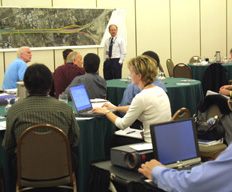
The goals of ACTT include minimizing the impact of ongoing highway construction on motorists and adjacent communities by streamlining project schedules and containing costs, while enhancing safety and improving quality. The ACTT process is applied to a specific corridor or project by means of a 2-day workshop in which a multidisciplinary team of 20 to 30 national transportation experts works with local agency professionals to evaluate all aspects of the project from the perspectives of various skill sets. By the conclusion of the workshop, participants deliver feasible recommendations for reducing roadway construction time and enhancing safety and quality. Ultimately, transportation agencies can save both time and money while reducing construction-related congestion and improving the work zone safety.
Benefits of ACTT
The ACTT process taps the finest knowledge base available in the Nation, and brings together the perspectives of dedicated transportation experts with a broad array of experience and expertise. This know-how, combined with the local agency perspective and in-depth knowledge of the specific project at hand, makes for an intensive exchange of ideas, all directed towards practical, measurable goals. The workshop also gives local agency professionals a chance to benefit from the experience of their peers, learning valuable lessons that can be applied to future projects within their own organization. This is a win-win situation for all involved.
|
"WSDOT conducted a workshop on the SR-520 bridge project, which has not yet completed the NEPA process. While we constrained the ACTT brainstorming to existing EIS alternatives, we still felt that the meeting delivered as promised - a number of very interesting ideas that, if implemented, should allow us to deliver the project in a shorter time than originally planned. WSDOT is definitely a booster for the ACTT process." Rick Smith Director, Innovative Project Delivery Washington State Department of Transportation |
The ACTT process offers a complete accelerated construction approach. The goal is to accelerate highway construction on select, high-cost projects or corridors across the Nation by disseminating best practices and promoting the latest technological innovations. This is achieved by evaluating the planning, design, and construction activities within the specific highway corridor using multiple strategies and technologies. Successful ACTT deployment requires a thorough examination of all facets of highway corridors, with the objective of streamlining and optimizing efficiency. Broadly, the ACTT approach benefits the public by:
- Encouraging the development of strategies that generate positive change.
- Creating a framework for informed consideration of innovations.
- Facilitating removal of barriers to innovation.
- Improving motorist and worker safety.
- Advocating continuous quality improvement.
The ACTT workshops and pilot workshops held to date have resulted in numerous benefits for the participating State agencies. Most workshops, for example, resulted in ideas and recommendations that could help reduce construction time by 30 percent or more. In one case, it was determined that the goals of a project estimated at $10 million in construction costs could be effectively met with only a $3 million investment. The needs of local communities along the corridor are also a high priority at ACTT workshops, resulting in roadway designs that are sensitive to environmental, historic, and cultural concerns. Many of the workshops' recommendations center around performing all needed rehabilitation or reconstruction work within a corridor at one time, thus avoiding multiple disruptions of traffic over time and forestalling the need for more serious measures. Finally, the workshops are also sensitive to the financial constraints of the participating agency, offering practical, applicable alternatives for funding improvements and ongoing system preservation.
| State | Project Cost | Planned Construction Time | Project Goal |
|---|---|---|---|
| Indiana | $400 million | 6-9 years | 3 years |
| Pennsylvania | $140 million | 4 years | 2 years |
| Texas | $760 million | 7 years | 4 years |
| New Jersey | $10 million* | 18 months | 3 months |
| California | $80 million | 2.2 years | N/A |
| Louisiana | $8 million | N/A | N/A |
| Montana | $100 million | 5 years | 3 years |
| Washington | $1.5 - $3.4 billion | 6 years | 4.5 - 5 years |
*Cost estimate reduced to $3 million as a result of ACTT workshop
Skill Sets
From the beginning, the shapers of the ACTT process realized that the planning and implementation of a complex construction project involves diverse "skill sets," and that a vital key to streamlining construction schedules is to integrate various skill sets early in the study of highway corridors and in the subsequent development of major projects.
In 2002, the trio of TRB Task Force on Accelerating Innovation in the Highway Industry (A5T60), FHWA, and AASHTO TIG began a national outreach effort resulting in the formation of a resource pool known as the "National Skill Sets Council." Representing State highway agencies, FHWA, industry, and academia, council members bring to the table their individual expertise in a broad spectrum of defined skill sets.
Skill Sets: A Closer Look
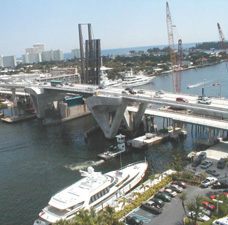
- Innovative Financing/Innovative Contracting - Members of this skill set seek to align financing and contracting options with the goals of the project. They do this by suggesting ways to match anticipated cash flow with project management, while recognizing competing priorities for existing resources. Financing tools include cost sharing strategies, tolling mechanisms, contractor financing, leveraging techniques, credit assistance, cost management, and containment concepts. Innovative contracting explores state-of-the-art in construction using techniques like performance-related specifications, warranties, design-build, cost + time strategies, partnering escalation agreements, lane rental, incentive/disincentives, and value engineering.
- Right-of-Way/Utilities/Railroads - This group focuses on reducing construction delays by resolving potential conflicts early in the planning process while minimizing any disruptive impacts on the community. Right-of-way considerations include State laws and procedures, numbers and types of businesses and residences affected, ready availability of additional right-of-way, and the number of outdoor advertising structures in the project area. Utility relocation issues include industry responsiveness, incentive-based utility agreements, corridor approaches to utility agreements, contracting for utility work, and nondestructive methods of utility relocation. For some projects, close railroad coordination is essential for maintaining both construction access and railroad schedules.
- Roadway/Geometric Design - Highway geometrics can have a great impact on project funds and integrity. This group examines the different design options that meet design standard requirements to identify the one that will best achieve the project goals while minimizing adverse impacts that could cause construction delays.
- Geotechnical/Materials - The geotechnical experts in this skill set explore subsurface conditions and issues to assess their impacts on the project. Based on the geography of the project, subsurface investigators may have to deal with traffic volume, environmental hazards, utilities, railroad property, and right-of-way concerns in order to perform an accurate analysis. This team also pursues options to expedite and facilitate turnaround times in material testing for material acceptance and contractor payment. The use of innovative materials is also fully explored and encouraged on projects to improve performance and increase durability.
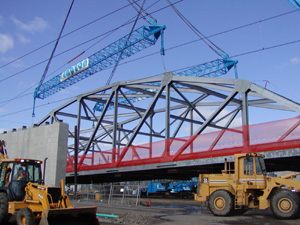
- Structures - Much of the construction time savings that the ACTT process engenders can be attributed to this group. Such structures systems and concepts as prefabrication, preassembly, incremental launching, lift-in, and roll-in have a proven contribution to accelerating construction of various highway structures, including bridges, retaining walls, and culverts. Designers have several options in structure types and materials to meet design requirements, but identifying the most accommodating system while minimizing adverse project impacts is the objective of this skill set.
- Long Life Pavements - Members of this skill set concentrate on designing pavements with an expected service life of up to 50 to 60 years. They do this by specifying ends rather than means - not "how to build the pavement," but "how long the pavement must last." When pavement performance goals and objectives are clearly identified, the designer and contractor have the maximum freedom to determine the appropriate methodology. This skill set also explores future maintenance issues for a project site, including winter maintenance, traffic operations, preventative maintenance, and any other concerns that may have an impact on the roadway's design life.
- Traffic Engineering/Safety/ITS - This skill set seeks to promote enhanced safety and improved traffic management through use of corridor contracting methods. These methods may include the use of incentives to enhance safety and improve traffic flow both during and after construction. ITS technologies can communicate real-time traffic information both during and after construction to motorists via radio, Internet, interactive signing and wireless alerts, and can provide incident management systems/services.
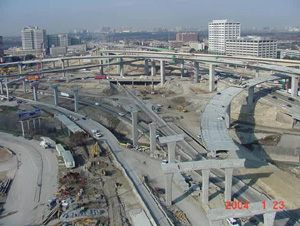
- Environment - This group focuses on building roadways that are safe and efficient, while also enhancing environmental and scenic resources. Their input ensures that scope-of-work and construction activities reflect environmental concerns and issues.
- Construction - This skill set explores the options available to keep traffic flowing during construction, maintain safety, and achieve project completion milestones, among other concerns. Common suggestions that would have an impact on time, constructability, or quality include enhanced construction management techniques, contractor design input, and improved construction scheduling. These techniques can improve the effectiveness and efficiency of the overall project completion. These experts also explore the use of automation to enhance the performance of construction equipment and contract administration.
- Public Relations - The vast majority of our Nation's highway projects involve reconstruction of existing facilities, with the need to maintain traffic flow during construction. This skill set develops strategies to partner with local entities and contractors to effectively inform the communities and the traveling public, minimizing construction delays as well as adverse socio-economic impacts.
Background: The Development of ACTT
The seeds from which ACTT would develop were planted in 1996, with the publication of TRB Special Report 249*, Building Momentum for Change. Outlined in the report were recommendations for a forum that would aim to accelerate innovation in highway construction across the Nation by disseminating best practices and promoting the latest technologies. Responding to the report's recommendations, a task force of high-level personnel from the public and private sectors was established in 1999.
The Task Force on Accelerating Innovation in the Highway Industry, designated A5T60, was charged with the mission of promoting innovation, which meant exploring new procedures in the planning and construction phases as well as identifying and avoiding any practices that tended to obstruct innovation.
The next step in ACTT's evolution took place in November 2000, when A5T60 convened a 2-day workshop in Washington, DC, with the goal of pinpointing the innovative solutions that had been developed by individual State Departments of Transportation (DOTs) and fast-tracking the adoption of the best innovations by transportation agencies nationwide. Upon conclusion of the workshop, which brought together 50 experts from across the United States, A5T60 task force members shared their findings and recommendations with FHWA and AASHTO TIG. It was then decided that the organizations would work jointly to advance the task force's mission of "accelerating innovation."
*Posted at http://trb.org/news/blurb_browse.asp?id=12
Back to *
Pilot Workshops
In spring of 2002, the joint TRB/AASHTO/FHWA ACTT team conducted two ACTT pilot workshops in Indiana and Pennsylvania that would serve as models for future events.
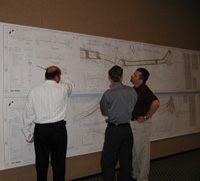
Indiana Department of Transportation (INDOT), March 17-19, 2002, Indianapolis, IN
The target for this workshop was a $400 million project to reconstruct a 12-mile stretch of I-465 from SR-67 to 56th Street in Indianapolis, expanding the six existing lanes to eight or 10 lanes in different stretches. The corridor includes eight interchanges, six bridges, and nine overpasses. INDOT has established a goal of maintaining a work-zone traffic flow at 72 kph (45 mph). Recommendations offered by the assembled team of experts included the use of design-build contracting with an incentive/disincentive clause, installation of ITS systems, establishment of a work zone incident plan, and incorporation of precast structural elements. INDOT described the workshop as successful, and implementing workshop recommendations is projected to reduce construction time from 6-9 years to only 3 years.
Pennsylvania Department of Transportation (PENNDOT), April 10-12, 2002, Pittsburgh, PA
The goal of this workshop was to suggest improvements to a $149 million project to upgrade a 3.2-km (2-mi) stretch of SR-28 in Pittsburgh, bringing a four-lane roadway up to current design standards and reconstructing two interchanges. The project will also construct 21 bridge structures, 29 km (18 mi) of retaining walls, and eight rockfall fences. PENNDOT's project goals were to construct an aesthetically pleasing product while maintaining traffic at 56 kph (35 mph) in the work zone. Among the suggestions emerging from the workshop were the use of soil nail walls, designation of a reversible center lane during construction, and construction of a dedicated utility corridor. PENNDOT gave the workshop a favorable review and indicated that many of the recommendations would be implemented. As a result, the projected construction time is expected to be reduced from 4 years to 2 years, while the time during which traffic flow will be affected by construction will be only one year.
The Task Force documented the pilot workshops and prepared the final report, which is posted at http://trb.org/news/blurb_detail.asp?id=2267. Upon successful completion of the two ACTT pilot workshops, A5T60 passed the concept off to AASHTO's TIG and FHWA to continue the effort by conducting future workshops.
ACTT Workshops
This effort has experienced unqualified success over the course of the past 2 years. ACTT workshops have explored a broad variety of highway projects, often with distinctive environmental, historic, and cultural implications.
Texas Department of Transportation (TxDOT), September 9-11, 2003, Dallas, TX
TxDOT hosted an ACTT workshop for Project Pegasus, an initiative aimed at redesigning and improving the two major Interstate freeways that serve downtown Dallas, I-30 and I-35E. Workshop recommendations included completing work on the Trinity Parkway first so it could be used as a detour during construction, allowing the contractor to build his plant onsite to minimize time and congestion, improving general materials specifications, setting up a dedicated incident management system, and a number of traffic flow strategies. The goal of the accelerated construction plan is to complete the $760 million project in 4 years, shaving 3 years off the original estimate.
New Jersey Department of Transportation (NJDOT), July 22 and October 27, 2003, Trenton, NJ
NJDOT is planning to improve the westbound structure of Overpeck Creek Bridge on Bergen County's Rt. 46. NJDOT's original plans called for the total replacement of the westbound superstructure, which was deemed cost-effective (at $10 million) but would impose 18 months of traffic disruptions. As a result of ACTT recommendations, work to replace the bridge deck and floor beams is under design and expected to begin early next year, and last 3 months, at an estimated cost of $3 million. This savings in time and money was made possible through the use of advanced materials such as precast elements, lightweight high-performance concrete (HPC), and fiber-reinforced polymer composites, thus reducing dead load, which provided for use of existing substructure.
California Department of Transportation (Caltrans), December 9-11, 2003, Ontario, CA
The Caltrans ACTT workshop focused on the $75 million French Valley Parkway project on I-15 between the cities of Temecula and Murrieta, CA. The project includes a new interchange between the I-15/I-215 and I-15/SR-79 junctions. Recommendations included modification of the design to eliminate two bridge structures, prefabrication of an entire bridge span, a dedicated incident management system, prequalification of material sources, and paving of the median to use as a detour during construction and to provide for future HOV lanes.
Louisiana Department of Transportation and Development (LDOTD), December 15-16, 2003, West Monroe, LA
At a workshop hosted by LDOTD, the focus was on the rehabilitation of a 40-year-old elevated section of I-20 in Monroe. Recommendations included complete closure of I-20 to traffic at night; prior completion of nearby projects to ease traffic flow; an aggressive incident management system including performance-based wrecker service; use of a smart work zone with cameras, variable message signs, and advance warning signs; and use of lane rental contracting for nightly closure of both the mainline road and certain ramps.
Montana Department of Transportation (MDT), January 26-28, 2004, Missoula, MT
MDT hosted an ACTT workshop to examine a $100 million project to upgrade an 80-km (50-mi) stretch of US-93 north of Missoula. The roadway is entirely within the Flathead Indian Reservation, home of the Confederated Salish and Kootenai Tribes. Recommendations aimed to reduce construction time from 5 years to 3 years by using prefabricated structural components, installing the prefabricated components at night, and establishing a corridor management/communication team.
Washington Department of Transportation (WSDOT), March 16-18, 2004, Seattle, WA
A workshop hosted by WSDOT was devoted to an SR-520 project between I-5 and I-405 in Seattle that will include the replacement of a 40-year-old floating bridge across Lake Washington. The cost of this project will be between $1.5 and $3.4 billion, depending on WSDOT's selection of the number of lanes for the new facility, making this the largest ACTT project to date. The many diverse recommendations included using Self Consolidating Concrete, overlapping design and construction contracts, segmenting contracts, and removing juvenile salmon from the work area by placing submerged curtains between islands. Implementing workshop recommendations is anticipated to reduce construction time up to 1/3.
As support for the ACTT initiative gains momentum, the benefits to both highway agencies and their customers will be felt nationwide. With the number of highway rehabilitation and reconstruction projects on the rise, minimizing construction time while maintaining quality, safety, and efficiency is increasingly more vital. The recommendations and best practices gained from ACTT will benefit not only each individual project, but many other highway improvement initiatives occurring across the country, resulting in a safer and longer lasting transportation system for the traveling public that depends upon it each day.
| Indiana - March 2002 Pennsylvania - April 2002 Texas - September 2003 New Jersey - October 2003 California - December 2003 Louisiana - December 2003 Montana - January 2004 Washington - March 2004 |
Tennessee - April 2004 Oklahoma - May 2004 Minnesota - June 2004 Wyoming - September 2004 Rhode Island - October 2004 New Jersey - November 2004 Nevada - March 2005 |
Several other States such as Utah, Hawaii, Wisconsin, Maryland, Idaho, Georgia, Massachusetts, Oregon, Alabama, Arizona, and Virginia have also indicated interest in the program directly or through their FHWA division office. |
|
Conclusion
The workshops completed to date have clearly focused on reducing construction time and minimizing construction-related congestion and traffic delays because every public survey lists these as tax payers' chief complaints about today's highway projects. Each workshop has resulted in numerous feasible and viable ideas and recommendations to help the hosting State achieve its project goals and objectives. Although some of the recommendations have been project specific, others have broader application and have potential for application on other projects at State or national level. To optimize the benefits of the ACTT concept, the ideas and recommendations that have general application will be captured and shared with all owner agencies and transportation professionals. Some of these ideas and recommendations are:
- Prefabricate the entire bridge span on site and roll, launch, or lift it into final position to drastically reduce construction time and minimize traffic disruptions.
- Use a smart work zone with cameras, variable message signs, and advance warning signs.
- Solicit contractor input during design or preconstruction through AGC review, mandatory pre-bid meetings, and constructability reviews.
- Clearly define incident management roles and responsibilities, including performance-based wrecker service, during project planning and design based on types of incidents.
- Establish a comprehensive traffic management plan, including considerations such as pedestrian traffic control, elderly drivers, property access, wildlife concerns, and regular coordination meetings.
- Develop an onsite plant to minimizing time and congestion.
- Maximize use of total or partial road closures for better contractor mobility.
In short, workshops completed to date have been successful as the feedback from host States has been positive. Owner agencies have expressed greater support for the program at the completion of their workshop. Other State DOT reps attending these workshops have indicated interest in hosting their own workshop. In conclusion, the ACTT program is customer oriented and its objectives support the FHWA's vital few goals and objectives.
| << Previous | Contents | Next >> |