




| << Previous | Contents | Next >> |
Geotechnical Aspects of Pavements Reference Manual
Chapter 1.0 Introduction
1.1 Introduction
This is the reference manual for FHWA NHI's Course #132040 - Geotechnical Aspects of Pavements. Many groups within an agency are involved with different aspects of definition, design use and construction verification of pavement geomaterials. These groups include:
- pavement design engineers,
- geotechnical engineers,
- specification writers, and
- construction engineers.
The three-day training course was developed as a format for these various personnel to meet and together develop a better understanding of the geotechnical aspects of pavements. The overall goal is for this group of personnel to work together to enhance current procedures to build and maintain more cost-efficient pavement structures. The geotechnical aspects are particularly important today, as longer pavement performance (analysis) periods are being used in design. The maintenance and rehabilitation activities used in the pavement management process to achieve the design performance period require a competent support from the underlying geomaterials.
Thus, this manual has been prepared to assist pavement design engineers, geotechnical engineers, specification writers, and construction engineers in understanding the geotechnical aspects of pavement design, and as a common tool for future reference. This manual covers the latest methods and procedures to address the geotechnical issues in pavement design, construction, and performance, including:
- a review of the geotechnical parameters of interest in pavement design, construction, and performance of different types of pavements.
- the influence of climate, moisture, and drainage on pavement performance.
- the impact of unsuitable subgrades on pavement performance.
- the determination of the geotechnical inputs needed for the design, construction, and performance of pavements.
- evaluation and selection of appropriate remediation measures for unsuitable pavement subgrades.
- the geotechnical aspects of pavement construction specifications and inspection requirements.
- a review of typical subgrade problems during construction and the recommended solutions.
This manual covers the latest methods and procedures for:
- new construction,
- reconstruction, and
- rehabilitation projects (e.g., widenings, overlays, and treatments).
The manual covers designing and constructing pavement subgrades and unbound materials for paved and unpaved roads with emphasis on:
- the current AASHTO, 1993 design guidelines, and
- the mechanistic-empirical design approach, including the three levels of design inputs being developed under the NCHRP 1-37A.
Previous AASHTO design methods are also reviewed in relation to the sensitivity of geotechnical inputs. The design details section also provides a review of the overall geotechnical and drainage aspects of bases, subbases, and subgrades.
The manual is divided into modules, with each chapter representing a module for specific geotechnical aspects of pavement system design, including:
- introduction to geotechnical aspects of pavements,
- basic concepts and special conditions,
- subsurface exploration,
- determination of key geotechnical inputs,
- actual design (and sensitivity of design/performance to geotechnical inputs),
- design details and special problems, and
- construction and QC/QA issues.
Each module contains a short background section, which provides an overview of the specific design or construction element. Following the background section, the design element and, subsequently, the construction process, is presented. Examples used to demonstrate the method and case histories of both successes and failures are presented to support the use of the design and construction concepts.
1.2 A Historical Perspective Of Pavement Design
Pavements with asphalt or concrete surface layers have been used in the United States since the late 1880s. The historical development of asphalt and concrete pavement design is discussed in more detail in Chapter 3. Although pavement materials and construction methods have advanced significantly over the past century, until the last decade, pavement design has been largely empirical, based on regional experience. Even the empirically based designs of the 1980s and 1990s, as expressed in the AASHTO 1986, 1993, and 1998, guidelines have been, for most cases, modified by state agencies, based on regional experience. For example, several agencies still use their own modifications of the 1972 AASHTO design guidelines. Currently, approximately one-half of the state agencies are using the 1993 guide, albeit usually with some modification. This close reliance on empirical evidence makes it difficult to adopt new design concepts. Empirical designs are significantly challenged by constantly changing design considerations (e.g., traffic loads and number of applications, types of pavements, road base aggregate supply, etc.). An additional change is the type of pavement construction, which has shifted over the past several decades from new construction to rehabilitation. Recycled materials now often replace new construction materials. During the past ten years, a major thrust has been to develop a more scientific explanation of the interaction between the pavement structure, the materials, the environment and the wheel loading. The need for a more sophisticated design method becomes even more apparent when considering the number of variables, with more than twenty just for the geotechnical features (e.g., unit weight, moisture content, gradation, strength, stiffness, and hydraulic conductivity, as described in Chapter 6) that influence the design in a modern pavement system.
Fortunately, the tools available for design have also significantly advanced over the past several decades. Specifically, computerized numerical modeling techniques (i.e., mechanistic models) are now available that can accommodate the analysis of these complex interaction issues and, at the same time, allow the models to be modified based on empirical evidence. The development of mechanistic-empirical models is described in Chapter 3 and their use in design of unbound pavement materials is detailed in Chapter 6. The new national Pavement Design Guide development under NCHRP Project 1-37A (NCHRP 1-37A Design Guide) provides the basis for the information in these chapters. Several agencies have already adopted mechanistic-empirical analysis, at least as a secondary method for flexible pavement design (Newcomb and Birgisson, 1999). The newer, more sophisticated design models for flexible and rigid pavements rely heavily on accurate characterization of the pavement materials and supporting conditions for design input. As a result, there is a greater reliance on geotechnical inputs in the design models. Geotechnical exploration and testing programs are essential components in the reliability of pavement design and have also advanced significantly in the past several decades.
Better methods for subsurface exploration and evaluation have been developed over time. Standard penetration tests (SPT), where a specified weight is dropped from a specific height on a thick-walled tube sampler to obtain an index strength value and disturbed sample of the subgrade, was developed in the 1920s. A typical practice is to locate the sampling intervals at a standard spacing along the roadway alignment. However, subgrade conditions can vary considerably both longitudinally and transversely to the alignment. This approach evaluates and samples less than a billionth of the soil along the roadway alignment, often missing critical subsurface features and/or variations. In addition, the SPT value itself has a coefficient of variation of up to 100% (Orchant et al., 1988). Based on these considerations, one must question the use of this approach as the sole method for subsurface evaluation. As discussed in Chapter 4, geophysical methods (e.g., ground penetrating radar (GPR) and falling weight deflectometer (FWD)) and rapid in-situ testing (e.g., cone penetration test - CPT) now allow for economical spatial characterization of subsurface conditions such that soil borings for sampling can be optimally located. The use of FWD to directly evaluate the dynamic response of existing pavement materials and support conditions for reconstruction and/or rehabilitation - now a standard of practice by a number of agencies - is also reviewed.
Empirical design methods of the past often relied on index tests such as CBR or R-value for characterizing the supporting aggregate and subgrade materials. Just as the design methods were modified for local conditions, agencies have modified the test methods to the extent that there are currently over ten index methods used across the United States to characterize these materials. Tests include the IBR (Illinois), the LBR (Florida), the Washington R-value, the California R-value, the Minnesota R-value, and the Texas triaxial, to name a few. Rough correlations between many of these methods are reviewed in Chapter 5. Considering that both the design and the input values may rely upon local knowledge, it is not surprising that comparison of test sections constructed by different agencies is often difficult. A method that allows for direct modeling of the dynamic response of subsurface soils and base course aggregate materials is the resilient modulus test. Advancements in the resilient modulus equipment and test procedures are reviewed in Chapter 5.
Throughout the history of pavement design, special problems have been encountered in relation to pavement support. These include expansive soils, frost susceptible materials, caliche, karst topography, pumping soils and highly fluctuating groundwater conditions. The solution to these problems is often to remove and replace these materials, often at great expense to the project. Today there are a number of alternate techniques available to resolve these issues, as discussed in Chapter 7.
Finally, verification of construction over the past century has used an array of methods for spot-check detection techniques, including evaluation of density using sand cone, balloon and, more recently, nuclear gauge techniques and/or load tests using plate load, field CBR, and drop cone methods. As with many of the older laboratory testing techniques, these field quality control (QC) methods are usually index tests and do not directly measure the dynamic response of the inplace materials. Many of these methods are reviewed in Chapter 8, along with some newer rapid assessment techniques (e.g., the Geogage) that provide a direct assessment of the dynamic support conditions. While most of the index methods, as well as the dynamic response methods, usually produce reliable results, the small sample area evaluated does not allow an assessment of the overall project uniformity. Also, construction methods have developed to the extent that it is often impossible to keep up with the placement of materials. One of the oldest methods that does provide good area coverage and which is still widely used in current practice is proof rolling. However, this method is often subjective. Improvements in evaluation of proof rolling through the use of modern survey techniques now allow for a more quantitative, less subjective evaluation of the subgrade conditions, and are discussed in Chapter 8. The other disadvantage of all these methods is that the work is checked after the fact, often requiring rework and slowing the project. A new, more rapid technique that allows for real time evaluation of each pavement layer as it is constructed is now available, and is reviewed in Chapter 8. These "intelligent compaction" methods can also be directly tied into pavement guarantee and warranty programs, also discussed in Chapter 8.
1.3 The Pavement System And Typical Pavement Types
The purpose of the pavement system is to provide a smooth surface over which vehicles may safely pass under all climatic conditions for the specific performance period of the pavement. In order to perform this function, a variety of pavement systems have been developed, the components of which are basically the same.
1.3.1 Components of a Pavement System
The pavement structure is a combination of subbase, base course, and surface course placed on a subgrade to support the traffic load and distribute it to the roadbed. Figure 1-1 presents a cross section of a basic modern pavement system, showing the primary components.
Figure 1-1. Basic components of a typical pavement system.
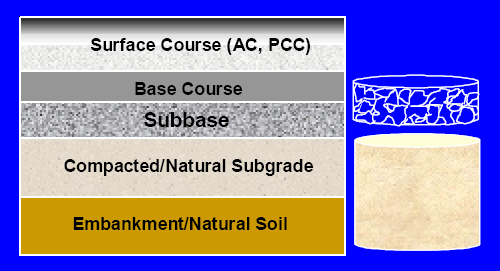
The subgrade is the top surface of a roadbed upon which the pavement structure and shoulders are constructed. The purpose of the subgrade is to provide a platform for construction of the pavement and to support the pavement without undue deflection that would impact the pavement's performance. For pavements constructed on-grade or in cuts, the subgrade is the natural in-situ soil at the site. The upper layer of this natural soil may be compacted or stabilized to increase its strength, stiffness, and/or stability.
For pavements constructed on embankment fills, the subgrade is a compacted borrow material. Other geotechnical aspects of the subgrade of interest in pavement design include the depth to rock and the depth to the groundwater table, especially if either of these is close to the surface. The actual thickness of the subgrade is somewhat nebulous, and the depth of consideration will depend on the design method, as discussed in Chapter 3.
The subbase is a layer or layers of specified or selected materials of designed thickness placed on a subgrade to support a base course. The subbase layer is usually of somewhat lower quality than the base layer. In some cases, the subbase may be treated with Portland cement, asphalt, lime, flyash, or combinations of these admixtures to increase its strength and stiffness. A subbase layer is not always included, especially with rigid pavements. A subbase layer is typically included when the subgrade soils are of very poor quality and/or suitable material for the base layer is not available locally, and is, therefore, expensive. Inclusion of a subbase layer is primarily an economic issue, and alternative pavement sections with and without a subbase layer should be evaluated during the design process.
In addition to contributing to the structural capacity of flexible pavement systems, subbase layers have additional secondary functions:
- Preventing the intrusion of fine-grained subgrade soils into the base layer. Gradation characteristics of the subbase relative to those of the subgrade and base materials are critical here.
- Minimizing the damaging effects of frost action. A subbase layer provides insulation to frost-susceptible subgrades and, in some instances, can be used to increase the height of the pavement surface above the groundwater table.
- Providing drainage for free water that may enter the pavement system. The subbase material must be free draining for this application, and suitable features must be included in the pavement design for collecting and removing any accumulated water from the subbase.
- Providing a working platform for construction operations in cases where the subgrade soil is very weak and cannot provide the necessary support.
The base is a layer or layers of specified or select material of designed thickness placed on a subbase or subgrade (if a subbase is not used) to provide a uniform and stable support for binder and surface courses. The base layer typically provides a significant portion of the structural capacity in a flexible pavement system and improves the foundation stiffness for rigid pavements, as defined later in this section. The base layer also serves the same secondary functions as the subbase layer, including a gradation requirement that prevents subgrade migration into the base layer in the absence of a subbase layer. It usually consists of high quality aggregates, such as crushed stone, crushed slag, gravel and sand, or combinations of these materials. The specifications for base materials are usually more stringent than those for the lower-quality subbase materials.
High quality aggregates are typically compacted unbound - i.e., without any stabilizing treatments - to form the base layer. Materials unsuitable for unbound base courses can provide satisfactory performance when treated with stabilizing admixtures, such as Portland cement, asphalt, lime, flyash, or a combination of these treatments, to increase their strength and stiffness. These stabilizing admixtures are particularly attractive when suitable untreated materials are in short supply local to the project site. Base layer stabilization may also reduce the total thickness of the pavement structure, resulting in a more economical overall design.
Finally, the surface course is one or more layers of a pavement structure designed to accommodate the traffic load, the top layer of which resists skidding, traffic abrasion, and the disintegrating effects of climate. The surface layer may consist of asphalt (also called bituminous) concrete, resulting in "flexible" pavement, or Portland cement concrete (PCC), resulting in "rigid" pavement. The top layer of flexible pavements is sometimes called the "wearing" course. The surface course is usually constructed on top of a base layer of unbound coarse aggregate, but often is placed directly on the prepared subgrade for low-volume roads. In addition to providing a significant fraction of the overall structural capacity of the pavement, the surface layer must minimize the infiltration of surface water, provide a smooth, uniform, and skid-resistant riding surface, and offer durability against traffic abrasion and the climate.
Figure 1-2 expands the basic components, showing other important features (e.g., drainage systems) that are often included in a pavement design. The permeable base drainage layer in Figure 1-2 is provided to remove infiltrated water quickly from the pavement structure. Suitable features, including edgedrains and drain outlets, must be included in the pavement design for collecting and removing any accumulated water from the drainage layer. In order to function properly, the layer below the drainage layer must be constructed to grades necessary to promote positive subsurface drainage (i.e., no undulations and reasonable crown or cross slope). Filter materials (e.g., geotextiles) may also be required to prevent clogging of the drainage layer and collector system. Pavement drainage is discussed in more detail in Chapters 3, 6, and 7.
Figure 1-2. Pavement system with representative alternative features.

The geotechnical components of a pavement system as covered in this manual include surfacing aggregate, unbound granular base, unbound granular subbase, the subgrade or roadbed (either mechanically or chemically stabilized, or both), aggregate and geosynthetics used in drainage systems, graded granular aggregate and geosynthetic used as separation and filtration layers, and the roadway embankment foundation. These and other terms related to the components of the pavement system are defined in Appendix A.
1.3.2 Alternate Types of Pavement
The most common way of categorizing pavements is by structural type: rigid, flexible, composite and unpaved.
- Rigid pavements in simplest terms are those with a surface course of Portland cement concrete (PCC). The Portland cement concrete slabs constitute the dominant load-carrying component in a rigid pavement system.
- Flexible pavements, in contrast, have an asphaltic surface layer, with no underlying Portland cement slabs. The asphaltic surface layer may consist of high quality, hot mix asphalt concrete, or it may be some type of lower strength and stiffness asphaltic surface treatment. In either case, flexible pavements rely heavily on the strength and stiffness of the underlying unbound layers to supplement the load carrying capacity of the asphaltic surface layer.
- Composite pavements combine elements of both flexible and rigid pavement systems, usually consisting of an asphaltic concrete surface placed over PCC or bound base.
- Unpaved roads or naturally surfaced roads simply are not paved, relying on granular layers and the subgrade to carry the load. Seal coats are sometimes applied to improve their resistance to environmental factors.
Pavements can also be categorized based on type of construction:
- New construction: The design and construction of a pavement on a previously unpaved alignment. All pavements start as new construction.
- Rehabilitation: The restoration or addition of structural capacity to a pavement. Overlays (either asphalt or Portland cement concrete), crack and seat and full or partial depth reclamation are examples of rehabilitation construction.
- Reconstruction: The complete removal of an existing pavement and construction of a new pavement on the same alignment. Except for the demolition of the existing pavement (usually done in stages, i.e., one lane at a time) and traffic control during construction, reconstruction is very similar to new construction in terms of design.
Categorization of pavements by structural type is generally the more useful approach for the overall pavement design, as well as performance monitoring and management of the pavement structure. The material types and structural behavior of flexible versus rigid pavements are sufficiently different to require fundamentally different design approaches. Unpaved roads also provide a unique set of challenges and correspondingly unique design requirements. Key features of flexible, rigid, composite pavement systems, and unpaved roads are described in the following subsections.
1.3.3 Flexible Pavements (Adapted from AASHTO 1993)
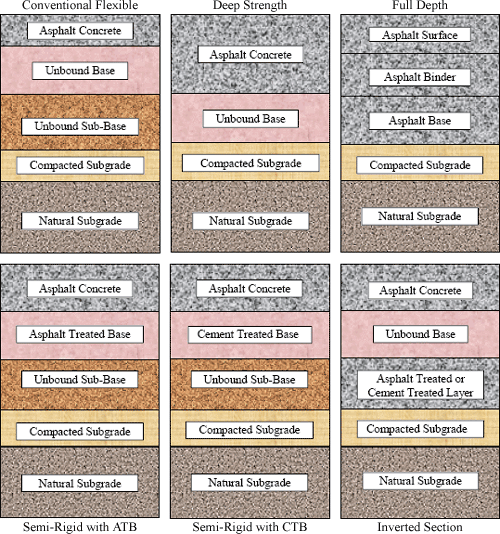
As was described in Figure 1-1, flexible pavements in general consist of an asphalt-bound surface course or layer on top of unbound base and subbase granular layers over the subgrade soil. In some cases, the subbase and/or base layers may be absent (e.g., full-depth asphalt pavements), while in others the base and/or subbase layers may be stabilized using cementitious or bituminous admixtures. Drainage layers may also be provided to remove water quickly from the pavement structure. Some common variations of flexible pavement systems are shown in Figure 1-3. Full depth asphalt pavements (Figure 1-3 upper right corner) are used primarily for flexible pavements subjected to very heavy traffic loadings.
Figure 1-3. Some common variations of flexible pavement sections (NCHRP 1-37A, 2002).
Hot mix asphalt concrete produced by an asphalt plant is the most common surface layer material for flexible pavements, especially for moderately to heavily trafficked highways. Dense-graded (i.e., well-graded with a low void ratio) aggregates with a maximum aggregate size of about 25 mm (1 in.) are most commonly used in hot mix asphalt concrete, but a wide variety of other types of gradations (e.g., gap-graded) have also been used successfully for specialized conditions. The Superpave procedure has become the standard for asphalt mixture design, although county and local government agencies may still use the older Marshall and Hveem mix design procedures (Asphalt Institute MS-2, 1984).
The asphalt surface layer in a flexible pavement may be divided into sub-layers. Typical sub-layers, proceeding from the top downward, are as follows:
- Seal coat: A thin asphaltic surface treatment used to increase (or restore) the water and skid resistance of the road surface. Seal coats may be covered with aggregate when used to increase skid resistance.
- Surface course (also called the wearing course): The topmost sublayer (in the absence of a seal coat) of the pavement. This is typically constructed of dense graded asphalt concrete. The primary design objectives for the surface course are waterproofing, skid resistance, rutting resistance, and smoothness.
- Binder course (also called the asphalt base course): The hot mix asphalt layer immediately below the surface course. The base course generally has a coarser aggregate gradation and often a lower asphalt content than the surface course. A binder course may be used as part of a thick asphalt layer either for economy (the lower quality asphalt concrete in the binder course has a lower material cost than the higher-asphalt content concrete in the surface course) or if the overall thickness of the surface layer is too great to be paved in one lift.
Additionally, thin liquid bituminous coatings may be used in the pavement, as follows:
- Tack coat: Applied on top of stabilized base layers and between lifts in thick asphalt concrete surface layers to promote bonding of the layers.
- Prime coat: Applied on the untreated aggregate base layer to minimize flow of asphalt cement from the asphalt concrete to the aggregate base and to promote a good interface bond. Prime coats are often used to stabilize the surface of the base to support the paving construction activities above. Cutback asphalt (asphalt cement blended with a petroleum solvent) is typically used because of its greater depth penetration.
Proper compaction of the asphalt concrete during construction is critical for satisfactory pavement performance. Improper compaction can lead to excessive rutting (permanent deformations) in the asphalt concrete layer due to densification under traffic; cracking or raveling of the asphalt concrete due to embrittlement of the bituminous binder from exposure to air and water; and failure of the underlying unbound layers due to excessive infiltration of surface water. Typical construction specifications require field compaction levels of 92% or more of the theoretical maximum density for the mixture. Layers of unbound material below the asphalt concrete layers must be constructed properly in order to achieve the overall objectives of pavement performance.
1.3.4 Rigid Pavements
Rigid pavements in general consist of Portland cement pavement slabs constructed on a granular base layer over the subgrade soil. The base layer serves to increase the effective stiffness of the slab foundation. The base layer also provides the additional functions listed in Section 1.3.1, plus the base must also prevent pumping of fine-grained soils at joints, cracks, and edges of the slab. Gradation characteristics of the base and/or subbase are critical here. The base may also be stabilized with asphalt or cement to improve its ability to perform this function. A subbase layer is occasionally included between the base layer and the subgrade. The effective foundation stiffness will be a weighted average of the subbase and subgrade stiffnesses. For high quality coarse subgrades (e.g., stiffness equal to that of the base) or low traffic volumes (less than 1 million 80-kN (18-kip) ESALs), the base and subbase layer may be omitted.
Because of the low stresses induced by traffic and environmental effects (e.g., thermal expansion and contraction) relative to the tensile strength of Portland cement concrete, most rigid pavement slabs are unreinforced or only slightly reinforced. When used, the function of reinforcement is to eliminate or lengthen spacing of joints, which fault and infiltrate water. Reinforcement in the concrete does not influence subgrade support requirements. The subbase layer may be omitted if there is low truck traffic volume or good subgrade conditions. For high traffic volumes and/or poor subgrade conditions, the subbase may be stabilized using cementitious or bituminous admixtures. Drainage layers can and should be included to remove water quickly from the pavement structure, similar to flexible pavements. A geotextile layer may be used to control migration of fines into the open graded base layer. Some common variations of rigid pavement systems are shown in Figure 1-4.
Figure 1-4. Variations for rigid pavement section (NCHRP 1-37A, 2002).
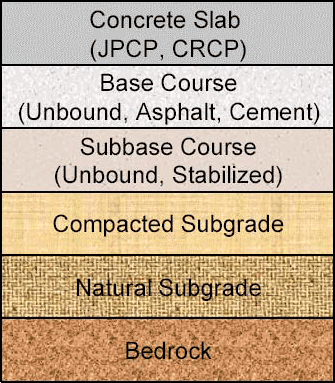
Rigid pavement systems are customarily divided into four major categories:
- Jointed Plain Concrete Pavements (JPCP). These unreinforced slabs require a moderately close spacing of longitudinal and transverse joints to maintain thermal stresses within acceptable limits. Longitudinal joint spacing typically conforms to the lane width (around 3.7 m (12 ft)), and transverse joint spacing typically ranges between 4.5 - 9 m (15 - 30 ft). Aggregate interlock, often supplemented by steel dowels or other load transfer devices, provides load transfer across the joints.
- Jointed Reinforced Concrete Pavements (JRCP). The light wire mesh or rebar reinforcement in these slabs is not designed to increase the load capacity of the pavement, but rather to resist cracking under thermal stresses and, thereby, permit longer spacings between the transverse joints between slabs. Transverse spacing typically ranges between 9 - 30 m (30 - 100 ft) in JRCP pavements. Dowel bars or other similar devices are required to ensure adequate load transfer across the joints.
- Continuously Reinforced Concrete Pavements (CRCP). Transverse joints are not required in CRCP pavements. Instead, the pavement is designed so that transverse thermal cracks develop at very close spacings, with typical spacings on the order of a meter (a few feet). The continuous conventional reinforcement bars are designed to hold these transverse thermal cracks tightly together and to supplement the aggregate interlock at the cracks to provide excellent load transfer across the cracks. In addition to the benefit of no transverse joints, CRCP pavement designs are typically 25 - 50 mm (1 - 2 in.) thinner than conventional JPCP or JRCP systems.
- Prestressed Concrete Pavements (PCP). PCP designs are similar to CRCP, except that the longitudinal reinforcement now consists of continuous steel strands that are prestressed prior to placing the concrete (or post-tensioned after the concrete has hardened). The initial tensile stress in the reinforcement counteracts the load- and thermal-induced tensile stresses in the concrete and, therefore, permits thinner slabs. Prestressed concrete pavements are more commonly used for airfield pavements than for highway pavements because of the greater benefit from the reinforcement in the comparatively thicker airfield slabs. Precast, prestressed concrete sections are also being used for pavement rehabilitation.
As suggested above, the basic components in rigid pavement slabs are Portland cement concrete, reinforcing steel, joint load transfer devices, and joint sealing materials. The AASHTO Guide Specifications for Highway Construction and the Standard Specifications for Transportation Materials provide guidance on mix design and material specifications for rigid highway pavements. These specifications can be modified based on local conditions and experience. Pavement concrete tends to have a very low slump, particularly for use in slip-formed paving. Air-entrainment is used to provide resistance to deterioration from freezing and thawing and to improve the workability of the concrete mix. Joint sealing materials must be sufficiently pliable to seal the transverse and longitudinal joints in JPCP and JRCP pavements against water intrusion under conditions of thermal expansion and contraction of the slabs. Commonly used joint sealing materials include liquid sealants (asphalt, rubber, elastomeric compounds, and polymers), preformed elastomeric seals, and cork expansion filler.
Load transfer devices in JPCP and JRCP pavements are designed to spread the traffic load across transverse joints to adjacent slabs and correspondingly reduce or eliminate joint faulting. The most commonly used load transfer device is a plain, round steel dowel; these are typically 450 mm (18 in.) long, 25 mm (1 in.) in diameter, and spaced at approximately every 300 mm (12 in.) along transverse joints. Tie bars, typically deformed steel rebars, are often used to hold the faces of abutting slabs in firm contact, but tie bars are not designed to act as load transfer devices.
1.3.5 Composite Pavements
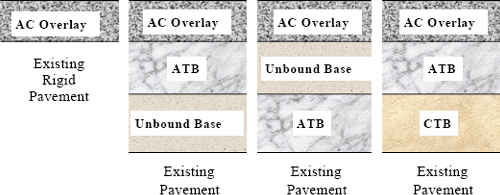
Composite pavements consist of asphaltic concrete surface course over PCC or treated bases as shown in Figure 1-5. Composite pavements with PCC over asphalt are also being used. The treated bases may be either asphalt-treated base (ATB) or cement-treated base (CTB). The base layers are treated to improve stiffness and, in the case of permeable base, stability for construction. The composite pavement type shown in Figure 1-5 of an AC overlay on top of a PCC rigid pavement system is a very common rehabilitation scenario.
Figure 1-5. Typical composite pavement sections.
1.3.6 Unpaved Roads (Naturally Surfaced)
Why use a paved surface? Over one-half of the roads in the United States are unpaved. In some cases, these roads are simply constructed with compacted or modified subgrade. In most cases, a gravel (base) layer is used as the wearing surface. Because of sparse population and low volumes of traffic, these roads will remain unpaved long into the future. Consideration for the subgrade are, again, the same as with flexible pavement, albeit the load levels are generally much higher. The subgrade should also be crowned to a greater extent than paved sections to promote drainage of greater quantities of infiltration surface water. The function of the gravel surfaced is now to carry the load and to provide adequate service. The problems with this approach include roughness, lateral displacement of surface gravel, traction, and dust. Maintenance of ditch lines is also problematic, due to continuous infilling, but open ditches are critical to long-term performance.
1.4 Pavement Performance With Ties To Geotechnical Issues
Regardless of which pavement type is used, all of the components make up the pavement system, and failure to properly design or construct any of these components often leads to reduced serviceability or premature failure of the system.
Distress refers to conditions that reduce serviceability or indicate structural deterioration. Failure is a relative term. In the context of this manual, failure denotes a pavement section that experiences excessive rutting or cracking that is greater than anticipated during the performance period, or that a portion of the pavement is structurally impaired at any time during the performance period with incipient failure anticipated from the local distress. There are a number of ways that a pavement section can fail, and there are many reasons for pavement distress and failure.
Yoder and Witczak (1975) define two types of pavement distress, or failure. The first is a structural failure, in which a collapse of the entire structure or a breakdown of one or more of the pavement components renders the pavement incapable of sustaining the loads imposed on its surface. The second type of failure is a functional failure; it occurs when the pavement, due to its roughness, is unable to carry out its intended function without causing discomfort to drivers or passengers or imposing high stresses on vehicles. The cause of these failure conditions may be due to inadequate maintenance, excessive loads, climatic and environmental conditions, poor drainage leading to poor subgrade conditions, and disintegration of the component materials. Excessive loads, excessive repetition of loads, and high tire pressures can cause either structural or functional failures.
Pavement failures may occur due to the intrusion of subgrade soils into the granular base, which results in inadequate drainage and reduced stability. Distress may also occur due to excessive loads that cause a shear failure in the subgrade, base course, or the surface. Other causes of failures are surface fatigue and excessive settlement, especially differential of the subgrade. Volume change of subgrade soils due to wetting and drying, freezing and thawing, or improper drainage may also cause pavement distress. Inadequate drainage of water from the base and subgrade is a major cause of pavement problems (Cedergren, 1987). If the subgrade is saturated, excess pore pressures will develop under traffic loads, resulting in subsequent softening of the subgrade. Under dynamic loading, fines can be literally pumped up into the subbase and/or base.
Improper construction practices may also cause pavement distress. Wetting of the subgrade during construction may permit water accumulation and subsequent softening of the subgrade in the rutted areas after construction is completed. Use of dirty aggregates or contamination of the base aggregates during construction may produce inadequate drainage, instability, and frost susceptibility. Reduction in design thickness during construction due to insufficient subgrade preparation, may result in undulating subgrade surfaces, failure to place proper layer thicknesses, and unanticipated loss of base materials due to subgrade intrusion. Yoder and Witczak (1975) state that a major cause of pavement deterioration is inadequate observation and field control by qualified engineers and technicians during construction.
After construction is complete, improper or inadequate maintenance may also result in pavement distress. Sealing of cracks and joints at proper intervals must be performed to prevent surface water infiltration. Maintenance of shoulders will also affect pavement performance.
Nearly all measures of pavement performance are based upon observations at the surface of the pavement - e.g., surface rutting, cracking of the asphalt or PCC, ride quality, and others. In some cases, these surface distresses are due directly to deficiencies in the asphalt or PCC surface layers, but in many other cases these distresses are caused at least in part by deficiencies from the underlying unbound layers. Since pavement design is ultimately an attempt to minimize pavement distresses and, thereby, maximize pavement performance, it is important to understand how geotechnical factors impact these distresses.
Table 1-1, Table 1-2, and Table 1-3 summarize the geotechnical influences on the major distresses for flexible, rigid, and composite pavements, respectively. The composite pavement type considered in Table 1-3 is an AC overlay on top of a PCC rigid pavement system and a very common rehabilitation scenario.
| Insuff. Base Stiffness / Strength | Insuff. Subgrade Stiffness / Strength | Moisture / Drainage Problems | Freeze / Thaw | Swelling | Contamination | Erosion | Spatial Variability | |
|---|---|---|---|---|---|---|---|---|
| Fatigue Cracking | X | X | X | X | X | |||
| Rutting | X | X | X | X | X | |||
| Corrugations | X | |||||||
| Bumps | X | X | X | |||||
| Depressions | X | X | X | X | X | |||
| Potholes | X | X | X | |||||
| Roughness | X | X | X | X | X | X | X |
| Insuff. Base Stiffness / Strength | Insuff. Subgrade Stiffness / Strength | Moisture / Drainage Problems | Freeze / Thaw | Swelling | Contamination | Erosion | Spatial Variability | |
|---|---|---|---|---|---|---|---|---|
| Fatigue Cracking | X | X | X | X | X | X | ||
| Punchouts (CRCP) | X | X | X | X | X | X | ||
| Pumping | X | X | ||||||
| Faulting | X | X | X | X | X | X | ||
| Roughness | X | X | X | X | X | X | X |
| Insuff. Base Stiffness / Strength | Insuff. Subgrade Stiffness / Strength | Moisture / Drainage Problems | Freeze / Thaw | Swelling | Contamination | Erosion | Spatial Variability | |
|---|---|---|---|---|---|---|---|---|
| Reflection Cracking | X | X | X | |||||
| Roughness | X | X | X | X | X | X |
The dominant geotechnical factor(s) for many pavement distresses is/are the stiffness and/or strength of the unbound materials. In reality, the stresses that develop in any well-designed in-service pavement are well below the failure strength of the unbound materials. As a consequence, the true strength parameters (i.e., the cohesion and friction angle from triaxial tests) are not typically needed or measured for unbound pavement materials. Strength indices like the California Bearing Ratio1 (CBR) have been commonly measured in the past as an overall indication of the material quality in terms of stiffness and resistance to permanent deformation. More recent trends have been to replace these quality indices with direct stiffness testing via the resilient modulus2 (MR). Fortunately, strength and stiffness are usually closely correlated in most geomaterials (see, for example, the correlations between MR and CBR described in Chapter 5).
A major effect of the moisture/drainage, freeze/thaw, and contamination (material from one layer intermixing with another) factors listed in Table 1-1 through 1-3 is to degrade the stiffness and strength of the affected unbound materials. Moisture and drainage are combined here because excessive moisture in the pavement system is often the result of inadequate or malfunctioning drainage systems. Freeze/thaw and swelling can cause heaving of the pavement surface. Erosion can produce voids beneath the surface layers, causing a complete loss of foundation support. The spatial variability factor represents the nonuniformity of the geotechnical factors along the pavement and will, in general, apply to all of the other geotechnical factors.
Note that there are many other important pavement distresses, like thermal cracking, low skid resistance, and others, that are not included in Tables 1-1 through 1-3. The influence of geotechnical factors on these other distresses is generally quite small.
Some further comments on the major distress types are given in the following paragraphs:
Permanent Deformations (Rutting, Bumps, Corrugations, and Depressions). Surface rutting is often the controlling stress mode for flexible pavements. It is sometimes caused by an unstable asphalt concrete mixture that deforms plastically within the first few inches beneath the wheel paths. For a well-designed mixture, however, any rutting observed at the surface will be only partly due to permanent deformations in the asphalt layer, with the remainder due to accumulated permanent deformations in the underlying unbound layers and the subgrade. For example, at the AASHO road test, the percent of final total surface rutting attributable to the asphalt layer averaged 32%, versus 18% for the granular base layer, 39% for the granular subbase, and 11% for the subgrade. In other words, two-thirds of the rutting observed at the surface was due to accumulated permanent deformations in the geomaterials in the pavement structure. Potential causes for excessive permanent deformations in the pavement geomaterials include:
- inadequate inherent strength and stiffness of the material.
- degradation of strength and stiffness due to moisture effects (including freeze/thaw); inadequate or clogged drainage systems will contribute to this degradation.
- contamination of base and subbase materials by subgrade fines (i.e., inadequate separation of layer materials).
The shape of the rut trough is usually a good indicator of the source of the permanent deformations. Permanent deformations concentrated in the surface asphalt layers tend to give a narrow rut trough (individual wheel tracks may even be evident), while deep seated permanent deformations from the underlying unbound layers and subgrade typically give a much broader rut trough at the surface.
Nonuniform geotechnical conditions along the pavement can contribute to local permanent deformations in the form of bumps, corrugations, and depressions.
Fatigue Cracking. This form of distress is the cracking of the pavement surface as a result of repetitive loading. It may be manifested as longitudinal or alligator cracking (interconnected or interlaced cracks forming a pattern that resembles an alligator's hide) in the wheel paths for flexible pavement and transverse cracking (and sometimes longitudinal cracking) for jointed concrete pavement. Fatigue cracking in both flexible and rigid pavements is governed by two factors: the inherent fatigue resistance of the surface layer material, and the magnitude of the cyclic tensile strains at the bottom of the layer. The inherent fatigue resistance is clearly dependent only on the properties of the asphalt or PCC. The magnitude of the cyclic tensile strain, on the other hand, is a function of the composite response of the entire pavement structure. Low stiffness in the base, subbase, or subgrade materials - whether due to deficient material quality and/or thickness, moisture influences, or freeze/thaw effects - will all raise the magnitude of the tensile strains in the bound surface layer and increase the potential for fatigue cracking. Localized fatigue cracking may also be caused by nonuniformities in the geomaterials along the pavement alignment - e.g., voids, local zones of low stiffness material, etc.
Reflective Cracking. Reflective cracking in asphalt or concrete surfaces of pavements occurs over joints or cracks in the underlying layers. Like fatigue cracking, reflection cracking of asphalt overlays on top of rigid pavements is governed by the inherent fatigue resistance of the asphalt concrete and the magnitude of the tensile and shear strains in the overlay above the joint in the underlying rigid pavement. Inadequate foundation support (e.g., voids) at the joint will allow differential movement between slabs under a passing vehicle, producing large strains in the overlay above. Intrusion of water, inadequate drainage, and erosion of the unbound base material beneath a joint are all major geotechnical factors influencing reflection cracking.
Potholes. Potholes are formed due to a localized loss of support for the surface course though either a failure in the subgrade or base/subbase layers. Potholes are often associated with frost heave, which pushes the pavement up due to ice lenses forming in the subgrade during the freeze. During the thaw, voids (often filled with water) are created in the soil beneath the pavement surface due to the melting ice and/or gaps beneath the surface pavement resulting from heave. When vehicles drive over this gap, high hydraulic pressure is created in the void, which further weakens the surrounding soil. The road surface cracks and falls into the void, leading to the birth of another pothole. Potholes can also occur as a result of pumping problems.
Punchouts. Punchouts are identified as a broken area of a CRCP bounded by closely spaced cracks usually spaced less than 1 m (3 ft).
Pumping. Pumping is the ejection of foundation material, either wet or dry, through joints or cracks, or along edges of rigid slabs, resulting from vertical movements of the slab under traffic, or from cracks in semi-rigid pavements.
Faulting. Faulting appears as an elevation or depression of a PCC slab in relation to an adjoining slab, usually at transverse joints and cracks.
Roughness. Surface roughness is due in large measure to nonuniform permanent deformations and cracking along the wheel path. Consequently, all of the geotechnical factors influencing permanent deformations and cracking will also impact roughness. Nonuniformity of the stiffness/strength of the geomaterials along the pavement, in particular, can be a major contributor to surface roughness. Nonuniform swelling of subgrade soils along the pavement alignment provides a classic example of extreme pavement roughness in some areas of the country.
Liquefaction. The process of transforming any soil from a solid state to a liquid state, usually as a result of increased pore pressure and reduced shearing resistance (ASTM, 2001) is called liquefaction. Spontaneous liquefaction may be caused by a collapse of the structure by shock or other type of strain, and is associated with a sudden, but temporary, increase of the prefluid pressure.
Thermal Cracking. Thermal cracks appear in an asphalt pavement surface, usually full width transverse, as a result of seasonal or diurnal volume changes of the pavement restrained by friction with an underlying layer.
By now it should be apparent that there are a number of ways that a pavement may become impaired to the extent that it is no longer serviceable. In designing a pavement section, the pavement is anticipated to deform over its service life so that at a period in time it will need to be repaired or replaced. Normal failure is defined by rutting of the pavement section, as shown in Figure 1-6, and usually consists of no more than 20 - 25 mm (¾ - 1 in.) within the anticipated performance period. However, as previously reviewed in this section, there are a number of factors that may result in premature failure, long before the performance period, most of which are related to geotechnical issues. Specifically, geotechnical failures, as shown in Figure 1-7, are generally related to excessive subgrade rutting, aggregate contamination or degeneration, subgrade pumping, poor drainage, frost action, and swelling soils. There are other ancillary geotechnical issues, which will impact pavement performance, but are usually addressed in roadway design (i.e., not by the pavement group). These include differential embankment settlement, embankment and cut slope stability, liquefaction, collapsing soils, and karstic (sinkhole) formations. Design methods to evaluate these specific issues, along with procedures to mitigate potential problems, can be found in reference manuals for NHI 132012 Soils and Foundations Workshop (FHWA NHI-00-045 (Cheney & Chassie, 2000)) and NHI 132034 on Ground Improvement Methods (FHWA NHI-04-001 (Elias et al., 2004)).
Figure 1-6. Normal rutting.
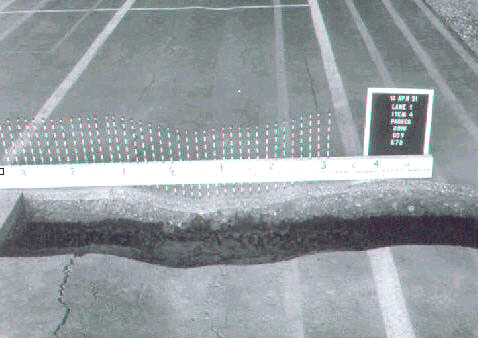
a) Excessive rutting 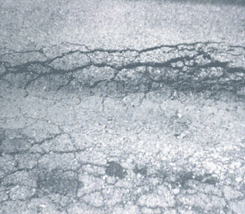 |
b) Aggregate contamination or degeneration 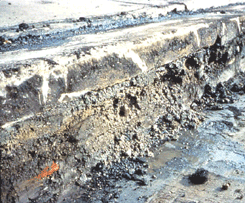 |
c) Subgrade pumping 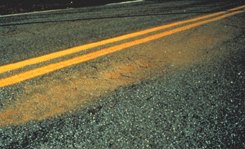 |
d) Drainage problems 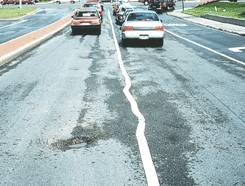 |
e) Frost action 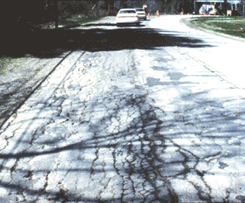 |
f) Swelling soils 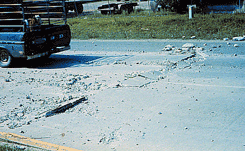 |
g) Differential settlement 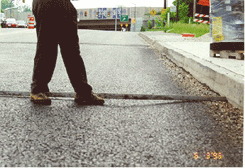 |
h) Collapsing soils, karst conditions, or liquefaction 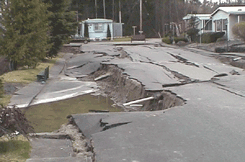 |
1.5 Case Histories Of Pavement Geotechnics (Failure Examples)
Geotechnical failures are often the result of not recognizing or adequately evaluating conditions prior to construction of the road. The following section provides several case histories of pavement failures that occurred due to inadequate geotechnical information.
1.5.1 Drainage Failure
The existing pavement along a 3 km (2 mile) portion of U.S. Route 1A in a northern state had been plagued by cracking, rutting, and potholes. The highway is a major transport route for tanker trucks that transport oil from the port to a major city. This particular roadway section required frequent maintenance to maintain a trafficable pavement surface, and recently had received a 100-mm (4-in.) overlay. However, within two years of construction, the overlay was badly cracked and rutted, again needing repair. These conditions prompted the reconstruction project. A subsurface investigation encountered moist clay soils (locally known as the Presumpscot Formation) along the entire length of the project. These soils are plastic and moisture sensitive, with water contents greater than 20%. Borings indicated up to 300 mm (12 in.) of asphalt in some sections, and an extensively contaminated base. During the investigation, water was observed seeping out of pavement sections, even though this had been the second driest summer on record in the state. Water in the pavement section was obviously one of the existing pavement section failure mechanisms. Based on soil conditions and past roadway construction experiences, designers initially recommended that the subgrade soils be undercut by 150 mm (6 in.) - with a greater depth of undercut anticipated in some areas - and replaced with granular soil to create a stable working surface prior to placing the overlying subbase course. However, this approach would not solve the drainage problem. Roadway drainage was not conventionally used in this state due to concerns that outlet freezing would prevent effectiveness.
In order to evaluate the most effective repair methods, test sections were established along the alignment consisting of alternate stabilization methods and drainage sections. The test sections were fully instrumented. Monitoring included FWD testing performed prior to reconstruction, after construction and periodically (e.g., before and after the spring thaw) since the project was completed in 1997. An indication of the poor subgrade condition on this project was encountered during construction, when a control section (no stabilization lift) failed and required a 600 mm (24 in.) undercut and gravel replacement to allow construction over the section. A 820 mm (32 in.) pavement section was then constructed over the undercut.
The roadway is performing well in all sections, and at this time (five years after construction) it is too early to determine which stabilization method proved most effective. Minimal frost heave has been observed thus far in all of the test sections, and it may take several additional seasons to provide discernible results. In the drainage section, water flows from the drains and corresponds strongly with precipitation events and water table levels. One surprising result occurs in the spring of each year. More water flows from the drains during the month of spring thaw than all of the other months combined. Over the long-term it is anticipated that this drainage will prove very beneficial to the performance of the pavement system.
1.5.2 Collapsible Soils
Sections of Interstate 15 within a 27 km (17-mi) length of roadway in a western state have been experiencing considerable distress since construction. Maintenance costs have been significant, and it appears that distress may not simply be due to an inadequate pavement section. The problems associated with bumps, cracks, and edge failures were likely associated with troubles in the subgrade soils along the alignment. Potential causes could have included collapsible soil, expansive soil, compressible soil, poorly compacted fill, and poor drainage. A study was performed with the objectives of determining the causes for the problems and developing potential solutions prior to design and reconstruction of the area in question. Based on surficial geology and borehole data, zones were identified where collapsible soils were likely the culprit. Because the zone of collapsible soil extends to depths of up to 6 m (20 ft) below the ground surface, deep dynamic compaction was recommended over excavation and replacement as a treatment method in these zones. Distress related to expansive soils exists throughout the study area, but significant damage concentrations are located in a cut section between mileposts 208 and 207 along I-15. This area is long enough to propose treatments for the area, in order to improve ride quality throughout the cut section. This study recommends a combination of methods to improve the odds of success. Because of the potential for differential settlement on the roadway, asphalt pavement should be used in reconstructing the roadway in the study area. A lack of adequate surface drainage is another critical factor leading to problems with both collapsible and expansive subgrade soils in this area. Deep dynamic compaction was found not to be feasible during construction, most likely due to an intervening fine-grained layer in the deposit.
1.6 Concluding Remarks
All pavement systems are constructed on earth and practically all components are constructed with earth materials. When these materials are bound with asphalt or cement to form surface layers, they take on a manufactured structural component that is relatively well understood by pavement designers. However, in their unbound state, the properties of these "geotechnical" materials are extremely variable and are the results of the natural processes that have formed them, and natural or man-made events following their formation. Often the earth provides inferior foundation materials in their natural state, but replacement is often impractical and uneconomical. As a result, the design engineer is often faced with the challenge of using the foundation and construction materials available on or near the project site. Therefore, designing and building pavement systems requires a thorough understanding of the properties of available soils and rocks that will constitute the foundation and other components of the pavement system.
1.7 References
- AASHTO (1972). AASHTO Interim Guide for Design of Pavement Structures, American Association of State Highway and Transportation Officials, Washington, D.C.
- AASHTO (1986). AASHTO Guide for Design of Pavement Structures, American Association of State Highway and Transportation Officials, Washington, D.C.
- AASHTO (1993). AASHTO Guide for Design of Pavement Structures, American Association of State Highway and Transportation Officials, Washington, D.C.
- AASHTO (1998). AASHTO Interim Guide for Design of Pavement Structures, American Association of State and Highway Transportation Officials, Washington, D.C.
- The Asphalt Institute (1984). MS-2, Mix Design Methods for Asphalt Concrete and Other Hot Mix Types.
- ASTM (2001). Annual Book of ASTM Standards, Section 4 Construction, Volume 04.03 Road and Paving Materials; Vehicle-Pavement Systems, American Society for Testing and Materials, West Conshohocken, PA.
- Cedergren, H.R. (1987). Drainage of Highway and Airfield Pavements, Robert E. Krieger Publishing Co. Inc., Malabar, FL.
- Cheney, R. and Chassie, R.G. (2000). Soils and Foundations Workshop, Reference Manual for NHI Course No. 132012, U.S. Department of Transportation, Federal Highway Administration, Washington D.C., FHWA NHI-00-045, 358 p.
- Elias, V., Welsh, J., Warren, J., Lukas, R., Collin, J.G., and Berg, R.R. (2004). Ground Improvement Methods, Reference Manual for NHI Course No. 132034, U.S. Department of Transportation, Federal Highway Administration, Washington, D.C., FHWA-NHI-04-001, 884 p.
- NCHRP 1-37A Design Guide (2002). 2002 Design Guide - Design of New and Rehabilitated Pavement Structures, Draft Final Report, Part 1 - Introduction and Part 2 - Design Inputs, Prepared for the National Cooperative Highway Research Program by ERES Division of ARA.
- Newcombe, D.A., and Birgisson B. (1999). "Measuring In-Situ Mechanical Properties of Pavement Subgrade Soils," NCHRP Synthesis 278, Transportation Research Board, Washington, D.C.
- Orchant, C.J., Kulhawy, F.H., and Trautmann, C.H. (1988). Reliability Based Foundation Design for Transmission Line Structures: Critical Evaluation of In-Situ Methods, Report EL-5507(2), Electric Power Research Institute, Palo Alto California et al., 1988
- Schultze, E. (1972). "Frequency Distributions and Correlations Of Soil Properties," in Statistics and Probability in Civil Engineering, Hong Kong University Press (Hong Kong International Conference). Ed. P. Lumb, distributed by Oxford University Press, London.
- Yoder, E. J., and Witczak, M.W. (1975). Principles of Pavement Design, Wiley, New York.
Notes
- California Bearing Ratio is described in more detail in Chapters 3 and 5. Return to Text
- Resilient Modulus is described in more detail in Chapters 3, 4, and 5. Return to Text
| << Previous | Contents | Next >> |