




| << Previous | Contents | Next >> |
Geotechnical Aspects of Pavements Reference Manual
Chapter 7.0 Design Details And Construction Conditions Requiring Special Design Attention (continued)
7.6 Subgrade Improvement And Strengthening
Proper treatment of problem soil conditions and the preparation of the foundation are extremely important to ensure a long-lasting pavement structure that does not require excessive maintenance. Some agencies have recognized certain materials simply do not perform well, and prefer to remove and replace such soils (e.g., a state specification dictating that frost susceptible loess cannot be present in the frost penetration zone). However, in many cases, this is not the most economical or even desirable treatment (e.g., excavation may create disturbance, plus additional problems of removal and disposal). Stabilization provides an alternate method to improve the structural support of the foundation for many of the subgrade conditions presented in the previous section. In all cases, the provision for a uniform soil relative to textural classification, moisture, and density in the upper portion of the subgrade cannot be over-emphasized. This uniformity can be achieved through soil sub-cutting or other stabilization techniques. Stabilization may also be used to improve soil workability, provide a weather resistant work platform, reduce swelling of expansive materials, and mitigate problems associated with frost heave. In this section, alternate stabilization methods will be reviewed, and guidance will be presented for the selection of the most appropriate method.
7.6.1 Objectives of Soil Stabilization
Soils that are highly susceptible to volume and strength changes can cause severe roughness and accelerate the deterioration of the pavement structure in the form of increased cracking and decreased ride quality when combined with truck traffic. Generally, the stiffness (in terms of resilient modulus) of some soils is highly dependent on moisture and stress state (see Section 5.4). In some cases, the subgrade soil can be treated with various materials to improve the strength and stiffness characteristics of the soil. Stabilization of soils is usually performed for three reasons:
- As a construction platform to dry very wet soils and facilitate compaction of the upper layers-for this case, the stabilized soil is usually not considered as a structural layer in the pavement design process.
- To strengthen a weak soil and restrict the volume change potential of a highly plastic or compressible soil-for this case, the modified soil is usually given some structural value or credit in the pavement design process.
- To reduce moisture susceptibility of fine grain soils.
A summary of the stabilization methods most commonly used in pavements, the types of soils for which they are most appropriate, and their intended effects on soil properties is presented in Table 7-13.
Mechanical stabilization using thick gravel layers or granular layers in conjunction with geotextiles or geogrids is an effective technique for improving roadway support over soft, wet subgrades. Thick granular layers provide a working platform, but do not provide strengthening of the subgrade. In fact, construction of thick granular layers in some cases results in disturbance of the subgrade due to required construction activities. Thick granular layers are also used to avoid or reduce frost problems by providing a protection to the underlying subgrade layers.
| Stabilization Method | Soil Type | Improvement | Remarks |
|---|---|---|---|
| Mechanical | |||
| - More Gravel | Silts and Clays | None | Reduce dynamic stress level |
| - Blending | Moderately plastic Other | None Improve gradation Reduce plasticity Reduce breakage | Too difficult to mix |
| - Geosynthetics | Silts and Clays | Strength gain through minimum disturbance and consolidation | Fast, plus provides long-term separation |
| - Lightweight fill | Very weak silts, clays, peats | None Thermal barrier for frost protection | Fast, and reduces dynamic stress level |
| Admixture | |||
| - Portland cement | Plastic Coarse | Less pronounced hydration of cement Hydration of cement | |
| - Lime | Plastic | Drying Strength gain Reduce plasticity Coarsen texture Long-term pozzolanic cementing | Rapid Rapid Rapid Rapid Slow |
| Coarse with fines | Same as plastic | Dependent on quantity of plastic fines | |
| Nonplastic | None | No reactive material | |
| - Lime- flyash | Same as lime | Same as lime | Covers broader range |
| - Lime- cement- flyash | Same as lime | Same as lime | Covers broader range |
| - Bituminous | Coarse | Strengthen / bind waterproof | Asphalt cement or liquid asphalt |
| Some fines | Same as coarse | Liquid asphalt | |
| Fine | None | Can't mix | |
| - Pozzolanic and slags | Silts and coarse | Acts as a filler Cementing of grains | Dense and strong Slower than cement |
| - Chemicals | Plastic | Strength increase and volume stability | See vendor literature Difficult to mix |
| Water proofers | |||
| - Asphalt | Plastic and collapsible | Reduce change in moisture | Long-term moisture migration problem |
| - Geomembranes | Plastic and collapsible | Reduce change in moisture | Long-term moisture migration problem |
A common practice in several New England and Northwestern states is to use a meter (3.3 ft) or more of gravel beneath the pavement section. The gravel improves drainage of surface infiltration water and provides a weighting action that reduces and results in more uniform heave. Washington State recently reported the successful use of an 0.4 m (18 in.) layer of cap rock beneath the pavement section in severe frost regions (Ulmeyer et al., 2002).
Blending gravel and, more recently, recycled pavement material with poorer quality soils also can provide a working platform. The gravel acts as filler, creating a dryer condition and decreasing the influence of plasticity. However, if saturation conditions return, the gravel blend can take on the same poorer support characteristics of the subgrade.
Geotextiles and geogrids used in combination with quality aggregate minimize disturbance and allow construction equipment access to sites where the soils are normally too weak to support the initial construction work. They also allow compaction of initial lifts on sites where the use of ordinary compaction equipment is very difficult or even impossible. Geotextiles and geogrids reduce the extent of stress on the subgrade and prevent base aggregate from penetrating into the subgrade, thus reducing the thickness of aggregate required to stabilize the subgrade. Geotextiles also act as a separator to prevent subgrade fines from pumping or otherwise migrating up into the base. Geosynthetics have been found to allow for subgrade strength gain over time. However, the primary long-term benefit is preventing aggregate-subgrade mixing, thus maintaining the thickness of the base and subbase. In turn, rehabilitation of the pavement section should only require maintenance of surface pavement layers.
Stabilization with admixtures, such as lime, cement, and asphalt, have been mixed with subgrade soils used for controlling the swelling and frost heave of soils and improving the strength characteristics of unsuitable soils. For admixture stabilization or modification of cohesive soils, hydrated lime is the most widely used. Lime is applicable in clay soils (CH and CL type soils) and in granular soils containing clay binder (GC and SC), while Portland cement is more commonly used in non-plastic soils. Lime reduces the Plasticity Index (PI) and renders a clay soil less sensitive to moisture changes. The use of lime should be considered whenever the PI of the soil is greater than 12. Lime stabilization is used in many areas of the U.S. to obtain a good construction platform in wet weather above highly plastic clays and other fine-grained soils. It is important to note that changing the physical properties of a soil through chemical stabilization can produce a soil that is susceptible to frost heave. Following is a brief description of the characteristics of stabilized soils followed by the treatment procedures. Additional guidance on soil stabilization with admixtures and stabilization with geosynthetics can be obtained from the following resources:
- "Lime Stabilization - Reactions, Properties, Design, and Construction," State of the Art Report 5, Transportation Research Board, Washington D.C., 1987.
- Soil Stabilization for Pavements, Joint Departments of the Army and Air Force, USA, TM 5-822-14/AFMAN 32-8010, 1994.
- Geosynthetics Design and Construction Guidelines, FHWA HI-95-038, 1998.
- Standard Specifications for Geotextiles - AASHTO M288, 1997.
7.6.2 Characteristics of Stabilized Soils
Although mechanical stabilization with thick granular layers or geosynthetics and aggregate subbase provides the potential for strength improvement of the subgrade over time, this is generally not considered in the design of the pavement section, and no increase in structural support is attributed to the geosynthetic. However, the increase in gravel thickness (minus an allowance for rutting) can contribute to the support of the pavement. Alternatively, the aggregate thickness used in conjunction with the geosynthetic is designed to provide an equivalent subgrade modulus, which can be considered in the pavement design, discounting the additional aggregate thickness of the stabilization layer. Geosynthetics also allow more open graded aggregate, thus providing for the potential to drain the subbase into edgedrains and improving its support value.
The improvement of subgrade or unbound aggregate by application of a stabilizing agent is intended to cause the improvements outlined above (i.e., construction platform, subgrade strengthening, and control of moisture). These improvements arise from several important mechanisms that must be considered and understood by the pavement designer. Admixtures used as subgrade stabilizing agents may fill or partially fill the voids between the soil particles. This reduces the permeability of the soil by increasing the tortuosity of the pathways for water to migrate through the soil. Reduction of permeability may be relied upon to create a waterproof surface to protect underlying, water sensitive soils from the intrusion of surface water. This mechanism must be accompanied by other aspects of the geometric design into a comprehensive system. The reduction of void spaces may also tend to change the volume change under shear from a contractive to a dilative condition. The admixture type stabilizing agent also acts by binding the particles of soil together, adding cohesive shear strength and increasing the difficulty with which particles can move into a denser packing under load. Particle binding serves to reduce swelling by resisting the tendency of particles to move apart. The particles may be bound together by the action of the stabilizing agent itself (as in the case of asphalt cement), or may be cemented by chemical reaction between the soil and stabilizing agent (as in the case of lime or Portland cement). Additional improvement can arise from other chemical-physical reactions that affect the soil fabric (typically by flocculation) or the soil chemistry (typically by cation exchange). The down side of admixtures is that they require up front lab testing to confirm their performance and very good field control to obtain a uniform, long lasting product, as outlined later in this section. There are also issues of dust control and weather dependency, with some methods that should be carefully considered in the selection of these methods.
The zone that may be selected for improvement depends upon a number of factors. Among these are the depth of soft soil, anticipated traffic loads, the importance of the transportation network, constructability, and the drainage characteristics of the geometric design and the underlying soil. When only a thin zone and/or short roadway length is subject to improvement, removal and replacement will usually be the preferred alternative by most agencies, unless a suitable replacement soil is not economically available. Note that in this context, the use of the qualitative term "thin" is intentional, as the thickness of the zone can be described as thick or thin, based primarily on the project economics of the earthwork requirements and the depth of influence for the vehicle loads.
7.6.3 Thick Granular Layers
Many agencies have found that a thick granular layer is an important feature in pavement design and performance. Thick granular layers provide several benefits, including increased load-bearing capacity, frost protection, and improved drainage. While the composition of this layer takes many forms, the underlying strategy of each is to achieve desired pavement performance through improved foundation characteristics. The following sections describe the benefits of thick granular layers, typical characteristics, and considerations for the design and construction of granular embankments.
Objectives of Thick Granular Layers
Thick granular layers have been used in design for structural, drainage, and geometric reasons. Many times, a granular layer is used to provide uniformity and support as a construction platform. In areas with large quantities of readily accessible, good quality aggregates, a thick granular layer may be used as an alternative to soil stabilization. Whatever the reason, thick granular layers aim to improve the natural soil foundation. By doing this, many agencies are recognizing that the proper way to account for weak, poorly draining soils is through foundation improvement, as opposed to increasing the pavement layer thicknesses. The following is a list of objectives and benefits of thick granular layers:
- To increase the supporting capacity of weak, fine-grained subgrades.
- To provide a minimum bearing capacity for the design and construction of pavements.
- To provide uniform subgrade support over sections with highly variable soil conditions.
- To reduce the seasonal effects of moisture and temperature variations on subgrade support.
- To promote surface runoff through geometric design.
- To improve subsurface drainage and the removal of moisture from beneath the pavement layers.
- To increase the elevation of pavements in areas with high water tables.
- To provide frost protection in freezing climatic zones.
- To reduce subgrade rutting potential of flexible pavements.
- To reduce pumping and erosion beneath PCC pavements.
- To meet elevation requirements of geometric design.
Characteristics of Thick Granular Layers
Thick granular layers have been incorporated in pavement design in several ways. They can be referred to as fills or embankments, an improved or prepared subgrade, and select or preferred borrow. Occasionally, a thick granular layer is used as the pavement subbase. The two most important characteristics for all of these layers are material properties and thickness. While geometric requirements (e.g., vertical profile) and improved surface runoff can be achieved by embankments constructed of any soil type, the most beneficial effects are produced through utilization of good quality, granular materials. Several methods are used to characterize the strength and stiffness of granular materials, including the California Bearing Ratio (CBR) and resilient modulus testing. In addition, several types of field plate load tests have been used to determine the composite reaction of the embankment and soil combination. In general, materials with CBR values of 20% or greater are used, corresponding to resilient moduli of approximately 120 MPa (17,500 psi). These are typically sand or granular materials, or coarse-grained materials with limited fines, corresponding to AASHTO A-1 and A-2 (GW, GP, SW and SP) soils.
Aggregate gradation and particle shape are other important properties. Typically, embankment materials are dense-graded, with a maximum top-size aggregate that varies depending on the height of the embankment. Many times, the lowest embankment layer may contain cobbles or aggregates of 100 - 200 mm (4 - 8 in.) in diameter. Granular layers placed close to the embankment surface have gradations, including maximum size aggregates, similar to subbase material specifications. Although dense-graded aggregate layers do not provide efficient drainage relative to open-graded materials, a marginal degree of subsurface seepage can be achieved by limiting the fines content to less than 10%. The type of granular material used is normally a function of material availability and cost. Pit-run gravels and crushed stone materials are the most common. The high shear strength of crushed stone is more desirable than rounded, gravelly materials; however, the use of crushed materials may not always be economically feasible.
The thicknesses of granular layers vary, depending upon their intended use. Granular layers 150 - 300 mm (6 - 12 in.) thick may be used to provide uniformity of support, or act as a construction platform for paving of asphalt and concrete layers. To increase the composite subgrade design values (i.e., combination of granular layer over natural soil), it is usually necessary to place a minimum of 0.5 - 1.5 m (1½ -- 5 ft) of embankment material, depending on the strength of the granular material relative to that of the underlying soil. Likewise, granular fills placed for frost protection may also range from 0.5 - 1.5 m (1½ - 5 ft). In most cases, embankments greater than 2 m (6½ ft) thick have diminishing effects in terms of strength, frost protection, and drainage. Granular embankments greater than 2 - 3 m (6½ - 10 ft) thick are usually constructed for purposes of geometric design.
Considerations for Pavement Structural Design
The use of a thick granular layer presents an interesting situation for design. The placement of a granular layer of substantial thickness over a comparatively weak underlying soil forms, essentially, non-homogeneous subgrade in the vertical direction. Pavement design requires a single subgrade design value, for example CBR, resilient modulus, or k-value. This is generally determined through laboratory or field tests, when the soil mass in the zone of influence of vehicle loads is of the same type, or exhibits similar properties. In the case of a non-homogeneous subgrade, the composite reaction of the embankment and soil combination can vary from that of the natural soil to that of the granular layer. Most commonly, the composite reaction is a value somewhere between the two extremes, dependent upon the relative difference in moduli between the soil and embankment, and the thicknesses of the granular layer. The actual composite subgrade response is not known until the embankment layer is placed in the field, and it may be different once the upper pavement layers are placed.
To account for non-homogenous subgrades in pavement structural design, it is recommended to characterize the individual material properties by traditional means, such as resilient modulus or CBR testing, and to compare these results to field tests performed over the constructed embankment layers, as well as the completed pavement section. Analytical models, such as elastic layer programs, can be used to make theoretical predictions of composite subgrade response, and these predictions can then be verified by field testing. Some agencies use in-situ plate load tests to verify that a minimum composite subgrade modulus has been achieved. Deflection devices, including the Falling Weight Deflectometer (FWD), can be used for testing over the compacted embankment layer and over the constructed pavement surface.
It is advisable to use caution when selecting a design subgrade value for a non-homogenous subgrade. Experience has shown that a good-quality embankment layer must be of significant height, say 1 m (3 ft) or more, before the composite subgrade reaction begins to resemble that of the granular layer. This means that, for granular layers up to 1 m (3 ft) in height, the composite reaction can be much less than that of the embankment layer itself. If too high a subgrade design value is selected, the pavement will be under-designed. Granular layers less than 0.5 m (1.6 ft) thick have minimal impact on the composite subgrade reaction, when loaded under the completed pavement section.
7.6.4 Geotextiles and Geogrids
Geosynthetics are a class of geomaterials that are used to improve soil conditions for a number of applications. They consist of manufactured polymeric materials used in contact with soil materials or pavements as an integral part of a man-made system (after ASTM D4439). The most common applications in general use are in pavement systems for both paved and unpaved roadways, for reinforcing embankments and foundation soils, for creating barriers to water flow in liners and cutoffs, and for improving drainage. The generic term "geosynthetic" is often used to cover a wide range of different materials, including geotextiles, geogrids, and geomembranes. Combinations of these materials in layered systems are usually called geocomposites.
Geotextile and geogrid materials are the most commonly used geosynthetics in transportation, although certainly others are sometimes used. This generality is more accurate when only the pavement itself (not including the adjoining fill or cut slopes, retaining walls, abutments, or drainage facilities) is considered. Table 7-14 provides a list of transportation applications for specific basic functions of the geosynthetic. Each of these functional classes, while potentially related by the specific application being proposed, refers to an individual mechanism for the improvement of the soil subgrade. Stabilization, as reviewed in this section, is a combination of the separation, filtration, and reinforcement functions. Drainage can also play a role.
| General Function | Typical Application |
|---|---|
| Separation of Dissimilar Materials | Between subgrade and aggregate base in paved and unpaved roads and airfieldsBetween subgrade and ballast for railroadsBetween old and new asphalt layers |
| Reinforcement of weak materials | Over soft soils for unpaved roads, paved roads, airfield, railroads, construction platforms |
| Filtration | Beneath aggregate base for paved and unpaved roads and airfields or railroad ballast |
| Drainage | Drainage interceptor for horizontal flow Drain beneath other geosynthetic systems |
The separation function prevents the subgrade and the subbase from intermixing, which would most likely occur during construction and in-service due to pumping of the subgrade. The filtration function is required because soils requiring stabilization are usually wet and saturated. By acting as a filter, the geotextile retains the subgrade without clogging, while allowing water from the subgrade to pass up into the subbase, thus allowing destabilizing pore pressure to dissipate and promote strength gain due to consolidation. If the subbase is dirty (contains high fines), it may be desirable to use a thick, nonwoven geotextile, which will allow for drainage in its plane (i.e., in this case, pore water pressure dissipates through the plane of the geotextile).
Geotextiles and geogrids also provide some level of reinforcement by laterally restraining the base or subbase and improving the bearing capacity of the system, thus decreasing shear stresses on the subgrade. Soft, weak subgrade soils provide very little lateral restraint, so when the aggregate moves or shoves laterally, ruts develop on the aggregate surface and also in the subgrade. A geogrid with good interlocking capabilities or a geotextile with good frictional capabilities can provide tensile resistance to lateral aggregate movement. The geosynthetic also increases the system bearing capacity by forcing the potential bearing surface under the wheel load to develop along alternate, longer mobilization paths and, thus, higher shear strength surfaces.
Geotextiles serve best as separators, filters and, in the case of nonwoven geotextiles, drainage layers, while geogrids are better at reinforcing. Geogrids, as with geotextiles, prevent the subbase from penetrating the subgrade, but they do not prevent the subgrade from pumping into the base. When geogrids are used, either the subbase has to be designed as a separator or a geotextile must be used in conjunction with the geogrid, either separately or as a geocomposite.
As defined by AASHTO M288, geotextiles or geogrids in conjunction with an appropriately designed thickness of subbase aggregate provide stabilization for soft, wet subgrades with a CBR of less than 3 (a resilient modulus less than 30 MPa (4500 psi)). Table 7-15 provides subgrade conditions that are considered to be the most appropriate for geosynthetic use. These are conditions where the subgrade will not support conventional construction without substantial rutting. Engineers have compiled over 20+ years of successful use for this application in these types of conditions. Geosynthetics do not provide improvements for expansive soils, and use in stabilization for subgrade conditions that are better than those defined in Table 7-15 is questionable. However, geosynthetics may still provide a valuable function as separators for any subgrade containing large amounts of fines or as base reinforcement, even with competent subgrades, as discussed in Section 7.2.
| Condition | Related Measures |
|---|---|
| Poor soils | USCS of SC, CL, CH, ML, MH, OL, OH, PT or AASHTO of A-5, A-6, A-7, A-7-6 |
| Low strength | cu < 13 psi or CBR < 3 or MR < 4500 psi |
| High water table | Within zone of influence of surface loads |
| High sensitivity | High undisturbed strength compared to remolded strength |
Separation is a viable function, for soils that are seasonally weak (e.g., from spring thaw) or for high fines content soils, which are susceptible to pumping. This is especially the case for permeable base applications, as covered in Section 7.2. A greater range of geotextile applicability is recognized in the M288 specification (AASHTO, 1997). With a CBR ≥ 3, the geotextile application is identified as separation. By simply maintaining the integrity of the subbase and base layers over the life of the pavement, the serviceability of the roadway section will be extended, and substantial cost benefits can be realized. Research is ongoing to quantify the cost-benefit life cycle ratio of using geosynthetics in permanent roadway systems. Initial work by Al-Qadi, 1997 indicates that the use a geosynthetic separator may increase the number of allowable design vehicles (ESALs) by a factor of two. Considering the cost of a geosynthetic is generally $1.25/m2, while the cost of a modern pavement section is on the order of $25/m2, the life extension of the roadway section will more than make up for the cost of the geosynthetic. In addition, as previously indicated, the geosynthetic maintains the integrity of the base such that rehabilitation should only require surface pavement restoration. The ability of a geosynthetic to prevent premature failure and reduce long-term maintenance costs provides extremely low-cost performance insurance.
The design of the geosynthetic for stabilization is completed using the design-by-function approach in conjunction with AASHTO M288, in the steps from FHWA HI-95-038 outlined below. A key feature of this method is the assumption that the structural pavement design is not modified at all in the procedure. The pavement design proceeds exactly according to standard procedures, as if the geosynthetic was not present. The geosynthetic instead replaces additional unbound material that might be placed to support construction operations, and replaces no part of the pavement section itself. However, this unbound layer will provide some additional support. If the soil has a CBR of less than 3, and the aggregate thickness is determined based on a low rutting criteria in the following steps, the support for the composite system is theoretically equivalent to a CBR = 3 (resilient modulus of 30 Mpa (4500 psi)). As with thick aggregate fill used for stabilization, the support value should be confirmed though field testing using, for example, a plate load test or FWD test to verify that a minimum composite subgrade modulus has been achieved. Note that the FHWA procedure is controlled by soil CBR, as measured using ASTM C4429.
- Identify properties of the subgrade, including CBR, location of groundwater table, AASHTO and/or USCS classification, and sensitivity.
- Compare these properties to those in Table 7-15, or with local policies. Determine if a geosynthetic will be required.
- Design the pavement without consideration of a geosynthetic, using normal pavement structural design procedures.
- Determine the need for additional imported aggregate to ameliorate mixing at the base/subgrade interface. If such aggregate is required, determine its thickness, t1, and reduce the thickness by 50%, considering the use of a geosynthetic.
- Determine additional aggregate thickness t2 needed for establishment of a construction platform. The FHWA procedure requires the use of curves for aggregate thickness vs. the expected single tire pressure and the subgrade bearing capacity, as shown in Figure 7-21, modified for highway applications. For the purposes of this manual, the curves have been correlated with common pavement construction traffic. Select Nc based on allowable subgrade ruts, where:
- Nc = 5 for a low rut criteria (< 50 mm (< 2 in.)),
- Nc = 5.5 for moderate rutting (50 - 100 mm (2 - 4 in.)), and
- Nc = 6 for large rutting (> 100 mm (> 4 in.)).
- (For comparison without a geotextile: Nc = 2.8, 3.0, or 3.3 respectively for low to large ruts.)
- Alternatively, local policies or charts may be used.
- Select the greater of t2 or 50% t1.
- Check filtration criteria for the geotextile to be used. For geogrids, check the aggregate for filtration compatibility with the subgrade (see Section 7.2), or use a geotextile in combination with the grid meeting the following criteria. The important measures include the apparent opening size (AOS), the permeability (k), and permittivity (ψ) of the geotextile, and the 95% opening size, defined as the diameter of glass beads for which 95% will be retained on the geosynthetic. These values will be compared to a minimum standard or to the soil properties as follows:
- AOS ≤ D85 (Wovens)
- AOS ≤ 1.8 D85 (Nonwovens)
- kgeotextile ≥ ksoil
- ψ ≥ 0.1 sec-1
- Determine geotextile survival criteria. The design is based on the assumption that the geosynthetic cannot function unless it survives the construction process. The AASHTO M288-99 standard categorizes the requirements for the geosynthetic based on the survival class. The requirements for the standard include the strength (grab, seam, tear, puncture, and burst), permittivity, apparent opening size, and resistance to UV degradation, based on the survival class. The survival class is determined from Table 7-5 (Section 7.2.12). For stabilization of soils, the default is Class 1, and for separation, the default is Class 2. These requirements may be reduced based on conditions and experience, as detailed in AASHTO M288. For geogrid survivability, see AASHTO PP46 and Berg et al. (2000).
Figure 7-21. Thickness design curves with geosynthetics for a) single and b) dual wheel loads (after USFS, 1977, and FHWA NHI-95-038, 1998).
Click here for text version of image
(a)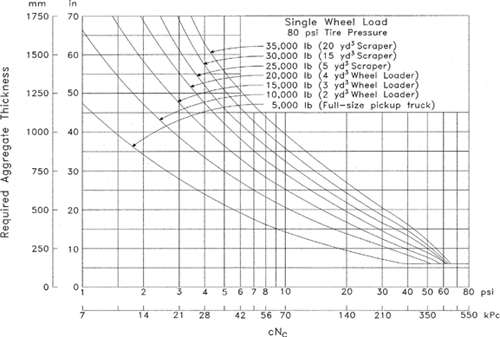
(b)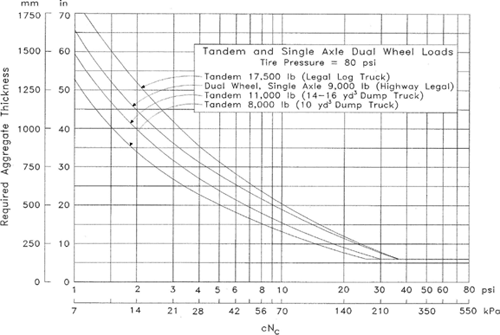
Field installation procedures introduce a number of special concerns; the AASHTO M288 standard includes a guide specification for geotextile construction. FHWA HI-905-038 (Holtz et al. 1998) recommends that this specification be modified to suit local conditions and contractors and provides example specifications. Concerns and criteria for field installation include, for example, the seam lap and sewing requirements, and construction sequencing and quality control.
7.6.5 Admixture Stabilization
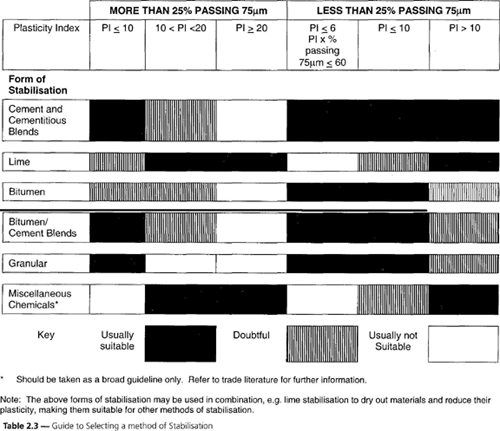
As previously indicated in Section 7.6.1, there are a variety of admixtures that can be mixed with the subgrade to improve its performance. The various admixture types are shown in Table 7-16, along with initial guidance for evaluating the appropriate application of these methods. Following is a general overview of each method, followed by a generalized outline for determining the optimum admixture content requirements. Design details for each specific method are contained in Appendix F.
Table 7-16. Guide for selection of admixture stabilization method(s) (Austroads, 1998).
Lime Treatment
Lime treatment or modification consists of the application of 1 - 3% hydrated lime to aid drying of the soil and permit compaction. As such, it is useful in the construction of a "working platform" to expedite construction. Lime modification may also be considered to condition a soil for follow-on stabilization with cement or asphalt. Lime treatment of subgrade soils is intended to expedite construction, and no reduction in the required pavement thickness should be made.
Lime may also be used to treat expansive soils, as discussed in Section 7.3. Expansive soils as defined for pavement purposes are those that exhibit swell in excess of 3%. Expansion is characterized by heaving of a pavement or road when water is imbibed in the clay minerals. The plasticity characteristics of a soil often are a good indicator of the swell potential, as indicated in Table 7-17. If it has been determined that a soil has potential for excessive swell, lime treatment may be appropriate. Lime will reduce swell in an expansive soil to greater or lesser degrees, depending on the activity of the clay minerals present. The amount of lime to be added is the minimum amount that will reduce swell to acceptable limits. Procedures for conducting swell tests are indicated in the ASTM D 1883 CBR test and detailed in ASTM D 4546.
| Liquid Limit | Plasticity Index | Potential Swell |
|---|---|---|
| > 60 | > 35 | High |
| 50 - 60 | 25 - 35 | Marginal |
| < 50 | < 25 | Low |
The depth to which lime should be incorporated into the soil is generally limited by the construction equipment used. However, 0.6 - 1 m (2 - 3 ft) generally is the maximum depth that can be treated directly without removal of the soil.
Lime Stabilization
Lime or pozzolanic stabilization of soils improves the strength characteristics and changes the chemical composition of some soils. The strength of fine-grained soils can be significantly improved with lime stabilization, while the strength of coarse-grained soils is usually moderately improved. Lime has been found most effective in improving workability and reducing swelling potential with highly plastic clay soils containing montmorillonite, illite, and kaolinite. Lime is also used to reduce the water content of wet soils during field compaction. In treating certain soils with lime, some soils are produced that are subject to fatigue cracking.
Lime stabilization has been found to be an effective method to reduce the volume change potential of many soils. However, lime treatment of soils can convert the soil that shows negligible to moderate frost heave into a soil that is highly susceptible to frost heave, acquiring characteristics more typically associated with silts. It has been reported that this adverse effect has been caused by an insufficient curing period. Adequate curing is also important if the strength characteristics of the soil are to be improved.
The most common varieties of lime for soil stabilization are hydrated lime [Ca(OH)2], quicklime [CaO], and the dolomitic variations of these high-calcium limes [Ca(OH)2×MgO and CaO×MgO]. While hydrated lime remains the most commonly used lime stabilization admixture in the U.S., use of the more caustic quicklime has grown steadily over the past two decades. Lime is usually produced by calcining2 limestone or dolomite, although some lime-typically of more variable and poorer quality-is also produced as a byproduct of other chemical processes.
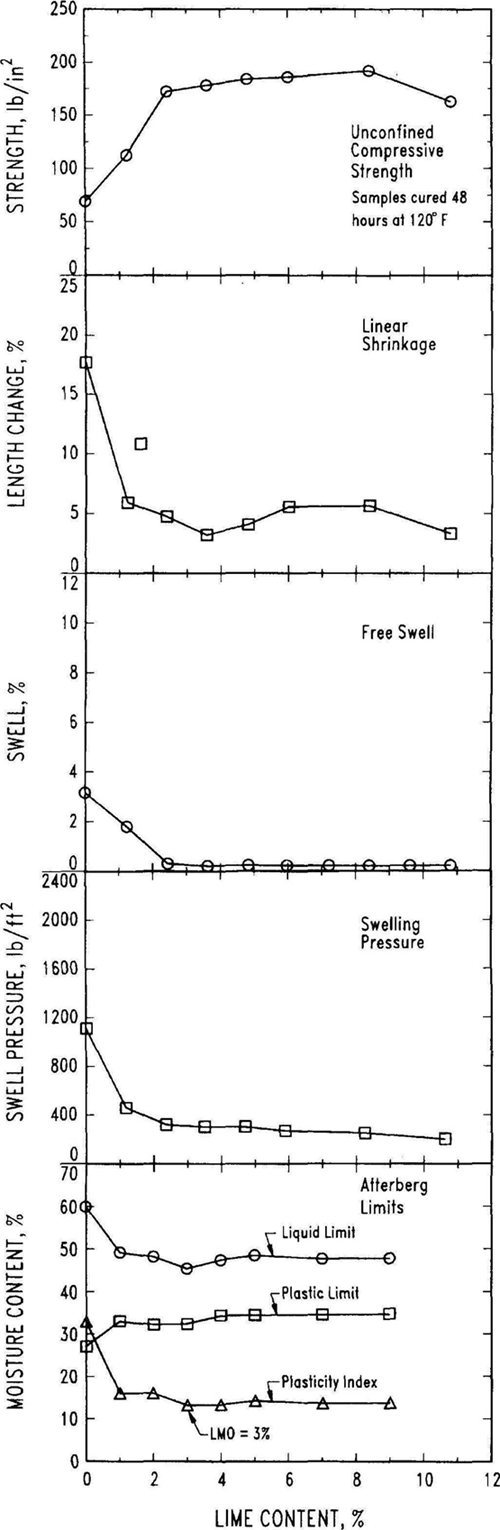
For lime stabilization of clay (or highly plastic) soils, the lime content should be from 3 - 8% of the dry weight of the soil, and the cured mass should have an unconfined compressive strength of at least 0.34 MPa (50 psi) within 28 days. The optimum lime content should be determined with the use of unconfined compressive strength and the Atterberg limits tests on laboratory lime-soil mixtures molded at varying percentages of lime. As discussed later in this section, pH can be used to determine the initial, near optimum lime content value. The pozzolanic strength gain in clay soils depends on the specific chemistry of the soil - e.g., whether it can provide sufficient silica and alumina minerals to support the pozzolanic reactions. Plasticity is a rough indicator of reactivity. A plasticity index of about 10 is commonly taken as the lower limit for suitability of inorganic clays for lime stabilization. The lime-stabilized subgrade layer should be compacted to a minimum density of 95%, as defined by AASHTO T99.
Typical effects of lime stabilization on the engineering properties of a variety of natural soils are shown in Table 7-18 and Figure 7-22. These are the result of several chemical processes that occur after mixing the lime with the soil. Hydration of the lime absorbs water from the soil and causes an immediate drying effect. The addition of lime also introduces calcium (Ca+2) and magnesium (Mg+2) cations that exchange with the more active sodium (Na+) and potassium (K+) cations in the natural soil water chemistry; this cation exchange reduces the plasticity of the soil, which, in most cases, corresponds to a reduced swell and shrinkage potential, diminished susceptibility to strength loss with moisture, and improved workability. The changes in the soil-water chemistry also lead to agglomeration of particles and a coarsening of the soil gradation; plastic clay soils become more like silt or sand in texture after the addition of lime. These drying, plasticity reduction, and texture effects all occur very rapidly (usually with 1 hour after addition of lime), provided there is thorough mixing of the lime and the soil.
| Soil | Lime % | Atterberg Limits | Strength | |||
|---|---|---|---|---|---|---|
| LL | PL | PI | qua | CBR | ||
| 1. CH, residual clayb | ||||||
| (a) Site 1, Dallas-Ft. Worth Airport, residuum from Eagle Ford shale, Britton member | 0 | 63 | 33 | 30 | 76 | |
| 2 | 62 | 48 | 14 | 123 | ||
| 3 | 60 | 47 | 13 | 202 | ||
| 4 | 56 | 46 | 10 | 323 | ||
| (b) Site 2, Dallas-Ft. Worth Airport, residuum from Eagle Ford shale, Tarrant member | 0 | 60 | 27 | 33 | 70 | |
| 2 | 48 | 32 | 16 | 171 | ||
| 3 | 45 | 32 | 13 | 177 | ||
| 5 | 48 | 34 | 14 | 184 | ||
| (c) Site 3, Irving, Texas, residuum from Eagle Ford shale, Britton member | 0 | 76 | 31 | 45 | 64 | |
| 2 | 61 | 45 | 16 | 116 | ||
| 3 | 56 | 45 | 11 | 193 | ||
| 5 | 57 | 45 | 12 | 302 | ||
| 2. CH, Bryce silty clayc, Illinois, B-horizon | 0 | 53 | 24 | 29 | 81 | |
| 3 | 48 | 27 | 21 | 201 | ||
| 5 | NP | NP | NP | 212 | ||
| 3. CH, Appling sandy loam3, South Carolina, residuum from granite | 0 | 71 | 33 | 38 | 92 | |
| 3 | 147 | |||||
| 6 | 171 | |||||
| 8 | 206 | |||||
| 4. CH, St Ann red bauxite clay loamd, Jamaica, limestone residuum | 0 | 58 | 25 | 33 | 119 | |
| 3 | 127 | |||||
| 5 | 334 | |||||
| 5. CLe, Pelucia Creek Dam, Mississippi | 0 | 29 | 18 | 11 | ||
| 1 | 32 | 19 | 13 | |||
| 2 | 31 | 22 | 9 | |||
| 3 | 30 | 21 | 9 | |||
| 6. CL, Illinoian till, Illinoisc, glacial till | 0 | 26 | 15 | 11 | 43 | |
| 3 | 27 | 21 | 6 | 126 | ||
| 5 | NP | NP | NP | 126 | ||
| 7. SC, sandy clay, San Lorenzo, Hondurasf | 0 | 54 | 23 | 31 | 8 | |
| 5 | 61 | 38 | 23 | 20 | ||
| 8. MH, Surinam red earthd, Surinam, residuum from acidic metamorphic rock | 0 | 60 | 32 | 28 | 72 | |
| 3 | 130 | |||||
| 5 | 136 | |||||
| 9. OH, organic soil with 8.1% organicsg | 0 | 63 | 27 | 36 | 4 | |
| 2 | 36 | 4 | ||||
| 4 | 24 | 8 | ||||
| 8 | 25 | 7 | ||||
- Unconfined compressive strength in psi at 28 days unless otherwise noted; different compaction efforts used by investigators.
- McAllister and Petry, 1990, accelerated curing.
- Thompson, 1966.
- Harty, 1971, 7-day cure.
- McElroy, 1989.
- Personal communication, Dr. Newel Brabston, Vicksburg, Mississippi.
- Arman and Munfakh, 1972, limits at 48 hours, qu at 28 days, strength samples prepared with moisture content at the LL.
Figure 7-22. Effect of lime content on engineering properties of a CH clay (from Rollings and Rollings, 1996; from data reported by McCallister and Petry, 1990).
When soils are treated properly with lime, it has been observed that the lime-soil mixture may be subject to durability problems, the cyclic freezing and thawing of the soil. The durability of lime stabilization on swell potential and strength may be adversely affected by environmental influences:
- Water: Although most lime stabilized soils retain 70% to 85% of their long-term strength gains when exposed to water, there have been reported cases of poor strength retention for stabilized soils exposed to soaking. Therefore, testing of stabilized soils in the soaked condition is prudent.
- Freeze/thaw cycles: Freeze/thaw cycles can lead to strength deterioration, but subsequent healing often occurs where the strength loss caused by winter freeze/thaw reverses during the following warm season. The most common design approach is to specify a sufficiently high initial strength gain to retain sufficient residual strength after freeze/thaw damage.
- Leaching: Leaching of calcium can decrease the cation exchange in lime stabilized soil, which, in turn, can reverse the beneficial reduction in plasticity and swell potential. The potential for these effects is greater when low lime contents are used.
- Carbonation: If atmospheric carbon dioxide combines with lime to form calcium carbonate, the calcium silicate and calcium aluminate hydrate cements may become unstable and revert back to their original silica and alumina forms, reversing the long-term strength increase resulting from the pozzolanic reactions. Although this problem has been reported less in the United States than in other countries, its possibility should be recognized and its potential minimized by use of ample lime content, careful selection, placement, and compaction of the stabilized material to minimize carbon dioxide penetration, as well as prompt placement after lime mixing, and good curing.
- Sulfate attack: Sulfates present in the soil or groundwater can combine with the calcium from the lime or the alumina from the clay minerals to form ettringite, which has a volume that is more than 200% larger than that of its constituents. Massive irreversible swelling can therefore occur, and the damage it causes can be quite severe. It is difficult to predict the combinations of sulfate content, lime content, clay mineralogy and content, and environmental conditions that will trigger sulfate attack. Consequently, if there is a suspicion of possible sulfate attack, the lime stabilized soil should be tested in the laboratory to see whether it will swell when mixed and exposed to moisture.
Soils classified as CH, CL, MH, ML, SC, and GC with a plasticity index greater than 12 and with 10% passing the 0.425 mm (No. 40) sieve are potentially suitable for stabilization with lime. Lime-flyash stabilization is applicable to a broader range of soils because the cementing action of the material is less dependent on the fines contained within the soil. However, long-term durability studies of pavements with lime-flyash stabilization are rather limited.
Hydrated lime, in powder form or mixed with water as a slurry, is used most often for stabilization.
Cement Stabilization
Portland cement is widely used for stabilizing low-plasticity clays, sandy soils, and granular soils to improve the engineering properties of strength and stiffness. Increasing the cement content increases the quality of the mixture. At low cement contents, the product is generally termed cement-modified soil. A cement-modified soil has improved properties of reduced plasticity or expansive characteristics and reduced frost susceptibility. At higher cement contents, the end product is termed soil-cement or cement-treated base, subbase, or subgrade.
For soils to be stabilized with cement, proper mixing requires that the soil have a PI of less than 20% and a minimum of 45% passing the 0.425 mm (No. 40) sieve. However, highly plastic clays that have been pretreated with lime or flyash are sometimes suitable for subsequent treatment with Portland cement. For cement stabilization of granular and/or nonplastic soils, the cement content should be 3 - 10% of the dry weight of the soil, and the cured material should have an unconfined compressive strength of at least 1 MPa (150 psi) within 7 days. The Portland cement should meet the minimum requirements of AASHTO M 85. The cement-stabilized subgrade should be compacted to a minimum density of 95% as defined by AASHTO M 134.
Several different types of cement have been used successfully for stabilization of soils. Type I normal Portland cement and Type IA air-entraining cements were used extensively in the past, and produced about the same results. At the present time, Type II cement has largely replaced Type I cement as greater sulfate resistance is obtained, while the cost is often the same. High early strength cement (Type III) has been found to give a higher strength in some soils. Type III cement has a finer particle size and a different compound composition than do the other cement types. Chemical and physical property specifications for Portland cement can be found in ASTM C 150.
The presence of organic matter and/or sulfates may have a deleterious effect on soil cement. Tests are available for detection of these materials and should be conducted if their presence is suspected.
- Organic matter. A soil may be acid, neutral, or alkaline and still respond well to cement treatment. Although certain types of organic matter, such as undecomposed vegetation, may not influence stabilization adversely, organic compounds of lower molecular weight, such as nucleic acid and dextrose, act as hydration retarders and reduce strength. When such organics are present, they inhibit the normal hardening process. If the pH of a 10:1 mixture (by weight) of soil and cement 15 minutes after mixing is at least 12.0, it is probable that any organics present will not interfere with normal hardening.
- Sulfates. Although sulfate attack is known to have an adverse effect on the quality of hardened Portland cement concrete, less is known about the sulfate resistance of cement stabilized soils. The resistance to sulfate attack differs for cement-treated, coarse-grained and fine-grained soils, and is a function of sulfate concentrations. Sulfate-clay reactions can cause deterioration of fine-grained soil-cement. On the other hand, granular soil-cements do not appear susceptible to sulfate attack. In some cases, the presence of small amounts of sulfate in the soil at the time of mixing with the cement may even be beneficial. The use of sulfate-resistant cement may not improve the resistance of clay-bearing soils, but may be effective in granular soil-cements exposed to adjacent soils and/or groundwater containing high sulfate concentrations. The use of cement for fine-grained soils containing more than about 1% sulfate should be avoided.
Stabilization with Lime-Flyash (LF) and Lime-Cement-Flyash (LCF)
Stabilization of coarse-grained soils having little or no fines can often be accomplished by the use of LF or LCF combinations. Flyash, also termed coal ash, is a mineral residual from the combustion of pulverized coal. It contains silicon and aluminum compounds that, when mixed with lime and water, forms a hardened cementitious mass capable of obtaining high compressive strengths. Lime and flyash in combination can often be used successfully in stabilizing granular materials, since the flyash provides an agent with which the lime can react. Thus LF or LCF stabilization is often appropriate for base and subbase course materials.
Flyash is classified according to the type of coal from which the ash was derived. Class C flyash is derived from the burning of lignite or subbituminous coal and is often referred to as "high lime" ash because it contains a high percentage of lime. Class C flyash is self-reactive or cementitious in the presence of water, in addition to being pozzolanic. Class F flyash is derived from the burning of anthracite or bituminous coal and is sometimes referred to as "low lime" ash. It requires the addition of lime to form a pozzolanic reaction. To be acceptable quality, flyash used for stabilization must meet the requirements indicated in ASTM C 593.
Design with LF is somewhat different from stabilization with lime or cement. For a given combination of materials (aggregate, flyash, and lime), a number of factors can be varied in the mix design process, such as percentage of lime-flyash, the moisture content, and the ratio of lime to flyash. It is generally recognized that engineering characteristics such as strength and durability are directly related to the quality of the matrix material. The matrix material is that part consisting of flyash, lime, and minus No. 4 aggregate fines. Basically, higher strength and improved durability are achievable when the matrix material is able to "float" the coarse aggregate particles. In effect, the fine size particles overfill the void spaces between the coarse aggregate particles. For each coarse aggregate material, there is a quantity of matrix required to effectively fill the available void spaces and to "float" the coarse aggregate particles. The quantity of matrix required for maximum dry density of the total mixture is referred to as the optimum fines content. In LF mixtures, it is recommended that the quantity of matrix be approximately 2% above the optimum fines content. At the recommended fines content, the strength development is also influenced by the ratio of lime to flyash. Adjustment of the lime-flyash ratio will yield different values of strength and durability properties.
Asphalt Stabilization
Generally, asphalt-stabilized soils are used for base and subbase construction. Use of asphalt as a stabilizing agent produces different effects, depending on the soil, and may be divided into three major groups: 1) sand-bitumen, which produces strength in cohesionless soils, such as clean sands, or acts as a binder or cementing agent, 2) soil-bitumen, which stabilizes the moisture content of cohesive fine-grained soils, and 3) sand-gravel bitumen, which provides cohesive strength and waterproofs pit-run gravelly soils with inherent frictional strength. The durability of bitumen-stabilized mixtures generally can be assessed by measurement of their water absorption characteristics. Treatment of soils containing fines in excess of 20% is not recommended.
Stabilization of soils and aggregates with asphalt differs greatly from cement and lime stabilization. The basic mechanism involved in asphalt stabilization of fine-grained soils is a waterproofing phenomenon. Soil particles or soil agglomerates are coated with asphalt that prevents or slows the penetration of water that could normally result in a decrease in soil strength. In addition, asphalt stabilization can improve durability characteristics by making the soil resistant to the detrimental effects of water, such as volume. In noncohesive materials, such as sands and gravel, crushed gravel, and crushed stone, two basic mechanisms are active: waterproofing and adhesion. The asphalt coating on the cohesionless materials provides a membrane that prevents or hinders the penetration of water and thereby reduces the tendency of the material to lose strength in the presence of water. The second mechanism has been identified as adhesion. The aggregate particles adhere to the asphalt and the asphalt acts as a binder or cement. The cementing effect thus increases shear strength by increasing cohesion. Criteria for design of bituminous-stabilized soils and aggregates are based almost entirely on stability and gradation requirements. Freeze-thaw and wet-dry durability tests are not applicable for asphalt-stabilized mixtures.
There are three basic types of bituminous-stabilized soils, including:
- Sand bitumen. A mixture of sand and bitumen in which the sand particles are cemented together to provide a material of increased stability.
- Gravel or crushed aggregate bitumen. A mixture of bitumen and a well-graded gravel or crushed aggregate that, after compaction, provides a highly stable waterproof mass of subbase or base course quality.
- Bitumen lime. A mixture of soil, lime, and bitumen that, after compaction, may exhibit the characteristics of any of the bitumen-treated materials indicated above. Lime is used with materials that have a high PI, i.e., above 10.
Bituminous stabilization is generally accomplished using asphalt cement, cutback asphalt, or asphalt emulsions. The type of bitumen to be used depends upon the type of soil to be stabilized, method of construction, and weather conditions. In frost areas, the use of tar as a binder should be avoided because of its high temperature susceptibility. Asphalts are affected to a lesser extent by temperature changes, but a grade of asphalt suitable to the prevailing climate should be selected. As a general rule, the most satisfactory results are obtained when the most viscous liquid asphalt that can be readily mixed into the soil is used. For higher quality mixes in which a central plant is used, viscosity-grade asphalt cements should be used. Much bituminous stabilization is performed in-place, with the bitumen being applied directly on the soil or soil aggregate system, and the mixing and compaction operations being conducted immediately thereafter. For this type of construction, liquid asphalts, i.e., cutbacks and emulsions, are used. Emulsions are preferred over cutbacks because of energy constraints and pollution control efforts. The specific type and grade of bitumen will depend on the characteristics of the aggregate, the type of construction equipment, and the climatic conditions. Generally, the following types of bituminous materials will be used for the soil gradation indicated:
- Open-graded aggregate.
- Rapid- and medium-curing liquid asphalts RC-250, RC-800, and MC-3000.
- Medium-setting asphalt emulsion MS-2 and CMS-2.
- Well-graded aggregate with little or no material passing the 0.075 mm (No. 200) sieve.
- Rapid and medium-curing liquid asphalts RC-250, RC-800, MC-250, and MC-800.
- Slow-curing liquid asphalts SC-250 and SC-800.
- Medium-setting and slow-setting asphalt emulsions MS-2, CMS-2, SS-1, and CSS-1.
- Aggregate with a considerable percentage of fine aggregates and material passing the 0.075 mm (No. 200) sieve.
- Medium-curing liquid asphalt MC-250 and MC-800.
- Slow-curing liquid asphalts SC-250 and SC-800
- Slow-setting asphalt emulsions SS-1, SS-01h, CSS-1, and CSS-lh.
The simplest type of bituminous stabilization is the application of liquid asphalt to the surface of an unbound aggregate road. For this type of operation, the slow- and medium-curing liquid asphalts SC-70, SC-250, MC-70, and MC-250 are used.
The recommended soil gradations for subgrade materials and base or subbase course materials are shown in Tables 7-19 and 7-20, respectively.
| Sieve Size | Percent Passing |
|---|---|
| 75-mm (3-in.) | 100 |
| 4.75-mm (#4) | 50-100 |
| 600-µm (#30) | 38-100 |
| 75-µm (#200) | 2-30 |
| Sieve Size | 37.5 mm (1½ in.) Maximum | 25 mm (1-in.) Maximum | 19 mm (¾-in.) Maximum | 12.7 mm (½-in.) Maximum |
|---|---|---|---|---|
| 37.5-mm (1½-in.) | 100 | - | - | - |
| 25-mm (l-in.) | 84 ± 9 | 100 | - | - |
| 19-mm (¾-in.) | 76 ± 9 | 83 ± 9 | 100 | - |
| M-in | 66 ± 9 | 73 ± 9 | 82 ± 9 | 100 |
| 9.5-mm (3/8-in.) | 59 ± 9 | 64 ± 9 | 72 ± 9 | 83 ± 9 |
| 0.475-mm (#4) | 45 ± 9 | 48 ± 9 | 54 ± 9 | 62 ± 9 |
| 2.36-mm (#8) | 35 ± 9 | 36 ± 9 | 41 ± 9 | 47 ± 9 |
| 1.18-mm (#16) | 27 ± 9 | 28 ± 9 | 32 ± 9 | 36 ± 9 |
| 600-mm (#30) | 20 ± 9 | 21 ± 9 | 24 ± 9 | 28 ± 9 |
| 300-mm (#50) | 14 ± 7 | 16 ± 7 | 17 ± 7 | 20 ± 7 |
| 150-mm (#100) | 9 ± 5 | 11 ± 5 | 12 ± 5 | 14 ± 5 |
| 75-mm (#200) | 5 ± 2 | 5 ± 2 | 5 ± 2 | 5 ± 2 |
Stabilization with Lime-Cement and Lime-Bitumen
The advantage of using combination stabilizers is that one of the stabilizers in the combination compensates for the lack of effectiveness of the other in treating a particular aspect or characteristic of a given soil. For instance, in clay areas devoid of base material, lime has been used jointly with other stabilizers, notably Portland cement or asphalt, to provide acceptable base courses. Since Portland cement or asphalt cannot be mixed successfully with plastic clays, the lime is added first to reduce the plasticity of the clay. While such stabilization practice might be more costly than the conventional single stabilizer methods, it may still prove to be economical in areas where base aggregate costs are high. Two combination stabilizers are considered in this section: lime-cement and lime-asphalt.
- Lime-cement. Lime can be used as an initial additive with Portland cement, or as the primary stabilizer. The main purpose of lime is to improve workability characteristics, mainly by reducing the plasticity of the soil. The design approach is to add enough lime to improve workability and to reduce the plasticity index to acceptable levels. The design lime content is the minimum that achieves desired results. The design cement content is determined following procedures for cement-stabilized soils presented in Appendix F.
- Lime-asphalt. Lime can be used as an initial additive with asphalt, or as the primary stabilizer. The main purpose of lime is to improve workability characteristics and to act as an anti-stripping agent. In the latter capacity, the lime acts to neutralize acidic chemicals in the soil or aggregate that tend to interfere with bonding of the asphalt. Generally, about 1 - 2% percent lime is all that is needed for this objective. Since asphalt is the primary stabilizer, the procedures for asphalt-stabilized materials, as presented Appendix F, should be followed.
Admixture Design
Design of admixtures takes on a similar process regardless of the admixture type. The following steps are generally followed and are generic to lime, cement, L-FA and L-C-FA, or asphalt admixtures.
Step 1. Classify soil to be stabilized.
- (% < 0.075 mm - No. 200 sieve, % < 0.425 mm - No. 40 Sieve, PI, etc.)
Step 2. Prepare trial mixes with varying % content.
- Lime: Select lowest % with pH = 12.4 in 1 hour
- Cement: Use table to estimate cement content requirements
- Asphalt: Use equation & table in Appendix F to estimate the quantity of cutback asphalt
Step 3. Develop moisture-density relationship for initial design.
Step 4. Prepare triplicate samples and cure specimens at target density.
- Use optimum water content and % initial admixture, +2% and +4%
Step 5. Determine index strength.
- Lime and Cement: Determine unconfined compressive strength (ASTM D 5102)
- Asphalt: Determine Marshall stability
Step 6. Determine resilient modulus for optimum percent admixture.
- Perform test or estimate using correlations (See Chapter 5)
Step 7. Conduct freeze-thaw tests (Regional as required).
- (For Cement, CFA, L-C-FA)
Step 8. Select % to achieve minimum design strength and F-T durability.
Step 9. Add 0.5 - 1% to compensate for non-uniform mixing.
Appendix F provides specific design requirements and design step details for each type of admixture reviewed in this section. Additional design and construction information can also be obtained from industry publications including:
- Soil-Cement Construction Handbook, Portland Cement Association, Skokie, IL, 1995.
- Lime-Treated Soil Construction Manual: Lime Stabilization & Lime Modification, National Lime Association, Arlington, Virginia, 2004.
- Flexible Pavement Manual, American Coal Ash Association, Washington, D.C., 1991.
- A Basic Emulsion Manual, Asphalt Institute, Manual Series #19.
- http://www.cement.org/
- http://www.lime.org/
7.6.6 Soil Encapsulation
Soil encapsulation is a foundation improvement technique that has been used to protect moisture sensitive soils from large variations in moisture content. The concept of soil encapsulation is to keep the fine-grained soils at or slightly below optimum moisture content, where the strength of these soils can support heavier trucks and traffic. This technique has been used by a number of states (e.g., Texas and Wyoming) on selected projects to improve the foundations of higher volume roadways. It is more commonly used as a technique in Europe and in foundation or subbase layers for low-volume roadways, where the import of higher quality paving materials is restricted from a cost standpoint. More than 100 projects have been identified around the world, usually reporting success in controlling expansive soils (Steinberg, 1998).
Fine-grained soils can provide adequate bearing strengths for use as structural layers in pavements and embankments, as long as the moisture content remains below the optimum moisture content. However, increases in moisture content above the optimum value can cause a significant reduction in the stiffness (i.e., resilient modulus) and strength of fine-grained materials and soils. Increased moisture content in fine-grained soils below pavements occurs over time, especially in areas subject to frost penetration and freeze-thaw cycles. Thus, fine-grained soils cannot be used as a base or subbase layer unless the soils are protected from any increase in moisture.
The soil encapsulation concept, sometimes referred to as membrane encapsulated soil layer (MESL), is a method for maintaining the moisture content of the soil at the desired level by encapsulating the soil in waterproof membranes. The waterproof membranes prevent water from infiltrating the moisture sensitive material. The resilient modulus measured at or below optimum conditions remains relatively constant over the design life of the pavement.
The prepared subgrade is normally sprayed with an asphalt emulsion before the bottom membrane of polyethylene is placed. This asphalt emulsion provides added waterproofing protection in the event the membrane is punctured during construction operations, and acts as an adhesive for the membrane to be placed in windy conditions. The first layer of soil is placed in sufficient thickness such that the construction equipment will not displace the underlying material. The completed soil embankment is also sprayed with an asphalt emulsion before placement of the top membrane. To form a complete encapsulation, the bottom membrane is brought up the sides and wrapped around the top, for an excavated section, or the top membrane is draped over the sides, for an embankment situation. The top of the membrane is sprayed with the same asphalt emulsion and covered with a thin layer of clean sand to blot the asphalt and to provide added protection against puncture by the construction equipment used to place the upper paving layers.
The reliability of this method to maintain the resilient modulus and strength of the foundation soil over long periods of time is unknown. More importantly, roadway maintenance and the installation of utilities in areas over time limit the use of this technique. Thus, this improvement technique is not suggested unless there is no other option available.
If this technique is used, the pavement designer should be cautioned regarding the use of the environmental effects model (EICM) to predict changes in moisture over time. Special design computations will be needed to restrict the change in moisture content of the MESL over time. The resilient modulus used in design for the MESL should be held constant over the design life of the pavement. The designer should also remember that any utilities placed after pavement construction could make that assumption invalid.
7.6.7 Lightweight Fill
When constructing pavements on soft soils, there is always a concern for settlement. For deeper deposits where shallow surface stabilization may not be effective, thicker granular aggregate as discussed in Section 7.3, may be effective for control deformation under wheel load, but would increase the concern for settlement. An alternate to replacement with aggregate would be to use lightweight fill.
The compacted unit density of most soil deposits consisting of sands, silts, or clays ranges from about 1,800 - 2,200 kg/m3 (112 - 137 lbs/ft3) Lightweight fill materials are available from the lower end of this range down to 12 kg/m3 ( 0.75 lbs/ft3). In many cases, the use of lighter weight materials on soft soils will likely result in both reduced settlement and increased stability. The worldwide interest and use of lightweight fill materials has led to the recent publication by the Permanent International Association of Road Congresses (PIARC) of an authoritative reference "Lightweight Filling Materials" in 1997.
Many types of lightweight fill materials have been used for roadway construction. Some of the more common lightweight fills are listed in Table 7-21. There is a wide range in density of the lightweight fill materials, but all have a density less than conventional soils. Additional information on the composition and sources of the lightweight fill materials listed in Table 7-21 can be found in FHWA NHI-04-001 Ground Improvement Methods technical summaries.
| Fill Type | Range in Density kg/m3 | Range in Specific Gravity | Approximate Cost1 $/m3 |
|---|---|---|---|
| Geofoam (EPS) | 12 to 32 | 0.01 to .03 | 40.00 to 85.002 |
| Foamed Concrete | 320 to 970 | 0.3 to 0.8 | 40.00 to 55.00 |
| Wood Fiber | 550 to 960 | 0.6 to 1.0 | 12.00 to 20.002 |
| Shredded Tires | 600 to 900 | 0.6 to 0.9 | 20.00 to 30.002 |
| Expanded Shale And Clay | 600 to 1040 | 0.6 to 1.0 | 40.00 to 55.003 |
| Flyash | 1120 to 1440 | 1.1 to 1.4 | 15.00 to 21.003 |
| Boiler Slag | 1000 to 1750 | 1.0 to 1.8 | 3.00 to 4.003 |
| Air-Cooled Slag | 1100 to 1500 | 1.1 to 1.5 | 7.50 to 9.003 |
- See Chapter 6 for details on cost data
- Price includes transportation and placement cost
- FOB plant
Some lightweight fill materials have been used for decades, while others are relatively recent developments. Wood fiber has been used for many years by timber companies for roadways crossing peat bogs and low-lying land, as well as for repair of slide zones.
The steel-making companies have produced slag since the start of the iron and steel making industry. Initially, the slag were stockpiled as waste materials, but beginning around 1950, the slag were crushed, graded, and sold for fill materials.
Geofoam is a generic term used to describe any foam material used in a geotechnical application. Geofoam includes expanded polystyrene (EPS), extruded polystyrene (XPS), and glassfoam (cellular glass). Geofoam was initially developed for insulation material to prevent frost from penetrating soils. The initial use for this purpose was in Scandinavia and North America in the early 1960s. In 1972, the use of geofoam was extended as a lightweight fill for a project in Norway.
The technique of using pumping equipment to inject foaming agents into concrete was developed in the late 1930s. Little is known about the early uses of this product. However, the U.S. Army Corps of Engineers used foamed concrete as a tunnel lining and annular fill. This product is generally job-produced as a cement/water slurry with preformed foam blended for accurate control and immediate placement.
Shredded tires and tire bales are a relatively recent source of lightweight fill materials. The availability of this material is increasing each year, and its use as a lightweight fill is further promoted by the need to dispose of tires. In most locations, the tires are stockpiled, but they are unsightly and present a serious fire and health hazard. Shredded tires have been used for lightweight fill in the United States and in other countries since the mid 1980s. More than 85 fills using shredded tires as a lightweight fill have been constructed in the United States. In 1995, three tire shred fills with a thickness greater than 8 m (26 ft) experienced an unexpected internal heating reaction. As a result, FHWA issued an Interim Guideline to minimize internal heating of tire shred fills in 1997, limiting tire shred layers to 3 m (9.8 ft).
Expanded shale lightweight aggregate has been used for decades to produce aggregate for concrete and masonry units. Beginning in about 1980, lightweight aggregates have also been used for geotechnical purposes. Completed projects include the Port of Albany, New York marine terminal, where lightweight fill was used behind a bulkhead to reduce the lateral pressures on the steel sheeting. Other projects include construction of roadways over soft ground. The existing high-density soils were partially removed and replaced with lightweight aggregate to reduce settlement. Other projects have included improvement of slope stability by reduction of the gravitational driving force of the soil in the slope and replacement with a lightweight fill.
Waste products from coal burning include flyash and boiler slag. Both of these materials have been used in roadway construction. One of the first documented uses of flyash in an engineered highway embankment occurred in England in 1950. Trial embankments led to the acceptance of flyash fills, and other roadway projects were constructed in other European countries. In 1965, a flyash roadway embankment was constructed in Illinois. In 1984, a project survey found that flyash was used in the construction of 33 embankments and 31 area fills. Boiler slag has been used for backfill since the early 1970s. Many state highway department specifications allow the use of boiler slag as an acceptable fine or coarse aggregate.
The FHWA NHI-04-001 provides an overview of the more common lightweight fill materials that have been used for geotechnical applications in highway construction. Typical geotechnical engineering parameters that are important for design are provided. In addition, design and construction considerations unique to each of these lightweight fill materials are presented. This information can be used for preliminary planning purposes. The technical summary also presents guidelines for preparation of specifications along with suggested construction control procedures. Four case histories are also presented to demonstrate the effectiveness of lightweight fills for specific situations. Approximate costs for the various lightweight fill materials are also presented.
With regard to pavement design, if a minimum of 1 m (3 ft) of good quality gravel type fill is placed between the pavement structure and the lightweight materials as a cover, then the lightweight material will have little impact on pavement design, even for the more compressible tire and geofoam materials. However, if a thinner cover must be used, the support value for these materials must be determined. Lab tests can be used, as discussed in Chapter 5, especially for the granular type materials. The ideal method is to perform field resilient modulus tests on placed material (i.e., on cover soils after placement over the lightweight material(s)), especially for the bulkier materials, such as tires and geofoam.
7.6.8 Deep Foundations and Other Foundation Improvement Methods (from Elias et al., 2004)
In some cases, the extent (area and depth) of poor subgrade conditions are too large for surface stabilization or removal. In extreme cases, the soils may be too week to support the roadway embankment (even for embankments that only consist of the pavement structure). In these cases, other deep ground improvement methods, such as deep foundations, may be required. Ground improvement technologies are geotechnical construction methods used to alter and improve poor ground conditions so that embankment and structure construction can meet project performance requirements where soil replacement is not feasible for environmental or technical reasons, or it is too costly.
Ground improvement has one or more than one of the following main functions:
- to increase bearing capacity, shear or frictional strength,
- to increase density,
- to control deformations,
- to accelerate consolidation,
- to decrease imposed loads,
- to provide lateral stability,
- to form seepage cutoffs or fill voids,
- to increase resistance to liquefaction and,
- to transfer embankment loads to more competent layers
There are three strategies available to accomplish the above functions representing different approaches. The first method is to increase the shear strength, density, and/or decrease the compressibility of the foundation soil. The second method is to utilize a lightweight fill embankment to reduce significantly the applied load to the foundation, and the third method is to transfer loads to a more competent deeper layer.
The selection of candidate ground improvement methods for any specific project follows a sequential process. The steps in the process include a sequence of evaluations that proceed from simple to more detailed, allowing a best method to emerge. The process is described as follows:
- Identify potential poor ground conditions, their extent, and type of negative impact. Poor ground conditions are typically characterized by soft or loose foundation soils, which, under load, would cause long-term settlement, or cause construction or post-construction instability.
- Identify or establish performance requirements. Performance requirements generally consist of deformation limits (horizontal and vertical), as well as some minimum factors of safety for stability. The available time for construction is also a performance requirement.
- Identify and assess any space or environmental constraints. Space constraints typically refer to accessibility for construction equipment to operate safely, and environmental constraints may include the disposal of spoil (hazardous or not hazardous) and the effect of construction vibrations or noise.
- Assessment of subsurface conditions. The type, depth, and extent of the poor soils must be considered, as well as the location of the ground-water table. It is further valuable to have at least a preliminary assessment of the shear strength and compressibility of the identified poor soils.
- Preliminary selection. Preliminary selection of potentially applicable method(s) is generally made on a qualitative basis, taking into consideration the performance criteria, limitations imposed by subsurface conditions, schedule and environmental constraints, and the level of improvement that is required. Table 7-22, which groups the available methods in six broad categories, can be used as a guide in this process to identify possible methods and eliminate those that by themselves, or in conjunction with other methods, cannot produce the desired performance.
Table 7-22. Ground improvement categories, functions, methods and applications (Elias et al., 2004). Category Function Methods Comment Consolidation Accelerate consolidation, increase shear strength - Wick drains
- Vacuum consolidation
Viable for normally consolidated clays. Vacuum consolidation viable for very soft clays. Can achieve up to 90% consolidation in a few months. Load Reduction Reduce load on foundation, reduce settlement - Geofoam,
- Foamed concrete
- Lightweight granular fills, tire chips, etc.
Density varies from 1 - 12 kN/m3 (6 - 76 lb/ft3). Granular fills usage subject to local availability. Densification Increase density, bearing capacity and frictional strength of granular soils. Decrease settlement and increase resistance to liquefaction. - Vibro-compaction using vibrators
- Dynamic compaction by falling weight impact
Vibrocompaction viable for clean sands with < 15% fines. Dynamic compaction limited to depths of about 10 m (33 ft), but is applicable for a wider range of soils. Both methods can densify granular soils up to 80% Relative Density. Dynamic compaction generates vibrations for a considerable lateral distance.
Reinforcement Internally reinforces fills and/or cuts. In soft foundation soils, increases shear strength, resistance to liquefaction and decreases compressibility. - MSE retaining walls
- Soil Nailing walls
- Stone column to reinforce foundations
Soil Nailing may not applicable in soft clays or loose fills. Stone columns applicable in soft clay profiles to increase global shear strength and reduce settlement. Chemical Stabilization by Deep Mixing Methods Physio-chemical alteration of foundation soils to increase their tensile, compressive and shear strength, and to decrease settlement and/or provide lateral stability and or confinement. - Wet mixing methods using primarily cement
- Dry mixing methods using lime-cement
Applicable in soft to medium stiff clays for excavation support where the groundwater table must be maintained, or for foundation support where lateral restraint must be provided, or to increase global stability and decrease settlement. Requires significant QA/QC program for verification. Chemical Stabilization by Grouting To form seepage cutoffs, fill voids, increase density, increase tensile and compressive strength - Permeation grouting with particulate or chemical grouts
- Compaction grouting
- Jet grouting, and
- Bulk filling
- Permeation grouting to increase shear strength or for seepage control,
- compaction grouting for densification and
- jet grouting to increase tensile and/or compressive strength of foundations, and
- bulk filling of any subsurface voids.
Load Transfer Transfer load to deeper bearing layer Column (Pile) supported embankments on flexible geosynthetic mats Applicable for deep soft soil profiles or where a tight schedule must be maintained. A variety of stiff or semi-stiff piles can be used. - Preliminary design. A preliminary design is developed for each method identified under "Preliminary selection" and a cost estimate prepared on the basis of data in Table 7-23. The guidance in developing preliminary designs is contained within each Technical Summary.
Table 7-23a. Comparative Costs (SI units) (Elias et al., 2004). Method Unit Cost Cost of Treated Volume $/m3 Wick Drains $ 1.50 - 4.00/m $ 0.80 - 1.60 Lightweight Fill Granular $ 3.00 - 21.00/m3 Tires-Wood $ 12.00 - 30.00/m3 Geofoam $ 35.00 - 65.00/m3 Foamed Concrete $ 45.00 - 65.00/m3 Vibrocompaction $ 15.00 - 25.00/m $ 1.00 - 4.00 Dynamic Compaction $ 6.00 - 11.00/m2 $ 1.00 - 2.00 MSE Walls $ 160.00 - 300.00/m2 RSS Slopes $ 110.00 - 260.00/m2 Soil Nail Walls $ 400.00 - 600.00/m2 Stone Columns $ 40.00 - 60.00/m $ 50 - 75 Deep Soil Mixing Dry w/lime-cement $30.00/m $ 60 Wet w/cement $ 85 - 150 Grouting Permeation $ 65.00/m + $ 0.70/Liter Compaction $ 30 - 200 Jet $ 200 - 275 Column-Supported Embankments $ 95/m2 + cost of column n/a Table 7-23b. Comparative Costs (U.S. customary units) (Elias et al., 2004). Method Unit Cost Cost of Treated Volume $/yd3 Wick Drains $ 0.46 - 1.22/ft $ 0.60 - 1.20 Lightweight Fill Granular $ 2.30 - 16.10/yd3 Tires-Wood $ 9.20 - 23.00/yd3 Geofoam $ 26.75 - 50.00/yd3 Foamed Concrete $ 34.50 - 50.00/yd3 Vibrocompaction $ 4.60 - 7.60/ft $ 0.75 - 3.00 Dynamic Compaction $ 5.00 - 9.20/yd2 $ 0.75 - 1.50 MSE Walls $ 15.00 - 28.00/ft2 RSS Slopes $ 10.00 - 24.00/ft2 Soil Nail Walls $ 37.00 - 56.00/ft2 Stone Columns $ 12.20 - 18.30/ft $ 38 - 57 Deep Soil Mixing Dry w/lime-cement $9.15/ft $ 46 Wet w/cement $ 65 - 115 Grouting Permeation $ 20/ft + $ 2.65/Gallon Compaction $ 23 - 153 Jet $ 150 - 210 Column Supported Embankments $ 81.50/yd2 + cost of column n/a - Comparison and selection. The selected methods are then compared, and a selection made by considering performance, constructability, cost, and other relevant project factors.
State-of-the-art design and construction methods and/or references are provided in each of the FHWA NHI-04-001 Ground Improvement Methods technical summaries to form the basis of a final design. The success of any ground improvement method is predicated on the implementation of a QA/QC program to verify that the desired foundation improvement level has been reached. These programs incorporate a combination of construction observations, in-situ testing and laboratory testing to evaluate the treated soil in the field. Details are provided in each technical summary contained in the FHWA NHI-04-001.
7.7 Recycle
Recycling, in principal, is a very powerful and often political concept. While the benefits of recycling including conservation of aggregate and binders and preservation of the environment, it requires serious consideration. The long-term performance of recycled materials in pavements and, in come cases the environmental impact, must be carefully evaluated to avoid costly performance and maintenance issues. In this section, the evaluation requirements for recycled materials will be reviewed. There are two forms of recycling in pavements: 1) reuse of the pavement materials themselves and 2) the use of recycled waste materials for subgrade stabilization or as a substitute for aggregate.
7.7.1 Pavement Recycling
The method of recycling the pavement will, in most cases, depend on whether the surface pavement has an AC or PCC surface pavement. In either case, the material could be rubblized, or, in some cases, processed (e.g., sieving, stockpiling, and reusing the reclaimed asphalt pavement (RCP) materials or recycled concrete materials (RCM) plus the aggregate base). Both pavement types can also be rubblized in place and compacted. This procedure is known as rubblize and roll for PCC pavements and full-depth reclamation for AC pavements. For AC pavement materials, there are also several other methods, including hot mix asphalt recycling, hot in-place recycling, and cold in-place recycling, all of which produce a bound product, which is beyond the scope of this manual.
Recycled Asphalt
The design requirements for RCP aggregates are essentially the same as natural aggregates. The strength of the material must be determined using the methods outlined in Chapter 5 and Section 7.3, and an assessment must be made of the drainage characteristics, as discussed in Section 7.2. With full-depth reclamation, all of the asphalt pavement sections and a predetermined amount of underlying materials are treated with recycling agents to produce a stabilized base course, and is well covered in FHWA-SA-98-042 (Kandhal, and Mallick, 1997) . The advantages of this process are establishing high production rate and maintaining the geometry of the pavement or shoulder reconstruction. The primary drawbacks are aggregate size, depth limitation and depth control, and need for specialized equipment. With the sizing, RAP can often only be effectively screened down to a maximum size of 50 mm (2 in.). If a significant amount of contaminated base course (i.e., containing significant amount of fines) is removed with the asphalt, the hydraulic properties of the aggregate could also be poor.
Recycled Concrete
Again, the design requirements for RCM aggregates are essentially the same as natural aggregates. Recycled concrete has been used by a number of states as base materials since the 1980s. However, several states have identified three significant issues, including:
- the formation of tufa (calcium deposits) clogging drains and filter materials;
- alkaline (high pH) run-off; and,
- freeze thaw degradation.
As a result, these states are now primarily using the recycled concrete, mixed with natural soils, as embankment fill.
7.7.2 Recycled Waste Materials
A number of recycled waste materials have been used in permanent construction, practically all of which where covered in Section 7.6.7 since they have a lighter weight than conventional aggregate. Other applications not reviewed in Section 7.6.7 include the use of recycled materials as a replacement for base materials (e.g., slag and bottom ash) and, in some cases (e.g., glass and tire shreds) drainage aggregate. As indicated in Section 7.6.7, the materials must be evaluated with respect to the same property requirements as the material they will replace. The pavement support value (e.g., resilient modulus or CBR) should be determine based on lab tests reviewed in Chapter 5. Field trails using FWD tests to confirm the as constructed properties are also recommended. Durability is a critical issue with many of these materials, and, obviously, an assessment of environmental issues must be made.
7.8 References
- AASHTO (1993). AASHTO Guide for Design of Pavement Structures, American Association of State Highway and Transportation Officials, Washington, D.C.
- AASHTO (2004). Standard Specifications for Transportation Materials and Methods of Sampling and Testing (24rd ed.), American Association of State Highway and Transportation Officials, Washington, D.C.
- American Society for Testing & Materials (2000). ASTM Book of Standards, Vol. 4, Section 01, Construction Materials: Cement; Lime; Gypsum, ASTM, Philadelphia, PA.
- American Society for Testing & Materials (2000). ASTM Book of Standards, Vol. 4, Section 02, Construction Materials: Concrete and Aggregates, ASTM, Philadelphia, PA.
- American Society for Testing & Materials (2000). ASTM Book of Standards, Vol. 4, Section 08 and 09, Construction Materials: Soils & Rocks, ASTM, Philadelphia, PA.
- American Society for Testing & Materials (2000). ASTM Book of Standards, Vol. 4, Section 03, Construction Materials: Road and Paving Materials; Vehicle-Pavement Systems, ASTM, Philadelphia, PA.
- Austroads (1998). Guide to Stabilisation in Roadworks, Austroads Publication No. AP-60/98, Austroads Inc.
- Berg, R.R, Christopher, B.R. and Perkins, S.W. (2000). Geosynthetic Reinforcement of the Aggregate Base/Subbase Courses of Pavement Structures, GMA White Paper II, Geosynthetic Materials Association, Roseville, MN, USA, 176 p.
- Bhatti, M.A., Barlow, J.A., and Stoner, J.W. (1996). "Modeling Damage to Rigid Pavements Caused by Subgrade Pumping," ASCE, Journal of Transportation Engineering, Vol. 122, No. 1, pp. 12-21.
- Blanco, A.M., Bowders, J.J., Donahue, J.P. (2003). "Laboratory and In-Situ Hydraulic Conductivity of Pavement Bases in Missouri," presented at the Subsurface Drainage Session, TRB Annual Conference, TRB, Washington, D.C.
- CALTRANS (1995) Design Criteria for Portland Cement Concrete Pavements (PCCP). Design Information Bulletin No. 80., California Department of Transportation, Sacramento, CA.
- Carpenter, S. H., M. I. Darter, and B. J. Dempsey (1979) "Evaluation of Pavement Systems for Moisture-Accelerated Distress." Transportation Research Record 705, Transportation Research Board, Washington, D.C.
- Cedergren, H.R. (1987) Drainage of Highway and Airfield Pavements, Robert E. Krieger Publishing Co. Inc. Malabar, FL
- Cedergren, H. R. (1988) "Why All Important Pavements Should be Well Drained." Transportation Research Record 1188, Transportation Research Board, Washington, D.C.
- Christopher, B.R. and V.C. McGuffey (1997). Synthesis of Highway Practice 239: Pavement Subsurface Drainage Systems, National Cooperative Highway Research Program, Transportation Research Board, National Academy Press, Washington, D.C.
- Christopher, B.R. (2000) Maintenance of Highway Edgedrains, National Cooperative Highway Research Program, Synthesis of Highway Practice 285, Transportation Research Board, National Academy Press, Washington, D.C., 2000, 62 p.
- Christopher, B.R., Zhao, A., Hayden, S.A. (2002) "Geocomposite for Pavement Subsurface Drainage," Presentation at TRB Committee A2KO6 on Subsurface Drainage. 2002 Annual Transportation Research Board Meeting, Washington, DC; also see: Christopher, B.R., Hayden, S.A., and Zhao, A., (2000). "Roadway Base and Subgrade Geocomposite Drainage Layers," Testing and Performance of Geosynthetics in Subsurface Drainage, ASTM STP 1390, J.S. Baldwin and L.D. Suits, Eds., American Society for Testing and Materials, West Conshohocken, PA.
- Christory, J.P. (1990). "Assessment of PIARC Recommendations on the Combating of Pumping in Concrete Pavements," Proceedings of the Second International Workshop on the Design and the Evaluation of Concrete Pavements, Siguenza, Spain.
- Coduto, D.P. (1999). Geotechnical Engineering Principles and Practices, Prentice-Hall, Englewood Cliffs, NJ.
- Daleiden, J. (1998) Video Inspection of Highway Edgedrain Systems, Final Report, Brent Rauhut Engineering.
- Dawson A R and Hill A R. (1998) "Prediction and implication of water régimes in granular bases and sub-bases", Proc. Int. Symp. On Subdrainage in Roadway Pavements and Subgrades, Granada, Spain, pp 121-128.
- De Beer, M. (1990). "Erodibility of Cementitious Subbase Layers in Flexible and Rigid Pavements," 2nd International Workshop on the Theoretical Design of Concrete Pavements, Siguenza, Spain.
- Dempsey, B.J. (1982). "Laboratory and Field Studies of Channeling and Pumping," Transportation Research Board, Transportation Research Record 849, pp. 1-12.
- Elias, V., Welsh, J., Warren, J., Lukas, R., Collin, J.G., and Berg, R.R. (2004). Ground Improvement Methods, Participant Notebook, NHI Course 132034, FHWA NHI-04-001, National Highway Institute, Federal Highway Administration, Washington, D.C., 1022 pp.
- ERES Consultants, Inc. (1999). Pavement Subsurface Drainage Design, Participants Reference Manual for NHI Course Number 131026, National Highway Institute, Federal Highway Administration.
- Fehsenfeld, F. M. (1988) Performance of Open-Graded "Big Rock Mixes" in Tennessee and Indiana, National Asphalt Pavement Association, Riverdale, MD.
- FHWA HI-95-038 (1998 revision), Geosynthetic Design and Construction Guidelines, Participant Notebook, NHI Course No. 13213, FHWA Publication No. FHWA HI-95-038 (revised), authors: Holtz, R.D., Christopher, B.R., and Berg, R.R., Federal Highway Administration, Washington, DC.
- FHWA (1992) Drainable Pavement Systems - Participant Notebook. (Demonstration Project 87). Publication No. FHWA-SA-92-008. Federal Highway Administration, Washington, DC.
- FHWA (1994) Drainable Pavement Systems - Instructor's Guide. (Demonstration Project 87). Publication No. FHWA-SA-94-062. Office of Technology Applications and Office of Engineering, Federal Highway Administration, Washington, DC.
- Hagen, M.G., and G.R. Cochran (1995) "Comparison of Pavement Drainage Systems, Final Report," Minnesota Department of Transportation, Minneapolis, MN.
- Hindermann, W. L. (1968) The Swing to Full-Depth. Information Series No. 146, The Asphalt Institute, Lexington, KY.
- Holtz, R.D., Christopher, B.R., and Berg, R.R. (1998 revision). Geosynthetic Design and Construction Guidelines, Participant Notebook, NHI Course No. 132013, FHWA Publication No. FHWA HI-95-038 (revised), Federal Highway Administration, Washington, D.C.
- Holtz, R. D., and Kovacs, W. D. (1981). An Introduction to Geotechnical Engineering, Prenctice-Hall, Inc., Englewood Cliffs, NJ.
- Kandhal, P.S. and R.B. Mallick (1997) Pavement Recycling Guidelines for State and Local Governments. Federal Highway Administration Publication No. FHWA-SA-98-042, Washington, D.C.
- Kaplar, C.W. (1974). "A Laboratory Freezing Test to Determine the Relative Frost Susceptibility of Soils," Technical Report TR 250, Cold Regions Research and Engineering Laboratory (CRREL), U.S. Army Corps of Engineers, 1974.
- Koerner, R.M. (1998). Designing with Geosynthetics, 4th Edition, Upper Saddle River, NJ, Prentice Hall.
- McCallister, L.D. and Petry, T.M. (1990). Property Changes in Lime-Treated Expansive Clay Under Continuous Leaching, U.S. Army Corps of Engineers, Washington, D.C., No. GL-90-17.
- McKeen, R.G. (1976). Design and Construction of Airport Pavements on Expansive Soils. Report No. FAA-RD-76-66.
- NCHRP 1-37A (2004). Mechanistic-Empirical Design of New and Rehabilitated Pavement Structures, Final Report, National Cooperative Highway Research Program NCHRP Project 1-37A, Transportation Research Board, National Research Council, Washington, D.C.
- NHI 131033 Hot Mix Asphalt Pavement Evaluation and Rehabilitation
- NHI 131060A Concrete Pavement Design Details and Construction Practices
- NHI 13126 (Currently 131026) (1999) Pavement Subsurface Drainage Design, Participants Reference Manual, prepared by ERES Consultants, Inc, National Highway Institute, Federal Highway Administration, Washington, D.C.
- PIARC Technical Committee on Concrete Roads (1987). "Combating Concrete Pavement Slab Pumping."
- Rollings, M.P., and Rollings, R.S. Jr. (1996). Geotechnical Materials in Construction, McGraw-Hill, New York, NY.
- Sawyer, S. (1995) Establishment of Underdrain Maintenance Procedure. Report FHWA/OK95(04), Federal Highway Administration, Oklahoma City, OK.
- Seed, H.B. and C.K. Chan (1959) "Structure and Strength Characteristics of Compacted Clays," ASCE Journal of Soil Mechanics and Foundation Engineering, Vol. 85, No. 5, pp. 87-128.
- Snethen, D.R., L.D. Johnson, and D.M. Patrick (1977). An Evaluation of Expedient Methodology for Identification of Potentially Expansive Soils, Report No. FHWA-RD-77-94, Federal Highway Administration, Washington, D.C.
- Sowers, G.F. (1979) Introductory Soil Mechanics and Foundations: Geotechnical Engineering (4th edition), MacMillan, New York, NY.
- Steinberg. M.L. (1998). Geomembranes and the Control of Expansive Soils in Construction, McGraw Hill, Inc., New York, NY.
- Thompson, M.R. (1970). Soil Stabilization for Pavement Systems - State of the Art, Technical Report, Construction Engineering Research Laboratory, Champaign, IL.
- Ulmeyer, J.S., Pierce, L.M., Lovejoy, J.S., Gribner, M.R., Mahoney, J P, and Olson, G.D. (2002) "Design and Construction of Rock Cap Roadways: Case Study in Northeast Washington State" Prepared for presentation at the 2003 TRB Annual Meeting, Transportation Research Board, Washington D.C. Also see Transportation Research Record 1821.
- U.S. Army Corps of Engineers (1992). Engineering and Design Drainage Layers for Pavements, Engineer Technical Letter 1110-3-435, U.S. Army Corps of Engineers, Washington, D.C.
- USFS (1977) Guidelines for Use of Fabrics in Construction and Maintenance of Low-Volume Roads, authors: Steward, J., Williamson, R. and Mohney, J., USDA, Forest Service, Portland, OR. Also reprinted as Report No FHWA-TS-78-205.
- Witczak, M.W. (1972). "Relationships Between Physiographic Units and Highway Design Factors," Report 132, National Cooperative Highway Research Program, Highway Research Board, Washington, D.C.
- Yu, H. T., K. D. Smith, M. I. Darter, J. Jiang, L. Khazanovich (1998a). Performance of Concrete Pavements, Volume III - Improved Concrete Pavement Performance. FHWA-RD-95-111, Federal Highway Administration, McLean, VA.
- Yu, H. T., L. Khazanovich, S. P. Rao, M. I. Darter, H. Von Quintus (1998b) Guidelines for Subsurface Drainage Based on Performance. NCHRP 1-34 Final Report, National Cooperative Highway Research Program, Washington DC.
Notes
- Calcining is the heating of limestone or dolomite to a high temperature below the melting or fusing point that decomposes the carbonates into oxides and hydroxides. Return to Text
| << Previous | Contents | Next >> |