Rehabilitation of Jointed Portland Cement Concrete Pavements:
SPS-6, Initial Evaluation and Analysis
Chapter 4. MONITORING FREQUENCY
The frequency of the collection of monitoring data at each site
is critical to identifying the unique performance trends specific
to a particular rehabilitation alternative. For each monitoring
type, the frequency of the collection of monitoring data is
evaluated below, including pre- and post-monitoring collection and
long-term testing after rehabilitation.
DATA COLLECTION DIRECTIVES
During the lives of these pavement sections, multiple directives
have been issued regarding the testing frequency for each type of
monitoring data collected. These directives are rules published by
the FHWA-LTPP Division to ensure that consistent data are
collected, monitored, and stored. Some of these directives slightly
adjusted the testing intervals during the life of the program. All
of the known directives as of the time of this report that
reference the SPS-6 data collection monitoring frequency are listed
in table 18. This table also identifies directives that supersede
the previous directives.
Table 18. Directives that reference LTPP data collection
monitoring frequency.
| Directive |
Date Issued |
Supersedes |
| DCG, Section 3.2(3) |
May 1991 |
None |
| D-02(4) |
Jan. 7, 1991 |
None |
| D-05(5) |
Mar. 14, 1995 |
D-02 |
| D-09(6) |
Dec. 20, 1996 |
None |
| FWD-01(7) |
Jan. 15, 1993 |
None |
| FWD-02(8) |
May 7, 1993 |
None |
| FWD-03(9) |
Sept. 16, 1993 |
FWD-05 and FWD-12 |
| FWD-05 (Draft)(10) |
Feb. 27, 1991 |
FWD-01 |
| FWD-10(11) |
Sept. 1, 1994 |
FWD-03 (Parts A and B) |
| FWD-12(12) |
Aug. 30, 1991 |
FWD-02 |
| P-01(13) |
Mar. 9, 1994 |
All previous SHRP-LTPP Manual for Profile
Measurements, Manual for Dipstick Profile
Measurements, and SHRP Directive P-04 |
| P-02(14) |
Sept. 1, 1994 |
P-01 |
| GO-20(15) |
Mar. 23, 1999 |
DCG, Section 3.2 |
| GO-21(16) |
Oct. 1, 1999 |
D-05, FWD-10, and P-02 |
These directives were used to identify all previous testing
frequencies for each type of monitoring data collected and are
summarized in table 19. The testing frequencies are listed
chronologically from the oldest to the most recent within each cell
of the table. Therefore, the current-as of the time of this
report-testing frequency is listed at the bottom of each cell
within the table. This allows for easy review of all previous SPS-6
testing frequencies that had been specified during the data
collection process. Table 20 lists the current-again, as of the
time of this report-monitoring frequencies for data collection.
Table 19. Testing frequencies for collection of monitoring
data.
| Data Collection Type |
Before Construction |
After Construction |
Long Term |
| Longitudinal profile |
<3 months is desired1 but < 6 months is
permitted7 |
<2 months is desired1 <3 months is
desired7but < 6 months is permitted7 |
Biennially,7 but may be postponed up to 1
year7Annually9 |
| Deflection (for nonfractured PCC) |
<3 months1 but < 1 year is
permitted5but < 6 months is
permitted6 |
1 to 3 months1 but < 6 months is
permitted5 |
Annually, but may be postponed up to 1 year5
Biennially6Biennially and responsive9* |
| Deflection (for fractured PCC) |
Before fracture1: < 1 year is
permitted5< 6 months is permitted6
Immediately after fracture1 Immediately after
seating1 |
1 to 3 months1 but < 6 months is
permitted5 |
Annually, but may be postponed up to 1
year5Biennially6Biennially and
responsive9* |
| Manual distress |
< 6 months1 <3 months2Only required
if not done with PASCO unit3 < 6
months3 |
< 6 months1 < 3 months2 |
Biennially2 Biennially, but may be postponed up to 1
year3Annually9* |
| Faulting |
With each manual distress survey |
With each manual distress survey |
With each manual distress survey |
| Transverse profile/rutting |
Not applicable |
With each AC distress survey4 |
With each AC distress survey4 |
| PASCO |
If PASCO unit is not used, then must perform manual distress
survey in < 6 months3 |
Not specified |
Biennially9* |
| Friction |
< 12 months1 |
3 to 12 months1 |
None (as of Mar. 23, 19998) |
| 1DCG, Section 3.2, May 1991 |
4D-09, Dec. 20, 1996 |
7P-02, Sept. 1, 1994 |
| 2D-02, Jan. 7, 1991 |
5FWD-03, Sept. 16, 1993 |
8GO-20, Mar. 23, 1999 |
| 3D-05, Mar. 14, 1995 |
6FWD-10, Sept. 1, 1994 |
9GO-21, Oct. 1, 1999 |
*For supplemental sections, the frequencies are every 3 years
for manual distress, every 2 years and responsive for PASCO, and
every 5 years and responsive for FWD testing.
Table 20. Current-as of this report-testing frequencies
for collection of monitoring data.
| Data Collection Type |
Before Construction |
After Construction |
Long Term |
| Longitudinal profile |
< 6 months is permitted7 |
< 6 months is permitted7 |
Annually9 |
| Deflection (for nonfractured and fractured
PCC) |
< 6 months is permitted6 |
< 6 months is permitted3 |
Biennially and responsive9* |
| Manual distress, rutting, and faulting |
< 6 months3 |
< 3 months2 |
Annually9+ |
| PASCO |
If PASCO unit is not used, then must perform manual distress
survey in < 6 months3 |
Not specified |
Biennially9* |
| Friction |
< 12 months1 |
3 to 12 months1 |
None |
| 1DCG, Section 3.2, May 1991 |
4D-09, Dec. 20, 1996 |
7P-02, Sept. 1, 1994 |
| 2D-02, Jan. 7, 1991 |
5FWD-03, Sept. 16, 1993 |
8GO-20, Mar. 23, 1999 |
| 3D-05, Mar. 14, 1995 |
6FWD-10, Sept. 1, 1994 |
9GO-21, Oct. 1, 1999 |
*For supplemental sections, the frequencies are every 3 years
for manual distress, every 2 years and responsive for PASCO, and
every 5 years and responsive for FWD testing.
In addition, closeout monitoring (FWD, profile, and manual
distress surveys) should be conducted on each section. According to
Directive GO-21, this is "when it is determined that the test
section will be taken out-of-study (due to a construction event or
at the option of the highway agency) or at the end of the field
monitoring portion of the LTPP program, whichever comes first."
MONITORING FREQUENCIES AS COLLECTED
Appendix C provides a tabular listing for all of the monitoring
activity dates at each SPS-6 section. These dates were used to
determine the monitoring interval of each data collection type for
each SPS-6 section. These testing frequencies were then summarized
in tables 21 through 29 for each SPS-6 site. Each of these
monitoring tables evaluates the monitoring interval prior to
rehabilitation, immediately after rehabilitation, and throughout
the long-term monitoring of these sections. These tables also
include an additional column listing the number of sections without
long-term monitoring data. It should be noted that most of the
sections without long-term monitoring are a result of long-term
monitoring data not having been entered or collected for the
supplemental pavement sections. For easy comparison of the actual
testing frequencies and the frequencies specified in the
directives, the periods prior to and immediately after
rehabilitation were assessed in terms of months and long-term
monitoring was assessed in terms of years.
All of the testing intervals are assumed to originate from the
end of the construction date. This date was determined by
evaluating various SPS-6 rehabilitation tables. The rehabilitation
dates were then compared, and the date that rehabilitation was
completed was determined. Based on the intervals specified in the
directives listed in table 19, it was assumed that the testing
interval immediately after construction should have occurred within
the first 12-month interval after construction, except for friction
that was limited to an 18-month interval. These monitoring
intervals are slightly greater than those specified in the
directives to allow for a reasonable margin of error within the
desired testing interval. It was assumed that if a section was not
tested within the 12- or 18-month interval immediately after
construction, then the monitoring for the interval immediately
after construction was not conducted. Therefore, any testing that
exceeds the 12- or 18-month interval immediately after construction
was then included as part of the long-term monitoring.
The directives for the fractured PCC pavement states that
testing must be conducted prior to fracturing the PCC; immediately
after fracturing the PCC, but prior to seating; and immediately
after seating, but before placement of the AC overlay. Because it
is very difficult to identify the monitoring activities of the
fractured sections that were tested immediately before and then
after seating, this information was not assessed at this time.
Monitoring activities conducted before rehabilitation (before
cracking) and after rehabilitation (after placement of the AC
overlay) were included in table 23.
The long-term monitoring interval begins immediately following
the initial monitoring after rehabilitation and, therefore, does
not include any testing prior to or immediately after
rehabilitation, and ends at the test date prior to the deassign
date. The long-term monitoring portion of the tables also provides
a more detailed summary of the testing interval, including the
minimum, maximum, and mean testing intervals that occurred during
the long-term monitoring of each section.
Table 21. SPS-6 testing frequency for longitudinal
profile.
| State |
Age, years |
Number of Sections Tested Before
Construction |
Number of Sections Tested After
Construction |
Long-Term Monitoring (LTM), years |
Number of Sections Without LTM |
| Minimum |
Mean |
Maximum |
| AL |
1.1 |
11 of 11 |
0 of 11 |
- |
- |
- |
11 |
| AZ |
8.8 |
13 of 19 |
19 of 19 |
0.4 |
0.9 |
1.8 |
11 |
| AR |
2.6 |
8 of 8 |
8 of 8 |
0.5 |
1.4 |
2.0 |
2 |
| CA |
6.9 |
13 of 14 |
13 of 14 |
1.9 |
2.5 |
3.2 |
7 |
| IL |
9.1 |
14 of 14 |
10 of 14 |
0.8 |
1.7 |
4.0 |
6 |
| IN |
8.9 |
22 of 22 |
21 of 22 |
0.6 |
1.4 |
3.0 |
14 |
| IA |
9.9 |
1 of 9 |
9 of 9 |
0.8 |
1.5 |
4.9 |
1 |
| MI |
9.2 |
9 of 9 |
8 of 9 |
0.4 |
1.5 |
3.2 |
1 |
| MO |
6.9 |
16 of 16 |
13 of 16 |
0.6 |
1.5 |
2.8 |
8 |
| MO(A) |
0.9 |
0 of 8 |
0 of 8 |
- |
- |
- |
8 |
| OK |
6.9 |
8 of 8 |
8 of 8 |
1.8 |
3.0 |
4.4 |
0 |
| PA |
6.8 |
11 of 11 |
11 of 11 |
0.9 |
1.2 |
1.9 |
3 |
| SD |
6.8 |
11 of 11 |
0 of 11 |
0.8 |
1.4 |
2.9 |
3 |
| TN |
3.1 |
8 of 10 |
10 of 10 |
- |
- |
- |
10 |
Table 22. SPS-6 testing frequency for nonfractured
deflection testing.
| State |
Age, years |
Number of Sections Tested Before
Construction |
Number of Sections Tested After
Construction |
Long-Term Monitoring
(LTM), years |
Number of Sections Without LTM |
| Minimum |
Mean |
Maximum |
| AL |
1.1 |
6 of 6 |
0 of 6 |
- |
- |
- |
6 |
| AZ |
8.8 |
6 of 6 |
6 of 6 |
0.5 |
1.3 |
3.1 |
0 |
| AR |
2.6 |
6 of 6 |
6 of 6 |
- |
- |
- |
6 |
| CA |
6.9 |
5 of 6 |
5 of 6 |
0.8 |
2.4 |
3.7 |
1 |
| IL |
9.1 |
10 of 10 |
10 of 10 |
0.8 |
1.5 |
2.3 |
4 |
| IN |
8.9 |
4 of 10 |
4 of 10 |
0.8 |
1.5 |
3.2 |
4 |
| IA |
9.9 |
6 of 7 |
7 of 7 |
0.6 |
1.3 |
1.8 |
1 |
| MI |
9.2 |
6 of 6 |
0 of 6 |
1.0 |
1.9 |
2.7 |
0 |
| MO |
6.9 |
7 of 8 |
6 of 8 |
0.0 |
1.5 |
3.2 |
2 |
| MO(A) |
0.9 |
1 of 6 |
1 of 6 |
- |
- |
- |
6 |
| OK |
6.9 |
6 of 6 |
6 of 6 |
2.8 |
2.8 |
2.8 |
0 |
| PA |
6.8 |
6 of 6 |
2 of 6 |
0.0 |
2.3 |
3.2 |
0 |
| SD |
6.8 |
8 of 8 |
8 of 8 |
0.6 |
1.9 |
3.0 |
2 |
| TN |
3.1 |
8 of 8 |
8 of 8 |
- |
- |
- |
8 |
Table 23. SPS-6 testing frequency for fractured deflection
testing.
| State |
Age, years |
Number of Sections Tested Before
Construction |
Number of Sections Tested After
Construction |
Long-Term Monitoring (LTM), years |
Number of Sections Without LTM |
| Minimum |
Mean |
Maximum |
| AL |
1.1 |
5 of 5 |
0 of 5 |
- |
- |
- |
5 |
| AZ |
8.8 |
7 of 13 |
13 of 13 |
0.5 |
2.2 |
3.1 |
11 |
| AR |
2.6 |
2 of 2 |
2 of 2 |
- |
- |
- |
2 |
| CA |
6.9 |
8 of 8 |
8 of 8 |
0.8 |
1.8 |
2.9 |
6 |
| IL |
9.1 |
4 of 4 |
4 of 4 |
0.9 |
1.6 |
2.3 |
2 |
| IN |
8.9 |
7 of 12 |
7 of 12 |
0.8 |
1.5 |
3.2 |
10 |
| IA |
9.9 |
2 of 2 |
2 of 2 |
0.6 |
1.3 |
1.9 |
0 |
| MI |
9.2 |
3 of 3 |
0 of 3 |
1.0 |
1.8 |
2.7 |
1 |
| MO |
6.9 |
8 of 8 |
2 of 8 |
0.4 |
1.4 |
3.1 |
6 |
| MO(A) |
0.9 |
0 of 2 |
0 of 2 |
- |
- |
- |
2 |
| OK |
6.9 |
2 of 2 |
2 of 2 |
2.8 |
2.8 |
2.8 |
0 |
| PA |
6.8 |
5 of 5 |
0 of 5 |
3.2 |
3.2 |
3.2 |
3 |
| SD |
6.8 |
3 of 3 |
3 of 3 |
0.6 |
1.9 |
3.0 |
1 |
| TN |
3.1 |
2 of 2 |
2 of 2 |
- |
- |
- |
2 |
Table 24. SPS-6 testing frequency for manual
distress.
| State |
Age, years |
Number of Sections Tested Before
Construction |
Number of Sections Tested After
Construction |
Long-Term Monitoring (LTM), years |
Number of Sections Without LTM |
| Minimum |
Mean |
Maximum |
| AL |
1.1 |
11 of 11 |
11 of 11 |
- |
- |
- |
11 |
| AZ |
8.8 |
0 of 19 |
19 of 19 |
0.5 |
2.6 |
3.1 |
13 |
| AR |
2.6 |
8 of 8 |
8 of 8 |
- |
- |
- |
8 |
| CA |
6.9 |
13 of 14 |
14 of 14 |
0.8 |
2.0 |
3.7 |
7 |
| IL |
9.1 |
1 of 14 |
0 of 14 |
0.5 |
1.7 |
3.2 |
6 |
| IN |
8.9 |
0 of 22 |
6 of 22 |
0.3 |
1.6 |
3.2 |
14 |
| IA |
9.9 |
0 of 9 |
0 of 9 |
0.9 |
2.3 |
3.7 |
4 |
| MI |
9.2 |
0 of 9 |
0 of 9 |
0.3 |
1.7 |
3.4 |
1 |
| MO |
6.9 |
14 of 16 |
16 of 16 |
0.7 |
1.4 |
2.5 |
8 |
| MO(A) |
0.9 |
5 of 8 |
1 of 8 |
- |
- |
- |
8 |
| OK |
6.9 |
8 of 8 |
8 of 8 |
0.6 |
1.5 |
2.6 |
0 |
| PA |
6.8 |
0 of 11 |
0 of 11 |
1.9 |
2.6 |
3.2 |
3 |
| SD |
6.8 |
0 of 11 |
8 of 11 |
0.8 |
2.7 |
3.0 |
3 |
| TN |
3.1 |
0 of 10 |
0 of 10 |
- |
- |
- |
10 |
Table 25. SPS-6 testing frequency for PASCO
testing.
| State |
Age, years |
Number of Sections Tested Before
Construction |
Number of Sections Tested After
Construction |
Long-Term Monitoring (LTM), years |
Number of Sections Without LTM |
| Minimum |
Mean |
Maximum |
| AL |
1.1 |
0 of 11 |
0 of 11 |
- |
- |
- |
11 |
| AZ |
8.8 |
8 of 19 |
0 of 19 |
- |
- |
- |
19 |
| AR |
2.6 |
0 of 8 |
0 of 8 |
- |
- |
- |
8 |
| CA |
6.9 |
0 of 14 |
0 of 14 |
2.8 |
2.8 |
2.8 |
7 |
| IL |
9.1 |
8 of 14 |
9 of 14 |
1.7 |
1.7 |
1.7 |
6 |
| IN |
8.9 |
22 of 22 |
0 of 22 |
3.1 |
3.1 |
3.1 |
15 |
| IA |
9.9 |
8 of 9 |
8 of 9 |
0.6 |
2.3 |
3.0 |
1 |
| MI |
9.2 |
7 of 9 |
0 of 9 |
2.0 |
2.0 |
2.0 |
1 |
| MO |
6.9 |
0 of 16 |
0 of 16 |
3.0 |
3.0 |
3.0 |
8 |
| MO(A) |
0.9 |
0 of 8 |
0 of 8 |
- |
- |
- |
8 |
| OK |
6.9 |
0 of 8 |
8 of 8 |
3.1 |
3.1 |
3.1 |
0 |
| PA |
6.8 |
0 of 11 |
0 of 11 |
1.9 |
1.9 |
1.9 |
3 |
| SD |
6.8 |
0 of 11 |
8 of 11 |
2.8 |
2.8 |
2.8 |
3 |
| TN |
3.1 |
10 of 10 |
10 of 10 |
- |
- |
- |
10 |
Table 26. SPS-6 testing frequency for combination of
manual distress and PASCO testing.
| State |
Age, years |
Number of Sections Tested Before
Construction |
Number of Sections Tested After
Construction |
Long-Term Monitoring (LTM), years |
Number of Sections Without LTM |
| Minimum |
Mean |
Maximum |
| AL |
1.1 |
11 of 11 |
11 of 11 |
- |
- |
- |
11 |
| AZ |
8.8 |
8 of 19 |
0 of 19 |
0.5 |
2.4 |
3.5 |
11 |
| AR |
2.6 |
8 of 8 |
8 of 8 |
- |
- |
- |
8 |
| CA |
6.9 |
13 of 14 |
13 of 14 |
0.1 |
1.2 |
3.1 |
7 |
| IL |
9.1 |
8 of 14 |
9 of 14 |
0.5 |
1.2 |
2.5 |
6 |
| IN |
8.9 |
22 of 22 |
6 of 22 |
0.2 |
1.1 |
2.0 |
14 |
| IA |
9.9 |
8 of 9 |
8 of 9 |
0.4 |
1.8 |
3.0 |
1 |
| MI |
9.2 |
7 of 9 |
0 of 9 |
0.0 |
1.0 |
3.3 |
1 |
| MO |
6.9 |
14 of 16 |
16 of 16 |
0.0 |
1.3 |
2.5 |
8 |
| MO(A) |
0.9 |
5 of 8 |
1 of 8 |
- |
- |
- |
8 |
| OK |
6.9 |
8 of 8 |
8 of 8 |
0.6 |
1.0 |
1.5 |
0 |
| PA |
6.8 |
0 of 11 |
0 of 11 |
0.1 |
1.3 |
1.9 |
3 |
| SD |
6.8 |
0 of 11 |
11 of 11 |
0.7 |
1.4 |
2.1 |
3 |
| TN |
3.1 |
10 of 10 |
10 of 10 |
- |
- |
- |
10 |
Table 27. SPS-6 testing frequency for faulting.
| State |
Age, years |
Number of Sections Tested Before
Construction |
Number of Sections Tested After
Construction |
Long-Term Monitoring (LTM), years |
Number of Sections Without LTM |
| Minimum |
Mean |
Maximum |
| AL |
1.1 |
11 of 11 |
3 of 11 |
- |
- |
- |
3 |
| AZ |
8.8 |
0 of 19 |
3 of 19 |
0.5 |
0.5 |
0.5 |
2 |
| AR |
2.6 |
8 of 8 |
3 of 8 |
- |
- |
- |
3 |
| CA |
6.9 |
0 of 14 |
2 of 14 |
1.3 |
2.8 |
3.7 |
1 |
| IL |
9.1 |
0 of 14 |
0 of 14 |
0.0 |
1.4 |
3.2 |
2 |
| IN |
8.9 |
0 of 22 |
0 of 22 |
0.9 |
1.9 |
3.2 |
1 |
| IA |
9.9 |
0 of 9 |
0 of 9 |
0.9 |
0.9 |
0.9 |
2 |
| MI |
9.2 |
0 of 9 |
0 of 9 |
0.8 |
1.3 |
2.0 |
0 |
| MO |
6.9 |
3 of 16 |
0 of 16 |
1.8 |
2.5 |
3.2 |
1 |
| MO(A) |
0.9 |
0 of 8 |
0 of 8 |
- |
- |
- |
3 |
| OK |
6.9 |
8 of 8 |
3 of 8 |
0.6 |
1.5 |
2.6 |
0 |
| PA |
6.8 |
8 of 11 |
0 of 11 |
1.9 |
2.5 |
3.2 |
0 |
| SD |
6.8 |
0 of 11 |
3 of 11 |
1.2 |
2.6 |
3.0 |
0 |
| TN |
3.1 |
10 of 10 |
3 of 10 |
- |
- |
- |
3 |
Table 28. SPS-6 testing frequency for transverse profile
of rutting.
| State |
Age, years |
Number of Sections Tested Before
Construction |
Number of Sections Tested After
Construction |
Long-Term Monitoring (LTM), years |
Number of Sections Without LTM |
| Minimum |
Mean |
Maximum |
| AL |
1.1 |
0 of 8 |
8 of 8 |
- |
- |
- |
8 |
| AZ |
8.8 |
0 of 16 |
8 of 16 |
0.5 |
2.0 |
3.0 |
11 |
| AR |
2.6 |
0 of 5 |
2 of 5 |
- |
- |
- |
5 |
| CA |
6.9 |
5 of 11 |
5 of 11 |
0.1 |
1.5 |
3.6 |
6 |
| IL |
9.1 |
0 of 9 |
0 of 9 |
0.2 |
1.3 |
2.5 |
4 |
| IN |
8.9 |
0 of 19 |
3 of 19 |
0.0 |
1.2 |
2.9 |
14 |
| IA |
9.9 |
0 of 6 |
0 of 6 |
0.4 |
1.2 |
3.0 |
1 |
| MI |
9.2 |
0 of 6 |
0 of 6 |
0.0 |
1.0 |
2.7 |
1 |
| MO |
6.9 |
0 of 12 |
5 of 12 |
0.2 |
1.1 |
2.4 |
7 |
| MO(A) |
0.9 |
0 of 5 |
1 of 5 |
- |
- |
- |
5 |
| OK |
6.9 |
5 of 5 |
5 of 5 |
0.3 |
1.9 |
3.1 |
0 |
| PA |
6.8 |
0 of 8 |
0 of 8 |
0.1 |
1.3 |
1.9 |
3 |
| SD |
6.8 |
0 of 8 |
5 of 8 |
0.3 |
1.3 |
2.1 |
3 |
| TN |
3.1 |
0 of 7 |
0 of 7 |
- |
- |
- |
7 |
Table 29. SPS-6 testing frequency for friction
testing.
| State |
Age, years |
Number of Sections Tested Before
Construction |
Number of Sections Tested After
Construction |
Long-Term Monitoring (LTM), years |
Number of Sections Without LTM |
| Minimum |
Mean |
Maximum |
| AL |
1.1 |
0 of 11 |
0 of 11 |
- |
- |
- |
11 |
| AZ |
8.8 |
0 of 19 |
0 of 19 |
1.1 |
1.1 |
1.1 |
11 |
| AR |
2.6 |
0 of 8 |
0 of 8 |
- |
- |
- |
8 |
| CA |
6.9 |
0 of 14 |
0 of 14 |
- |
- |
- |
14 |
| IL |
9.1 |
0 of 14 |
0 of 14 |
- |
- |
- |
14 |
| IN |
8.9 |
0 of 22 |
8 of 22 |
0.7 |
1.0 |
2.2 |
14 |
| IA |
9.9 |
0 of 9 |
8 of 9 |
0.0 |
1.0 |
1.3 |
1 |
| MI |
9.2 |
0 of 9 |
0 of 9 |
2.0 |
2.6 |
3.3 |
1 |
| MO |
6.9 |
0 of 16 |
7 of 16 |
0.9 |
1.5 |
2.9 |
8 |
| MO(A) |
0.9 |
0 of 8 |
0 of 8 |
- |
- |
- |
8 |
| OK |
6.9 |
0 of 8 |
0 of 8 |
- |
- |
- |
8 |
| PA |
6.8 |
0 of 11 |
0 of 11 |
- |
- |
- |
11 |
| SD |
6.8 |
0 of 11 |
0 of 11 |
- |
- |
- |
11 |
| TN |
3.1 |
0 of 10 |
0 of 10 |
- |
- |
- |
10 |
The directives do not limit the interval when closeout tests
must be performed. It can be assumed that the last test conducted
during the long-term monitoring of each section is the closeout
test. Therefore, closeout monitoring was not evaluated during this
analysis.
Based on these assumptions, the frequency of the monitoring data
is summarized for each site in tables 21 through 29. For each of
these tables, the number of sections tested before and after
construction is given in terms of the total number of sections. For
example, in table 21, Alabama had 11 of 11 sections that had
received longitudinal profile monitoring immediately before and
after rehabilitation. In addition, all of these sections have had
long-term monitoring ranging from an interval of 0.9 to 3.0 years.
Most of the sites have received the required testing.
The more recently rehabilitated sections, including Alabama,
Arkansas, Missouri (A), and Tennessee may have received all of the
initial monitoring immediately before and after construction as
specified in the directives. However, this information may be in
the process of being entered into the regional IMS databases and,
therefore, had not yet reached the IMS database as of the August
1999 or January 2000 IMS downloads.
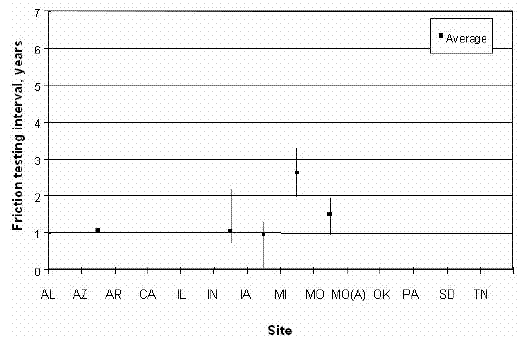
Figures 3 through 11 visually show the long-term monitoring
intervals that were graphically presented in tables 21 through 29
for each of the data monitoring types. Each figure shows the
long-term monitoring intervals for all sections of a particular
site. This includes the minimum and maximum testing interval, and
the average monitoring frequency that occurred at each site.
Typically, all of the sections within a site were tested within a
3-year period.
Figure 3. Profile testing
intervals for each site.
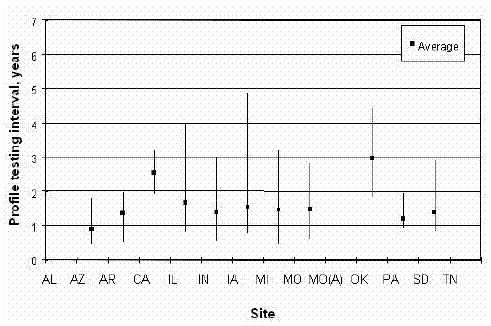
Figure 4. Nonfractured FWD
testing intervals for each site.
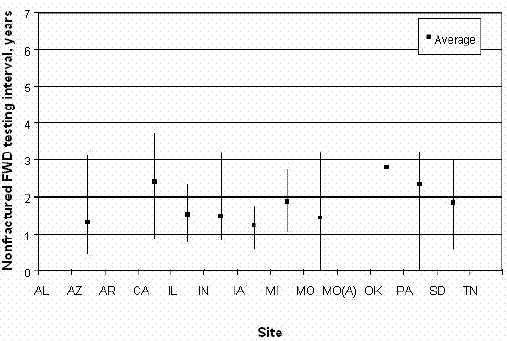
Figure 5. Fractured FWD testing
intervals for each site.
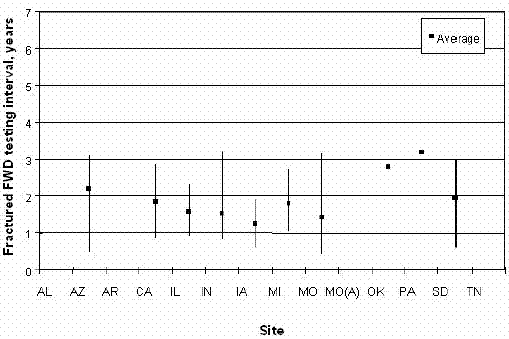
Figure 6. Manual distress
testing intervals for each site.
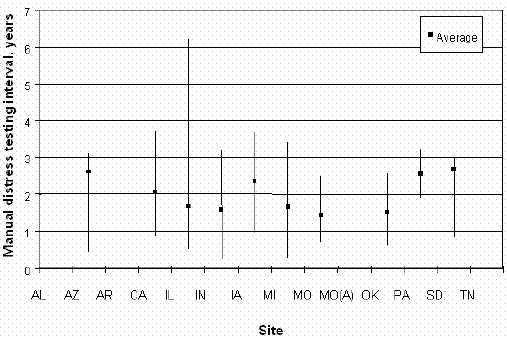
Figure 7. PASCO testing
intervals for each site.
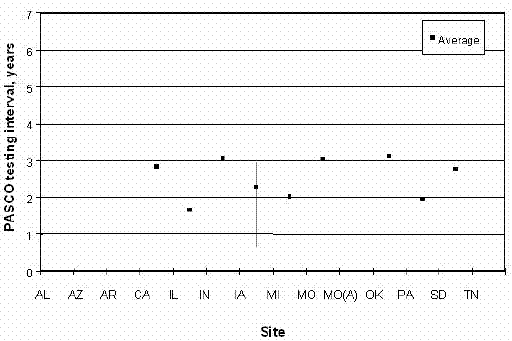
Figure 8. Combined manual
distress and PASCO testing intervals for each site.
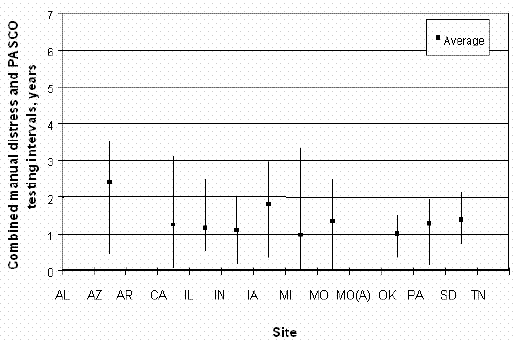
Figure 9. Faulting testing
intervals for each site.
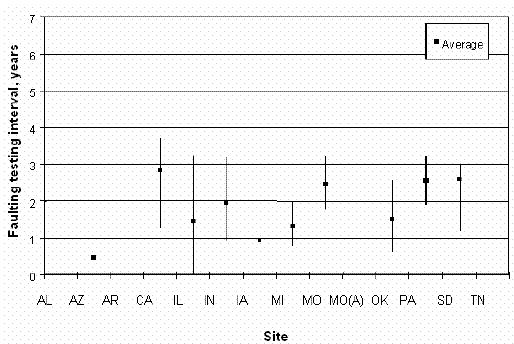
Figure 10. Rutting testing
intervals for each site.
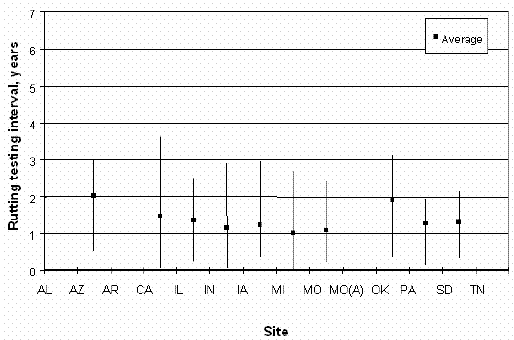
Figure 11. Friction testing
intervals for each site.
In addition, because the data collection monitoring for the
manual distress and PASCO surveys is used to identify the same
information (surface distress), these dates were combined in figure
8. Using the combination of manual distress and PASCO survey dates,
almost all of the sites have an average survey time of between 1
and 2 years. This interval is very good and it is vital information
that will be used later to evaluate each pavement section. Surface
distress may be a key parameter in identifying and recommending
appropriate rehabilitation techniques for future projects.






