Detailed Findings (continued)
New questions were added in 2005 to address several aspects of travelers' perceptions about planning and the impact of the transportation system on the environment
Overall Grade
- Travelers give the nation's transportation system an overall grade of 2.28 (on a 4-point grade scale where 4.0 is an A / Excellent grade) for planning. This equates to a C for transportation planning. Planning received the second lowest grade of all system attributes.
- Forty five percent (45%) of all travelers gave the system a grade of B minus (B-) or higher for transportation planning. However, one out of five (21%) give the system a D or F grade.
- The overall quadrant analysis suggests that planning is a significant system weakness, second only to pavement conditions. Note pavement conditions received a higher grade but were considered of greater importance than planning. Planning received a lower grade but is considered of slightly less importance than pavement conditions.
- Planning is seen as a critical issue in all areas of the country. Only the Midwest appears to do a somewhat better job with planning for future transportation needs.
| Grade |
Overall |
Northeast |
South |
Midwest |
West |
| A |
11% |
11% |
12% |
12% |
11% |
| B |
34 |
33 |
31 |
40 |
34 |
| C |
34 |
33 |
34 |
34 |
34 |
| D / F |
20 |
23 |
24 |
14 |
20 |
| Mean |
2.28 |
2.23 |
2.20 |
2.44 |
2.31 |
| Grade |
C+ |
C+ |
C+ |
C+ |
C+ |
*Grades based on four-point grade scale where "A" = 4.0-3.85; "A-" = 3.84-3.45"; "B+" = 3.44-3.15; "B" = 3.14-2.85; "B-" =2.84-2.5; "C+" = 2.49-2.15; "C" = 2.14-1.85; "C-" = 1.84-1.5; "D+"= 1.49-1.15; "D" = 1.14-0.85; "D-" = 0.84-0.5;and "F"= 0.4-0.0."
Travelers give the second lowest overall grade for transportation planning.
The lowest grades are given in the South and Northeast. The West receives only a slightly higher than average grade.
In addition to the differences noted regionally, there are differences in ratings for planning among other key segments.
- Those living in urban and suburban communities are more likely than those in rural areas to give the system a failing (D or F) grade for transportation planning - 21 percent compared with 15 percent, respectively. Those in urban and suburban communities are more differentiated from their rural counterparts by their lower satisfaction with the degree to which public agencies use public input in the planning process and the extent to which agencies plan for a system to accommodate future travel needs.
- There is no significant difference in grades between those in urban versus suburban communities. However, those in suburban communities are significantly more likely than those in urban communities to be dissatisfied with the way agencies use public input in the planning process - 39 percent compared with 33 percent dissatisfied, respectively.
- There is no significant difference in the overall grade given for planning between commuters and non-commuters. Non-commuters are more likely than commuters to say they are very satisfied with the extent to which the system is planning to accommodate for future travel needs - 23 percent compared with 15 percent, respectively.
- There is no significant difference in the overall grade given for planning by men and women. However, men are significantly more likely than women to say they are very dissatisfied with the way the system plans to accommodate future travel needs - 18 percent compared with 12 percent, respectively.
- There are significant differences in the overall grade given to planning by age. Those between the ages of 50 and 64 give the system the lowest grade (2.16) while the youngest travelers (between the ages of 18 and 34) give the system the highest grade (2.39).
- Both men and women in this 50 to 64 year old age segment grade the system nearly the same for transportation planning - 2.20 and 2.12, respectively.
- What is interesting is the significant difference between men and women in the 35 to 49 age segment. Men between the ages of 35 and 49 grade the system much lower for planning than do women in the same age group - 2.19 compared with 2.32, respectively. Grades given by men in this age segment are only slightly higher than the grades given by men in the older (50 to 64 segment).
- This suggests that those most concerned with planning are men between the ages of 35 and 64 and women between the ages of 50 and 64.
- There are no significant differences in the overall grade given for planning among those who use alternative modes as compared to those who only drive. Nor are there differences among those who have access to a personal vehicle and those who do not.
- Those who use alternative modes are more likely than those who primarily drive to say they are dissatisfied with the extent to which agencies are planning for future travel needs - 36 percent compared with 29 percent, respectively.
- Perhaps a surprise, those who have access to a personal vehicle are significantly more likely than those that do not to express dissatisfaction with the extent to which agencies are planning for where future land develop will occur - 36 percent compared with 19 percent, respectively.
Satisfaction with Planning Efforts and Impact on Overall Grade
- In general, travelers are neutral to just somewhat satisfied with planning - an overall mean of 3.31 on a scale where "5" means "very satisfied" and "3" represents the mid-point. There is also little variation in satisfaction across the different attributes measured with means running from as low as 3.17 for the degree to which agencies provide information to the public about the planning process to 3.42 for the coordination of planning activities between local jurisdictions.
- Fewer than one out of five (17%) travelers suggest that they are "very satisfied" with any aspects of planning. In addition, one out of three travelers (34%) are dissatisfied.
- Improvements to all aspects of planning, except for coordination between state and federal agencies, would have a significant impact on the overall grade given for transportation planning.
- Travelers are looking for both better planning - notably planning for where land development is likely to occur - and greater public involvement in the process.
| |
Overall
Satisfaction * |
Impact on Overall Grade
for Transportation Planning ** |
| Overall satisfaction |
3.31 |
|
| Way region is planning for a system to accommodate future needs |
3.33 |
.160 *** |
| Degree to which agencies provide information to public |
3.17 |
.159 *** |
| Way region is planning for where future land development will occur |
3.29 |
.140 *** |
| Way region is planning to growth |
3.30 |
.120 *** |
| Coordination of planning activities between regional jurisdictions |
3.42 |
.073 *** |
| Coordination of planning activities between local and state agencies |
3.41 |
.073 *** |
| Degree to which agencies use public input in planning |
3.18 |
.065 *** |
| Coordination of planning activities between state and federal agencies |
3.40 |
.061 |
* Mean based on a 5-point scale where "1" means "very dissatisfied" and "5" means "very satisfied".
** Shown are standardized beta coefficients which indicate amount of effect on the overall grade. For example, if improvements are made to a specific characteristic that results in one scale unit increase in satisfaction with that attribute, the overall grade given will increase by this amount.
*** Significance is determined using regression analysis with overall grade for programs to reduce congestion and improve traffic serving as the dependent variable and the specific attributes related to programs to reduce congestion and improve traffic serving as the independent variables.
Providing better information to the public and planning for a system to accommodate the future would have the greatest impact on the overall grade.
Overall Grade
- Travelers give the nation's transportation system an overall grade of 2.48 (on a 4-point grade scale where 4.0 is an "A / Excellent") or a C plus (C+) for efforts to minimize the impact of the transportation system on the environment. Over half (54%) of all travelers gave the system a grade of B minus (B-) or higher.
- As with many aspects of the transportation system, those in the Northeast and South grade the system lower than do those in the Northeast and West.
| Grade |
Overall |
Northeast |
South |
Midwest |
West |
| A |
16% |
11% |
16% |
16% |
16% |
| B |
38 |
39 |
35 |
41 |
39 |
| C |
30 |
33 |
29 |
31 |
28 |
| D / F |
16 |
17 |
19 |
11 |
14 |
| Mean |
2.48 |
2.38 |
2.39 |
2.59 |
2.60 |
| Grade |
C+ |
C+ |
C+ |
B- |
B- |
*Grades based on four-point grade scale where "A" = 4.0-3.85; "A-" = 3.84-3.45"; "B+" = 3.44-3.15; "B" = 3.14-2.85; "B-" =2.84-2.5; "C+" = 2.49-2.15; "C" = 2.14-1.85; "C-" = 1.84-1.5; "D+"= 1.49-1.15; "D" = 1.14-0.85; "D-" = 0.84-0.5;and "F"= 0.4-0.0."
Travelers have generally mixed feelings about how effective the system is in minimizing its impact on the environment.
In addition to the differences noted regionally, there are differences in the grades given and satisfaction with key aspects for consideration of the environment among other key segments.
- Travelers living in rural areas are more satisfied with the efforts to minimize the impact of the transportation system on the environment than are those living in urban and suburban areas.
- Residents of rural areas are most distinguished from their urban and suburban counterparts by their satisfaction with efforts to reduce impact on air quality, noise, and the natural environment (habitats and wetlands). The order listed is the order in which they are distinguished.
- Somewhat surprisingly, there are no differences in overall satisfaction with efforts to minimize the impact of the transportation system on the environment by gender. Somewhat surprisingly, there are no differences in overall satisfaction with efforts to minimize the impact of the transportation system on the environment by gender. Other research suggests that women are more concerned about environmental impacts than men.17
- Women are less satisfied than men with the impact of the transportation system on water quality.
- Most research has reported age as a consistent predictor of environmental concern, with relatively younger people more environmentally concerned than relatively older people.18 This relationship is also seen here, with those between the ages of 18 and 34 and, to a lesser extent, those between 35 and 49 expressing less satisfaction than those 50 years of age and older.
- Those between 18 and 49 express greater concern with the impact of the transportation system on water quality. Those between 18 and 34 also express concerns about the impact of the environment on habitats and wetlands.
- What is interesting in this analysis is that concerns about the impact of emissions on air quality (as measured by satisfaction with how well the system is doing in minimizing the impact) are consistent across most segments. This would suggest that travelers are generally aware of this problem. The differences at other levels suggest that it would be possible to raise similar levels of awareness of the issues over time.
Satisfaction with Efforts to Minimize Impact of Transportation System on the Environment and Impact on Overall Grade
- In general, travelers are satisfied with the efforts to minimize the impact of the transportation system on the environment - an overall mean of 3.65 on a five-point scale where "5" means "very satisfied" and "3" represents the mid-point. There, is however, significant room for improvement. In all cases, more travelers are just "somewhat satisfied" than "very satisfied."
- There is little difference in satisfaction with how the transportation system impacts the environment.
- Travelers are most satisfied with the impact on noise, water quality, and the natural habitats.
- They are less satisfied with the impact on air quality. These lower satisfaction levels may reflect the higher awareness of the relationship between vehicle emissions and air quality.
- Improvements in all areas would have a significant impact on the overall grade travelers give for efforts to minimize the impact of the system on the environment.
- By far, additional efforts to reduce efforts to minimize the impact of the transportation system on air quality (receives a high impact score and a below average satisfaction rating) and habitats / wetlands (receives a high impact score and an average satisfaction rating) would have the most impact on the overall system grade.
| |
Overall
Satisfaction * |
Impact on Overall Grade for Efforts to
Minimize Impact of System on Environment ** |
| Overall satisfaction |
3.65 |
|
| Impact on habitats, wetlands |
3.65 |
.282 *** |
| Air quality |
3.54 |
.268 *** |
| Impact on water quality |
3.68 |
.136 *** |
| Impact on noise |
3.75 |
.104 *** |
* Mean based on a 5-point scale where "1" means "very dissatisfied" and "5" means "very satisfied".
** Shown are standardized beta coefficients which indicate amount of effect on the overall grade. For example, if improvements are made to a specific characteristic that results in one scale unit increase in satisfaction with that attribute, the overall grade given will increase by this amount.
*** Significance is determined using regression analysis with overall grade for efforts to minimize impact of system on the environment serving as the dependent variable and the specific attributes related specific aspects of the environment.
The nation should continue to focus on minimizing the impact of the transportation system on air quality.
Finally, questions were added in 2005 to measure travelers' interest in becoming involved in the planning process and the extent to which they feel their input matters.
Respondents were asked the degree to which they agree or disagree with statements about their interest in participating in the transportation planning process and the extent to which they are informed about and know how to participate. Responses were recorded on an 11-point scale where "0" means "strongly disagree" and "10" means "strongly agree."
- Travelers are moderately interested in becoming involved in the transportation planning process.
- There is a clear preference for smaller neighborhood meetings as opposed to citywide meetings as a means to becoming involved. Over half (56%) of all travelers suggest they would attend neighborhood meetings; 47 percent said they would attend city-wide meetings.
- Travelers do not, however, feel they are well informed about the decision-making process and/or how to become involved in planning.
- Less than one out of three (32%) travelers agrees that they know how to be come involved in planning and/or feel that they are well-informed about the process.
| |
% Strongly Agree (10) |
% Agree
Net (7 - 10) |
Mean |
| Would attend neighborhood meetings |
19% |
56% |
6.38 |
| Would like to be involved in how region plans |
17 |
51 |
6.21 |
| Would use the Internet to find information on plans and issues |
20 |
54 |
6.13 |
| Would attend city-wide meetings |
15 |
47 |
5.88 |
| Know how to become involved in planning |
10 |
32 |
4.92 |
| Am well-informed about the decisions being made |
8 |
31 |
4.92 |
* Mean based on 11-point scale where "0" means "strongly disagree" and "10" means "strongly agree."
Travelers are moderately interested in being involved in the transportation planning process.
However, they do not know how to become involved or feel they are well-informed about the decisions that are being made.
Respondents were asked about their satisfaction with the information provided about the future of transportation by their city, state, and federal governments. Responses were given on a five-point scale where "1" means "very dissatisfied" and "5" means "very satisfied." This set of questions was asked of a subset (n = 1,600) of respondents.
- Travelers generally have neutral opinions on how well the different government agencies provide information about future transportation plans. They are most satisfied with the information provided by their local government agencies and least satisfied with the information provided by the federal government.
| |
% Very Satisfied |
% Somewhat Satisfied |
% Dissatisfied |
Mean * |
| Overall Satisfaction |
|
|
|
3.10 |
| City |
18% |
40% |
41% |
3.19 |
| State |
16 |
42 |
41 |
3.15 |
| Federal government |
12 |
38 |
48 |
2.95 |
Mean based on 5-point scale where "1" means "very dissatisfied" and "5" means "very satisfied."
Travelers have generally neutral opinions on how well government agencies provide information about future transportation plans.
Cities and state governments do better than the federal government.
Finally, respondents were asked to what extent they feel they have an opportunity affect transportation planning and policy decisions. Responses were given on an 11-point scale where "0" means "no opportunity at all" and "10" means "a significant opportunity."
- Travelers feel that they have little opportunity to affect transportation planning and policy decisions. More than one out of five (21%) travelers feel they have "no opportunity at all"; an additional 28 percent feel they have little opportunity (between 1 and 3 on the 11-point scale). This equates to nearly half (49%) of all travelers feeling they have little or no opportunity to affect transportation planning and policy decisions.
| |
Overall |
Northeast |
South |
Midwest |
West |
| No opportunity at all (0) |
21% |
24% |
23% |
18% |
17% |
| Little opportunity (1 - 3) |
28 |
28 |
26 |
32 |
26 |
| In the middle (4 - 6) |
34 |
33 |
32 |
35 |
35 |
| Opportunity (7 - 10) |
17 |
16 |
19 |
15 |
23 |
| Mean |
3.72 |
3.48 |
3.74 |
3.61 |
4.03 |
Mean based on 5-point scale where "1" means "very dissatisfied" and "5" means "very satisfied."
Travelers feel that have little opportunity to affect transportation planning and policy decisions. More than one out of five (21%) travelers feels they have "no opportunity at all"; an additional 28 percent feel they have little opportunity
Respondents were asked their satisfaction with travel on federal lands. Responses were recorded on a five-point satisfaction scale where "1" means "very dissatisfied" and "5" means "very satisfied."
- Travelers are generally highly satisfied with their travel on federal lands.
- There has been an increase in satisfaction from 2000. Note the 2005 survey was administered as part of the larger telephone survey while the 2000 survey was administered immediately following travel through on-site surveys. Therefore, these increases may reflect the method of administration.
| |
2000 |
2005 |
| Visual appeal |
87% |
98% |
| Convenient access to destination |
83 |
95 |
| Preservation of natural resources |
83 |
93 |
| Traffic flow |
76 |
93 |
| Safety of driving conditions |
71 |
94 |
| Bridge conditions |
83 |
93 |
| Road surface conditions |
71 |
90 |
| Amount of congestion |
n.a. |
88 |
Travelers are generally satisfied with their travel on federal and satisfaction has increased from 2000.
Overall Grade
Respondents also gave the system an overall grade for travel on federal lands. They gave a letter grade between A meaning excellent and F meaning failing. They could also apply a plus or minus ratings. Grades were then converted to a continuous four-point scale ranging from 0.0 for failing and 4.0 for excellent.
- Travelers give their travel on federal lands an overall grade of 3.18 or a B.
| Grade |
Overall |
Northeast |
South |
Midwest |
West |
| A |
36% |
32% |
46% |
31% |
32% |
| B |
48 |
49 |
38 |
55 |
51 |
| C |
14 |
17 |
14 |
11 |
15 |
| D / F |
2 |
2 |
2 |
3 |
2 |
| Mean |
3.18 |
3.13 |
3.28 |
3.16 |
3.13 |
| Grade |
B+ |
B |
B+ |
B+ |
B |
Travelers on federal lands give generally high grades.
*Grades based on four-point grade scale where "A" = 4.0-3.85; "A-" = 3.84-3.45"; "B+" = 3.44-3.15; "B" = 3.14-2.85; "B-" =2.84-2.5; "C+" = 2.49-2.15; "C" = 2.14-1.85; "C-" = 1.84-1.5; "D+"= 1.49-1.15; "D" = 1.14-0.85; "D-" = 0.84-0.5;and "F"= 0.4-0.0."
Regression analysis was used to determine the extent to which satisfaction with different aspects of travel on federal lands are related to the overall grade travelers give for this travel.
- The eight aspects of travel on federal lands included in the survey account for 40 percent of travelers' overall grade for this travel. This suggests that most aspects of travel that impact the grade were included in the survey.
- Improvements to five areas would have a significant impact on the overall grade given by travelers for their travel on federal lands.
- By far, improving the road surface and safety of driving conditions would have the greatest impact on the overall grade.
| |
Overall
Satisfaction * |
Impact on Overall Grade for
Travel on Federal Lands ** |
| Road surface conditions |
4.23 |
.196 *** |
| Safety of driving conditions |
4.36 |
.190 *** |
| Visual appeal |
4.57 |
.173 *** |
| Preservation of natural resources |
4.38 |
.140 *** |
| Traffic flow |
4.38 |
.101 *** |
| Amount of congestion |
4.19 |
.062 |
| Convenient access to destination |
4.43 |
.053 |
| Bridge conditions |
4.34 |
-.036 |
* Mean based on a 5-point scale where "1" means "very dissatisfied" and "5" means "very satisfied".
** Shown are standardized beta coefficients which indicate amount of effect on the overall grade. For example, if improvements are made to a specific characteristic that results in one scale unit increase in satisfaction with that attribute, the overall grade given will increase by this amount.
*** Significance is determined using regression analysis with overall grade for programs to reduce congestion and improve traffic serving as the dependent variable and the specific attributes related to programs to reduce congestion and improve traffic serving as the independent variables.
Improving the condition of the road surface and improving the general safety of the driving conditions would have the greatest impact on the overall grade given for travel on federal lands.
A primary objective of this study was to translate the results into a set of Strategic Imperatives - concrete strategies for improvement that federal and state highway agencies could apply to further improve the traveling public's satisfaction with the transportation system. Looking at what is important to travelers and the extent to which the system currently delivers what is important can identify these Strategic Imperatives.
To accomplish these objectives, a preliminary quadrant analysis was completed to identify overall system strengths and weaknesses. This was done by classifying the perceived importance of different elements of service and the ratings for quality into four quadrants that provide indicators of potential problems and opportunities. They can be used to set priorities for areas that may require attention, as illustrated below:
| |
|
Importance |
| |
|
Low |
High |
| Overall Grades |
Highest |
Priority 4:
Secondary Strengths:
Maintain Current Level of Service / Targeted Improvements |
Priority 1:
Primary Strengths: Maintain / Improve Current Level of Service
/ Communicate |
| Lowest |
Priority 3:
Potential Weaknesses: Improve if Resources are Available |
Priority 2:
Critical Weaknesses:
Invest Immediately to Improve |
In addition, a diagonal line is drawn through the quadrant from lowest importance / lowest grade to highest importance / highest grade. This line represents the "ideal" match between traveler requirements and system performance. The further the distance from a point to this line suggests the greater the mismatch between traveler requirements and system performance.
- Primary Strengths: This quadrant contains those attributes most important to travelers that receive the highest grades. Efforts should be focused on continuing to maintain current service levels in these areas. Strategic investments in specific areas may also be warranted. These strengths can also be used to leverage support for other improvement areas. Strengths include:
- Bridge conditions and management of work zones. These are clear strengths of the nation's transportation system and are relatively well aligned with expectations - as measured by its distance from the diagonal line.
- Highway safety and specific programs to improve safety. These are the most important aspects of an effective and high-quality transportation system. Travelers also give the system above average grades for these attributes. Highway safety is seen as a primary strength in all areas of the country.
However, the distance from customer requirements (as indicated by the distance from the diagonal line) and system performance is significant. This would suggest that while a system strength, additional resources should continue to be devoted to not only maintaining but further improving system performance. In addition, there is an opportunity for the Safety Program Office to communicate what is being done to improve safety. This would make people aware of what programs actually exist and potentially improve their perceptions of actual performance.
Efforts / programs to improve safety are potentially a greater problem in the West.
- Critical Weaknesses: This quadrant contains those services most important to travelers that receive the lowest overall grades. Efforts should be focused on improvements in this area by targeting resources here. Efforts should be focused on improvements in these areas:
- Pavement conditions. This is by far the system's biggest weakness - as indicated by its distance from the diagonal line. This is a problem in all areas of the country.
- Planning for future transportation needs. Also a significant weakness, as measured by its distance from the diagonal line. This is a problem in all areas of the country.
Other critical weaknesses include:
- Pedestrian safety and mobility - a critical weakness in the South and, to a lesser extent, the Midwest.
- Reducing delays from congestion and improving traffic flow. This is a critical problem in all areas except for the Midwest. Travelers in the Midwest believe that these aspects of the system are strengths, with efforts to reduce congestion a primary strength.
- Potential Weaknesses: This quadrant contains those services that also receive the lowest grades. However, they are rated less important overall by respondents (Note importance is relative from most important to least important; all aspects of the system were rated as important.) If resources are available, improvements should be made in these areas.
- There are only two system characteristics in this quadrant - delays from road work and bicycle safety and mobility.
- While performance is rated as below average, notably for bicycle safety and mobility, performance is not significantly misaligned with customer requirements (as measured by the distance from the diagonal line).
- Bicycle safety and mobility is viewed as a similar problem nationwide.
- Delays from road work are seen as a critical weakness in the West - potentially contributing to the lower ratings for efforts to improve traffic flow and reduce congestion in this region.
- Secondary Strengths: This quadrant contains those services that receive relatively high grades but are less important overall. (Again, note importance is relative from most important to least important; all aspects of the system were rated as important.) Resources can with care be diverted from these areas. However, care should be taken in diverting resources to ensure that these attributes do not become weaknesses. Analysis in subsequent sections may suggest specific areas where resources could be diverted. Attributes in this quadrant include:
- Visual appeal,
- Traveler information, and
- Amenities.
- Maintenance response times and consideration for the environment also fall in this quadrant. However, in these instances, performance and expectations appear to be relatively well-aligned (as measured by distance from the diagonal line). The greatest weakness in this area is pavement repairs.
- Maintenance response times are seen as a critical weakness in the West. Again, this may contribute to the lower ratings for efforts to improve traffic flow and reduce congestion.
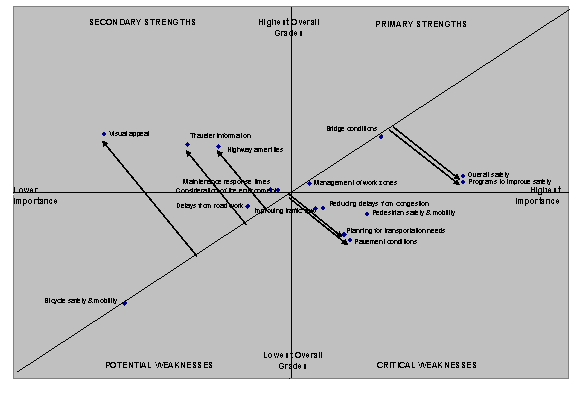
The system's current strengths are bridge conditions and management of work zones.
Overall safety and safety programs are also strengths although continued efforts are needed here.
Pavement conditions and planning for the future of transportation are the system's most critical weaknesses
The analysis throughout has shown that there are clear differences in ratings - both the importance of different aspects of the system and the grades given to the system - by region. The following tables show the quadrant analyses for the four different census regions.
| Northeast |
Highest Grades |
Secondary Strengths
Maintain Current Level of Service / Targeted Improvements
|
Primary Strengths
Maintain / Improve Current Level of Service
/ Communicate |
- Visual appeal
- Traveler information
- Highway amenities
|
- Bridge conditions
- Management of work zones
- Pedestrian safety and mobility
- Overall safety
- Programs to improve safety
- Maintenance response times
|
| Lowest
Grades |
Potential Weaknesses
Improve if Resources are Available |
Critical Weaknesses
Invest Immediately to Improve |
- Consideration for the environment
- Delays from road work
- Bicycle safety and mobility
|
- Pavement conditions
- Planning for transportation
- Reducing delays from congestion
- Improving traffic flow
|
| |
|
Lower Importance |
Greater Importance |
| South |
Highest Grades |
Secondary Strengths
Maintain Current Level of Service / Targeted Improvements |
Primary Strengths
Maintain / Improve Current Level of Service
/ Communicate |
- Visual appeal
- Traveler information
- Highway amenities
- Maintenance response times
- Consideration for the environment
|
- Bridge conditions
- Management of work zones
- Overall safety
- Programs to improve safety
|
| Lowest
Grades |
Potential Weaknesses
Improve if Resources are Available |
Critical Weaknesses
Invest Immediately to Improve |
- Delays from road work
- Bicycle safety and mobility
|
- Pedestrian safety and mobility
- Planning for transportation
- Reducing delays from congestion
- Pavement conditions
- Improving traffic flow
|
| |
|
Lower Importance |
Greater Importance |
| Midwest |
Highest Grades |
Secondary Strengths
Maintain Current Level of Service / Targeted Improvements |
Primary Strengths
Maintain / Improve Current Level of Service
/ Communicate |
- Visual appeal
- Highway amenities
- Traveler information
- Maintenance response times
- Improving traffic flow
|
- Bridge conditions
- Reducing delays from congestion
- Management of work zones
- Overall safety
- Programs to improve highway safety
|
| Lowest
Grades |
Potential Weaknesses
Improve if Resources are Available |
Critical Weaknesses
Invest Immediately to Improve |
- Consideration for the environment
- Delays from road work
- Bicycle safety and mobility
|
- Pavement conditions
- Planning for transportation needs
- Pedestrian safety and mobility
|
| |
|
Lower Importance |
Greater Importance |
| West |
Highest Grades |
Secondary Strengths
Maintain Current Level of Service / Targeted Improvements |
Primary Strengths
Maintain / Improve Current Level of Service
/ Communicate |
- Visual appeal
- Traveler information
- Highway amenities
- Management of work zones
- Consideration for the environment
|
- Bridge conditions
- Overall safety
- Pedestrian safety and mobility
|
| Lowest
Grades |
Potential Weaknesses
Improve if Resources are Available |
Critical Weaknesses
Invest Immediately to Improve |
- Maintenance response times
- Bicycle safety and mobility
|
- Planning for transportation needs
- Pavement conditions
- Reducing delays from congestion
- Improving traffic flow
- Delays from road work
- Programs to improve safety
|
| |
|
Lower Importance |
Greater Importance |
A second stage of the analysis sought to identify specific areas of strength and weakness within each major attribute of the system. This entailed a two-step process.
- Regression analysis was used to determine the extent to which satisfaction with specific areas relate to the overall grade travelers give for the overall system attribute.
- Quadrant analysis then identifies target improvement opportunities by classifying the different elements of service into four quadrants based on their impact on the overall grade (as measured by the beta coefficients) and traveler satisfaction with each specific aspect of the program.
The following table summarizes the results of this analysis.
| More Satisfied |
Secondary Strengths
Maintain Current Level of Service / Targeted Improvements |
Primary Strengths
Maintain / Improve Current Level of Service
/ Communicate |
- Markings for bike lanes along roadways
- Coordination of planning activities between state and federal agencies
- Traffic signals on freeway entrances to control traffic flow
- Signage and warnings for crosswalks
- Enforcement of bicycle laws and regulations
- Lane width on highways / roadways
- Safety barriers on highways / roadways
- Number of flaggers in work zones to manage traffic flow
- Availability of traffic information on media
- Enforcement of seat belt laws
- Posting and enforcement of speed limits in school zones
- Hazard warning signs
- Safety when crossing streets / roadways in work zones
|
- Access to traffic reports
- Smoothness of ride on bridges
- Compatibility of highways / roadways with natural environment
- Bridge safety
- Use of roadway message signs
- Durability of bridges
- Smoothness of ride on highways / roadways
- Overall safety in work zones
- Surface appearance of highways / roadways
- Making repairs during non-rush hour periods
- Amount of time to clear accidents
- Way region is planning for a system to accommodate future needs
- Guardrail and barrier repair
- Use of orange signs indicating ongoing construction
- Availability of crosswalks at intersections
- Impact on water quality
- Ability to predict / judge travel times
- Design of rest areas
- Crashes & debris removed quickly
- Landscaping
- Appearance of bridges
- Availability of bike lanes separated from roadways
- Width of bike lanes
- Signs for mileage and destinations
- Impact on noise
- Rest area cleaning
- Safety features in work zones
- Pavement markings
- Signs for motorist services and attractions
- Detour signs and directions in work zones
- Availability of park-and-ride lots
- Coordination of planning activities between regional jurisdictions Coordination of planning activities between local and state agencies
- Appearance of sound barriers & retainer walls
- Number of police dedicated for roadside assistance in work zones
- Quietness of ride on highways / roadways
- Availability of tow trucks to clear accidents in work zones
- Use of rumble strips
|
| Less Satisfied |
Potential Weaknesses
Improve if Resources are Available |
Critical Weaknesses
Invest Immediately to Improve |
- Connections between bike lanes and major streets & arterials
- Shoulder width on roadways / highways
- Availability of mid-block crosswalks
- Availability of phone numbers for traffic and road work updates
- Availability of carpool lanes
- Extent to which regulations / laws control amount / location of outdoor ads / billboards
- Enforcement of laws at intersections
- Enforcement of drinking and driving laws
- Adequate time to cross streets
- Availability of public transportation
- Enforcement of speed limits in work zones
- Road signs in work zones showing length of expected delays
- Number / length of passing lanes
|
- Coexistence of roadways and pedestrians walkways
- Variety of rest areas and service plazas
- Impact of transportation system on habitats / wetlands
- Impact of transportation system on air quality
- General availability of sidewalks
- Amount of litter or trash.
- Durability
- Phone numbers for traffic reports / updates
- Traffic signal timing to improve traffic flow
- Amount of time required to make repairs
- Amount of surface defects
- Number of rest areas and service plazas
- Availability of route planning information
- Availability of alternate routes
- Pavement repairs
- Degree to which agencies provide information to public
- Patrols for roadside assistance
- Way region is planning for where future land development will occur
- Snow removal
- Safety when riding bicycles in work zones
- Availability of separate bike lanes on roadways
- Planning for system to accommodate land development patterns
- Amount of surface defects in bike lanes
- Setup of lanes in work zones so drivers can merge safely
- Manner in which lanes in work zones merge at lane closures
- Repainting pavement markings
- Enforcement of speed limit laws
- Roadway lighting
- Width of lanes / shoulders on bridges
- Amount of congestion in work zones
- Amount of time delayed in work zones
- Durability of pavement so roads last
- Litter or trash removal
- Use of skid resistant pavement materials to improve safety
- Connections between bike lanes / paths and public transportation
- Surface treatments to increase traction in snow / ice / rain
- Degree to which agencies use public input in planning
- Use of detours to re-route traffic around work zones
- Length of merge lanes on highways / roadways
- Accessibility of pedestrian walkways for persons with disabilities
- Availability of emergency road information
- Availability of walkways / bike lanes on bridges
|
| |
Lower Impact of Grade |
Highest Impact on Grades |
| OVERALL SYSTEM PRIMARY STRENGTHS |
SETUP OF WORK ZONES |
More Satisfied |
Secondary Strengths
Maintain Current Level of Service / Targeted Improvements |
Primary Strengths
Maintain / Improve Current Level of Service
/ Communicate |
- Number of flaggers to manage traffic flow
|
- Overall safety in work zones
- Use of orange signs indicating ongoing construction
- Safety features
- Detour signs and directions
|
| Less Satisfied |
Potential Weaknesses
Improve if Resources are Available |
Critical Weaknesses
Invest Immediately to Improve |
- Availability of phone numbers for traffic and road work updates
- Enforcement of speed limits in work zones
- Road signs showing length of delay
|
- Setup of lanes so drivers can merge safely
- Manner in which lanes merge together at closures
- Use of detours to re-route traffic
|
| |
|
Lower Impact of Grade |
Highest Impact on Grades |
| BRIDGE CONDITIONS |
More Satisfied |
Secondary Strengths
Maintain Current Level of Service / Targeted Improvements |
Primary Strengths
Maintain / Improve Current Level of Service
/ Communicate |
| |
- Smoothness of ride
- Safety
- Durability
- Appearance
|
| Less Satisfied |
Potential Weaknesses
Improve if Resources are Available |
Critical Weaknesses
Invest Immediately to Improve |
| |
- Width of lanes / shoulders
- Availability of walkways / bike lanes
|
| |
Lower Impact of Grade |
Highest Impact on Grades |
| SAFETY |
More Satisfied |
Secondary Strengths
Maintain Current Level of Service / Targeted Improvements |
Primary Strengths
Maintain / Improve Current Level of Service
/ Communicate |
- Safety barriers
- Enforcement of seat belt laws
- Lane width
- Hazard warning signs
|
- Pavement markings
- Use of rumble strips
|
| Less Satisfied |
Potential Weaknesses
Improve if Resources are Available |
Critical Weaknesses
Invest Immediately to Improve |
- Enforcement of laws at intersections
- Shoulder width
- Enforcement of drinking and driving laws
- Number / length of passing lanes
|
- Roadway lighting
- Enforcement of speed limit laws
- Skid resistant pavement materials
- Availability of emergency road information
- Length of merge lanes
|
| |
|
Lower Impact of Grade |
Highest Impact on Grades |
| OVERALL SYSTEM CRITICAL WEAKNESSES |
PAVEMENT CONDITIONS |
More Satisfied |
Secondary Strengths
Maintain Current Level of Service / Targeted Improvements |
Primary Strengths
Maintain / Improve Current Level of Service
/ Communicate |
| |
- Smoothness of ride
- Surface appearance
- Quietness of ride
|
| Less Satisfied |
Potential Weaknesses
Improve if Resources are Available |
Critical Weaknesses
Invest Immediately to Improve |
| |
- Amount of surface defects
- Durability
- Surface treatments to increase traction in snow / ice / rain
|
| |
|
Lower Impact of Grade |
Highest Impact on Grades |
| PLANNING FOR THE FUTURE |
More Satisfied |
Secondary Strengths
Maintain Current Level of Service / Targeted Improvements |
Primary Strengths
Maintain / Improve Current Level of Service
/ Communicate |
- Coordination between state and federal agencies
|
- Coordination between regional jurisdictions
- Coordination between local / regional and state agencies
- Way in which agencies plan for transportation to support future transportation needs
|
| Less Satisfied |
Potential Weaknesses
Improve if Resources are Available |
Critical Weaknesses
Invest Immediately to Improve |
| |
- Degree to which agencies provide information to public
- Way in which agencies plan for future land development patterns
- Way in which agencies plan for plan for where future development will occur
- Degree to which agencies use public input in planning
|
| |
|
Lower Impact of Grade |
Highest Impact on Grades |
| OVERALL SYSTEM CRITICAL WEAKNESSES
(continued) |
PEDESTRIAN SAFETY AND MOBILITY |
More Satisfied |
Secondary Strengths
Maintain Current Level of Service / Targeted Improvements |
Primary Strengths
Maintain / Improve Current Level of Service
/ Communicate |
- Posting and enforcement of speed limits in school zones
- Signage and warnings for crosswalks
- Safety when crossing in work zones
|
- Availability of crosswalks at intersections
|
| Less Satisfied |
Potential Weaknesses
Improve if Resources are Available |
Critical Weaknesses
Invest Immediately to Improve |
- Availability of mid-block crosswalks
- Adequate time to cross streets
|
- Coexistence of roadways and pedestrians walkways
- Availability of sidewalks
- Accessibility for persons with disabilities
|
| |
Lower Impact of Grade |
Highest Impact on Grades |
| REDUCING CONGESTION / IMPROVING TRAFFIC FLOW |
More Satisfied |
Secondary Strengths
Maintain Current Level of Service / Targeted Improvements |
Primary Strengths
Maintain / Improve Current Level of Service
/ Communicate |
- Signals on freeway ramps
- Availability of traffic information on media
|
- Ability to judge / predict travel time
- Availability of park-and-ride lots
|
| Less Satisfied |
Potential Weaknesses
Improve if Resources are Available |
Critical Weaknesses
Invest Immediately to Improve |
- Availability of public transportation
- Availability of carpool lanes
|
- Traffic signal timing to improve traffic flow
- Availability of alternate routes
|
| |
|
|
Lower Impact of Grade |
Highest Impact on Grades |
| OVERALL SYSTEM POTENTIAL WEAKNESSES |
DELAYS FROM ROAD WORK |
More Satisfied |
Secondary Strengths
Maintain Current Level of Service / Targeted Improvements |
Primary Strengths
Maintain / Improve Current Level of Service
/ Communicate |
| |
- Making repairs during non-rush hour periods
- Amount of time to clear accidents
- Number of police dedicated for roadside assistance
- Availability of tow trucks to clear accidents
|
| Less Satisfied |
Potential Weaknesses
Improve if Resources are Available |
Critical Weaknesses
Invest Immediately to Improve |
| |
- Amount of time required to make repairs
- Amount of congestion
- Amount of time delayed
- Durability of pavement so roads last
|
| |
|
Lower Impact of Grade |
Highest Impact on Grades |
| BICYCLE SAFETY AND MOBILITY |
More Satisfied |
Secondary Strengths
Maintain Current Level of Service / Targeted Improvements |
Primary Strengths
Maintain / Improve Current Level of Service
/ Communicate |
- Markings for bike lanes
- Enforcement of laws and regulations
|
- Availability of bike lanes separated from roadways
- Width of bike lanes
|
| Less Satisfied |
Potential Weaknesses
Improve if Resources are Available |
Critical Weaknesses
Invest Immediately to Improve |
- Connections between bike lanes and major streets & arterials
|
- Connections between bike lanes / paths and public transportation
- Availability of separate bike lanes on roadways
- Safety when riding bicycles in work zones
- Amount of surface defects in bike lanes
|
| |
|
|
Lower Impact of Grade |
Highest Impact on Grades |
| OVERALL SYSTEM SECONDARY STRENGTHS |
VISUAL APPEAL |
More Satisfied |
Secondary Strengths
Maintain Current Level of Service / Targeted Improvements |
Primary Strengths
Maintain / Improve Current Level of Service
/ Communicate |
| |
- Compatibility with natural environment
- Landscaping
- Design of rest areas
- Appearance of sound barriers & retainer walls
|
| Less Satisfied |
Potential Weaknesses
Improve if Resources are Available |
Critical Weaknesses
Invest Immediately to Improve |
- Extent to which regulations / laws control amount / location of outdoor ads / billboards
|
- Amount of litter or trash.
|
| |
|
Lower Impact of Grade |
Highest Impact on Grades |
| TRAVELER INFORMATION |
More Satisfied |
Secondary Strengths
Maintain Current Level of Service / Targeted Improvements |
Primary Strengths
Maintain / Improve Current Level of Service
/ Communicate |
| |
- Access to traffic reports
- Use of roadway message signs
|
| Less Satisfied |
Potential Weaknesses
Improve if Resources are Available |
Critical Weaknesses
Invest Immediately to Improve |
| |
- Phone numbers for traffic reports / updates
- Availability of route planning information
|
| |
|
Lower Impact of Grade |
Highest Impact on Grades |
| AMENITIES |
More Satisfied |
Secondary Strengths
Maintain Current Level of Service / Targeted Improvements |
Primary Strengths
Maintain / Improve Current Level of Service
/ Communicate |
| |
- Signs for mileage and destinations
- Signs for motorist services and attractions
|
| Less Satisfied |
Potential Weaknesses
Improve if Resources are Available |
Critical Weaknesses
Invest Immediately to Improve |
| |
- Variety of rest areas and service plazas
- Number of rest areas and service plazas
- Patrols for roadside assistance
|
| |
|
|
Lower Impact of Grade |
Highest Impact on Grades |
| OVERALL SYSTEM SECONDARY STRENGTHS (continued) | MAINTENANCE RESPONSE TIMES |
More Satisfied |
Secondary Strengths
Maintain Current Level of Service / Targeted Improvements |
Primary Strengths
Maintain / Improve Current Level of Service
/ Communicate |
| |
- Guardrail and barrier repair
- Crashes & debris removed quickly
- Rest area cleaning
|
| Less
Satisfied |
Potential Weaknesses
Improve if Resources are Available |
Critical Weaknesses
Invest Immediately to Improve |
| |
- Pavement repairs
- Snow removal
- Repainting pavement markings
- Litter or trash removal
|
| |
Lower Impact of Grade |
Highest Impact on Grades |
| CONSIDERATION FOR THE ENVIRONMENT |
More Satisfied |
Secondary Strengths
Maintain Current Level of Service / Targeted Improvements |
Primary Strengths
Maintain / Improve Current Level of Service
/ Communicate |
| |
- Impact on noise
- Impact on water quality
|
| Less Satisfied |
Potential Weaknesses
Improve if Resources are Available |
Critical Weaknesses
Invest Immediately to Improve |
| |
- Impact on air quality
- Impact on habitats / wetlands
|
| |
|
|
Lower Impact of Grade |
Highest Impact on Grades |




