



REDUCED CONGESTION
DOT Performance Goal: Reduction in urban congestion.
This funding request contributes to the DOT Reduced Congestion strategic objective and the performance outcome goals to achieve a reduction in urban congestion. The DOT and the FHWA have adopted the percent of daily-congested travel nationwide as an indicator of overall system performance. The measure is an estimate of the percent of daily traffic in approximately 400 urbanized areas moving at less than free-flow speeds. The FHWA includes this long-term congestion measure within the Federal Aid Highway Program (FAHP) Program Assessment Rating Tool (PART) assessment.
| 2002 | 2003 | 2004 | 2005 | 2006 | 2007 | 2008 | 2009 | |
|---|---|---|---|---|---|---|---|---|
| Target | 30.9 | 31.6 | 32.3 | 33.0 | 33.7 | 32.5 | 32.3 | 31.9 |
| Actual | 30.7(r) | 31.0(r) | 31.6(r) | 31.8(r) | 31.6 | 31.8# |
| STRATEGIC GOALS & OUTCOMES by Performance Measure |
FY 2007 ENACTED | FY 2008 ENACTED | FY 2009 REQUEST |
|---|---|---|---|
| 2. REDUCED CONGESTION STRATEGIC GOAL | |||
| Reduction in Urban Congestion | |||
| a. Percent of annual uran-area travel time occurring in congested conditions | 6,805,321 | 6,877,809 | 6,537,639 |
| b. Other | ----- | ----- | ----- |
| Subtotal, Performance Outcome | 6,805,321 | 6,877,809 | 6,537,639 |
| Total — Reduced Congestion Strategic Goal | 23,400,996 | 23,634,428 | 22,441,787 |
This request will allow the FHWA to fund transportation-related improvements that address traffic congestion in urban areas and will support the Department’s Congestion Initiative.
Funding will be used to implement all of the following congestion reduction strategies:
(1) ensuring that consumption levels accurately reflect individual and commercial requirements and preferences (applying direct charges to users through congestion pricing),
(2) strategically adding capacity,
(3) using the physical capacity currently available more productively by operating the system at peak condition and performance, and
(4) providing travel alternatives by encouraging the adoption of travel demand management strategies such as telecommuting.
Marginal Cost of Performance – Urban Congestion
As noted in the table below, the FHWA will focus its congestion mitigation initiatives on reducing the cost of congestion as measured by travel delay and fuel consumption. The estimate of reduced travel on congested roads in 2007-2009 is based on meeting the targets for the percentage of travel on congested NHS roads and a projected VMT. Using this approach, it is estimated that there will be a reduction of 24 million miles of congested travel on the NHS in 2008 and 50 million miles in 2009, when compared to projections in each year based on current trends. This improvement represents a cost savings to society, in terms of a reduction in travel delay, of $3 billion in 2008 and $5.2 billion in 2009, which is equivalent to approximately 3 percent and 6 percent, respectively, of total Fed-aid program costs based on current trends and anticipated growth in travel. The incremental improvement in percentage of congested travel from 2007 to 2009 is offset by the anticipated growth in travel and delay. Even if the targets are met, the total congested VMT still increases by 6 million, from 980 to 986 million miles.
Agency Output or Outcome Measure Associated with this Program increase(s): Reduction in urban congestion.
Performance Measure: Percent of total annual urban-area road travel time that occurs under congested conditions.
| FY 2007 | FY 2008 | FY 2009 | |
|---|---|---|---|
| Target (million VMT) |
980 | 985 | 986 |
| Projected (million VMT) |
983 | 1,009 | 1,036 |
| Incremental Performance Target |
-3 | -24 | -50 |
Note: Actual VMT under congested conditions for FY 2007 will be available in the fall of 2008. VMT is projected at 3,015 million miles in 2007, 3,049 in 2008, and 3,092 in 2009.
Performance Issue
Traffic congestion on the Nation’s highways has steadily increased over the past 20 years as population, number of drivers and vehicles, and travel volume continue to increase at a much faster rate than system capacity. According to the Texas Transportation Institute, drivers experience 3.7 billion hours of delay and waste 2.3 billion gallons of fuel annually due to traffic congestion. The economic impact of congestion, including wasted fuel and time, was estimated to be over $63 billion in 2003. Over 60 percent of the cost was experienced in the 10 metropolitan areas with the most congestion.
As noted in figure 2, the percentage of congested travel was 31.8 percent in 2005, a figure below the projected level of 33.2 percent (and the target of 33.0 percent). The actual result was 0.2 percentage points higher than in 2004, a rate slightly below the projected increase of 0.7 percentage points. On the whole, recent results suggest that the overall rate of growth in traffic congestion nationwide has slowed somewhat. The goal in FY 2009 is to reduce the level of congestion by 0.4 percentage points relative to the FY 2008 target level.
In addition, the rate of growth in traffic congestion nationwide appears to be slowing based on the analyses of real-time traffic data that the FHWA collected during 2005-2007 from travel information websites and transportation management centers in selected cities. 2005-2006 data collected from transportation management centers in 19 cities in general showed continued growth in congestion at similar rates as the 2004-2005 data.
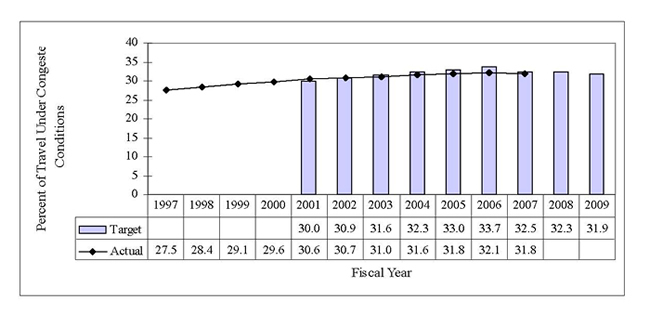
Figure 2. Percent of Travel under Congested Conditions, FY 1997 – FY 2009.
Innovative strategies to reduce recurring congestion are now available. For example, new advances in technology can greatly improve system operations and management and provide for the application of pricing. In addition, successful congestion reducing demonstrations in major cities around the world have proven that congestion pricing strategies are effective. Furthermore, a number of freeway and arterial management strategies are available to address recurring congestion. For example, poorly timed traffic signals cause approximately 10 percent of congestion. Often, signals are initially timed, but not re-adjusted when traffic patterns changes. This results in inefficiency and unnecessary delays. Effective and low-cost options are currently available to address this problem.
As illustrated in Figure 3, the FHWA will pursue several broad strategies that are aimed at reducing congestion in urban areas. A key element will be supporting the new Urban Partner cities so that they will be successful in implementing their agreements to congestion reduction strategies. These strategies include comprehensive and innovative congestion pricing applications combined with strong transit, travel demand management, and operation and management strategies and technologies. In addition, FHWA will work with the Office of the Secretary of Transportation and other modal administrations throughout the Department to advance the Congestion Reduction Demonstration (CRD) program. As with the Urban Partnership program, the CRD program will result in the award of discretionary funds to cities willing to implement aggressive congestion pricing strategies as well as innovative technologies and expanded transit operations.
While the urban partners and CRD program participants provide an opportunity to showcase real-world applications of congestion reducing opportunities, a robust program of research, development, and technology transfer will be advanced to pursue the widespread implementation of pricing applications to include High Occupancy Toll (HOT) lanes and parking pricing; other travel demand management practices; the institutionalization of comprehensive bottleneck reduction programs in every State Department of Transportation; improved management of freeway and arterial systems particularly through improved traffic signal timing and Active Traffic Management; improved management of non-recurring events such as traffic incidents and work zones; and enhanced decision-making through the use of more robust traffic analysis tools, the integration of system management and operations considerations into the Planning process; and the establishment of partnerships that include all of the key agencies in a region.
The FHWA will continue developing the next generation of system operations capabilities that improve real-time information collection and dissemination to enable State and local transportation agencies to better quantify system performance, and place better information in the hands of transportation decision-makers. In addition, funds will be used to improve the performance of the existing transportation system and increase physical capacity. The capacity and performance of the physical infrastructure can be increased in specific locations or corridors by building new facilities, adding lanes to existing facilities, or removing bottlenecks.
|
FHWA National Performance Objectives Mitigate congestion and improve system reliabilty through actions targeted at key causes of congestion. Mitigate the impacts of congestion by fully integrating system management and operations into project delivery decisions Incease investment through Public-Private Partnerships and the Corridors of the Future program |
 |
DOT Performance Goals Reduction in urban congestions. Increased use of integrated ITS networks and new incident management approaches. Increased trasnportation capacity. |
Figure 3. Relationship between Urban Congestion Reduction Program Objectives and Outcomes. |
||
Increasing the capacity of the highway infrastructure is also an important approach to reducing traffic congestion. The capacity of the physical infrastructure can be increased in specific locations or corridors by building new facilities, adding lanes to existing facilities, or removing bottlenecks. In addition, the FHWA will implement SAFETEA-LU programs to fund designated projects that will add capacity to the National Highway System. The Projects of National and Regional Significance Program involves 25 projects and $1.779 billion in funding over five years. The National Corridor Infrastructure Improvement Program involves 33 projects and $1.948 billion in funding over 5 years.
Anticipated FY 2008 Accomplishments
Congestion reduction should be achieved in areas characterized by higher levels of investment in adding system capacity and removing bottlenecks; more emphasis on effective congestion partnerships that facilitate inter-agency coordination and collaboration; and a commitment to pursing the application of tolling and pricing strategies, the collection and dissemination of real-time information, and other effective operational practices. By focusing efforts on these areas, the FHWA anticipates progress in meeting the following objectives:
- Aggressively advance tolling and pricing strategies by assisting practitioners in States and Metropolitan areas that are most apt to implement tolling and pricing projects, and increase the overall understanding of such strategies in the broad transportation community as well as among elected officials and other key decision-makers. In addition, the FHWA will work to improve the technical capabilities required to analyze and evaluate tolling and pricing programs within the context of ongoing Statewide and regional transportation planning program options.
- Implement a major program to encourage the conversion of High Occupancy Vehicle (HOV) lanes to HOT lanes by assisting select States in exploring HOV to HOT conversion, building the necessary constituency base, and providing technical assistance.
- Implement a comprehensive national strategy to reduce traffic bottlenecks through providing, to transportation agencies, information and technical assistance in identifying operational and low-cost construction options that may be implemented in the near-term to mitigate or eliminate bottleneck traffic congestion and adopting comprehensive bottleneck reducing programs.
- Integration of operations and management considerations into the planning process through the provision of technical assistance in bringing a new outcome-based perspective to the Congestion Management Process and the Long-Range Transportation Plan.
- Increase the number of State and local transportation agencies using transportation operations performance measures to monitor performance, determine appropriate system enhancements, and support the consideration of investment in potential improvements by decision-makers.
- Improve the management of arterial transportation systems through the implementation of improved traffic signal timing. Continue to advance technologies, such as Adaptive Control Software-Lite (ACS-Lite), to enhance traffic signal timing.
- Promote the use of real-time data to better quantify system performance and place better information in the hands of officials making transportation investment and resource allocation choices.
- Provide technical assistance to the Federal Land Management Agencies (FLMA) to develop long-range transportation plans for FLMA regions or units that effectively integrate alternative transportation systems, intelligent transportation systems and the use of management systems into decision-making.
- Provide technical assistance to the FLMAs, including the National Park Service, U.S. Fish and Wildlife Service, and the U.S. Forest Service, in the development of congestion management strategies for the FLHP programs. Provide technical assistance to the Bureau of Indian Affairs to develop criteria for determining when congestion management strategies are required.
Safety, System Performance and 21st Century Solutions
Bottleneck Reduction – In alignment with the USDOT Congestion Initiative, assist transportation agencies in identifying and implementing operational or low-cost construction improvements to provide travelers with near-term relief from traffic congestion at bottleneck locations. A Primer outlining such solutions is available and is continuously updated with innovative ideas. The FHWA Division Offices use the Primer as a virtual peer exchange forum to work with their States to determine if their bottleneck locations could benefit from these improvements. In addition, technical assistance on matching low-cost operational improvements with specific bottleneck deficiencies and developing systematic near-term bottleneck reduction programs is provided.
Congestion Pricing - In support of the USDOT Congestion Initiative, activities are underway to introduce road pricing as a superior solution for reducing traffic congestion on heavily traveled facilities throughout the country. The USDOT selected five Urban Partner cities to demonstrate innovative congestion pricing strategies. A Congestion Reduction Program will add additional cities to the list of pricing pioneers. In addition, a task force is focused on providing tailored technical assistance to States that have HOV facilities with excess capacity that could be sold to vehicles not meeting the occupancy requirements. Extensive outreach and training, and technical assistance strategies are underway to provide information on all aspects of congestion pricing, to include developing State legislation allowing tolling, implementing the necessary technology, forming public private partnerships, and explaining the underlying rationale for pricing. Finally, a Making the Technical Case effort is on-going and will quantify the benefits and costs of congestion pricing.
Congestion Pricing – Implementation of HOT Lanes – A task force is focused on providing tailored technical assistance to States that have HOV facilities with excess capacity that could be sold to vehicles not meeting the occupancy requirements. In FY 2008, funds will be used to aggressively promote HOT lanes as a strategy to reduce congestion and demonstrate pricing as an appropriate congestion mitigation strategy.
Congestion Pricing - Execution of Discretionary Programs to Support Urban Partnership Agreements – In FY 2008, the FHWA will leverage Discretionary Programs, such as the Ferry Boats and Innovative Bridge Research and Deployment programs, to support the Urban Partners in the implementation of aggressive and innovative pricing strategies.
Congestion Rule Making - In FY 2008, funds will be used to identify and implement changes to the FHWA’s regulations to help States better focus on congestion and to incorporate elements of the DOT Congestion Initiative into FHWA programs. The expected outcome is a Final rule and the rulemaking is expected to be completed by the end of FY 2008.
Traffic Signal Timing - Significant congestion reduction impacts are realized when traffic signal timing is updated. The 2005 National Traffic Signal Report Card was updated and the findings will be used to encourage jurisdictions to improve their report card score. A broad array of outreach, training, and technical assistance activities encourage and support adoption of improved traffic signal management practices. In addition ACS-Lite was developed to, at relatively low cost, update traffic signal timing in real-time. This new software is being actively promoted via a partnership with interested parties from the private sector.
Congestion Management Process (CMP) – SAFETEA-LU requires transportation agencies to actively consider operational strategies alongside more traditional – often capital intensive – approaches to congestion reduction. Extensive guidance and training will be provided to those engaged in the planning process to ensure that the Congestion Management Process is geared toward outcomes. In this way, expenditures that result in operating the system at peak performance will be well considered.
Evaluation of the CMAQ Program - The FHWA will conduct an evaluation of the Congestion Mitigation and Air Quality (CMAQ) Program as required by SAFETEA-LU. This effort will assess a sample of CMAQ projects for their impacts on system performance. It will examine about 100 projects in detail and develop data on the project impacts on emissions and congestion and also will examine cost-effectiveness. The project will be conducted in cooperation with FTA and EPA in 2 phases. A final report will include data, where practicable, on the emissions, congestion benefits of seven projects and the relative cost-effectiveness.
Conditions and Performance (C&P) Report Enhancements – In FY 2008, funds will be used to improve and refine the analysis of the impact that aggressive congestion mitigation strategies, including congestion pricing and operations strategies, could have on future highway investment requirements and performance. The expected outcome is an improved investment analyses in the 2008 C&P Report, which better reflects the potential impacts of such strategies. The 2008 edition of the C&P Report will be completed in July 2008.
FY 2009 Performance Budget Request
Federal-aid Highway Program
Highway funds apportioned to the States will continue to be used to increase roadway throughput by adding system capacity, either as new roadways or transit routes, adding traffic lanes, adding additional buses in specific locations where congestion is recurring, or removing bottlenecks. States and local governments will also use these funds to improve traffic flow through more effective systems management and operations, including variable pricing programs.
In the following paragraphs, two major projects are described which illustrate how the uses of FAHP funds contribute to reducing congestion:
- The I-10/Katy Freeway, Texas project is estimated at over $2.7 billion and consists of reconstruction and widening of 23 miles of I-10 to provide general purpose through lanes, frontage road lanes in each direction, and managed lanes. This major project will provide transportation infrastructure to serve future development patterns. Population growth is projected to result in a corridor population increase of 42 percent between 1990 and 2020. However, some portions of the corridor are projected to grow by as much as 130 percent for the same time period. For the same period, employment growth is projected to be equally as strong within the corridor, with average growth in employment in excess of 44 percent. These growth projections point to major increases in travel demand along the Katy Freeway corridor.
- The I-43/I-94/I-794 Marquette Interchange, Wisconsin project is estimated at over $800 million and consists of the reconstruction of the Interstate 94/794/43 interchange in Milwaukee. The interchange accommodates Milwaukee’s commuter traffic, as well as interurban traffic traveling to and from Madison, Green Bay, and Chicago, and long-distance interstate traffic. The existing interchange was built in 1968. The reconstruction will address structural deterioration and operational and safety concerns, including the location of exit and entry ramps, alignments that fail to meet current AASHTO policy, substandard sight distances, and narrow or absent shoulders.
Federal Lands Highway
FLH will use identified funding to reduce congestion by continuing to implement alternative transportation solutions on all Federal lands. FLHP funds will be used to support capacity expansion, including the use of buses in national parks, national forests, fish and wildlife refuges, and Indian Reservations, as well as operational improvement approaches. The FHWA is coordinating a joint effort with the Department of Interior to create a process for external reviews of the Park Road and Parkways Program. These activities are referred to in the PART assessment of the Federal Lands Highway Program.
Research and ITS
The FHWA ExploratoryAdvancedResearch programwillseek to identify, develop and assess promising innovations that could provide significant operational and technological improvements that have the potential to dramatically reduce traffic congestion. Proposals would explore longer-term, higher risk research with potentially dramatic breakthroughs addressing the causes and consequences of traffic congestion.
Effectively addressing traffic congestion will hinge on the ability of the FHWA and State and local transportation agencies to transform traditional transportation organizations into modern agencies using advanced technologies to improve management and operations. ITS technologies have been researched, deployed, and tested during the past decade to improve the operation of the highway system and mitigate congestion.
Specifically, the FHWA will use FY 2009 R&D and ITS funding to:
- Promote the findings gathered from the Urban Partnership /Congestion Reduction Demonstration (CRD) experience by fully engaging field staff in promoting broad-based (e.g., cordon pricing) and individual facility-based (e.g., converting HOV to HOT lanes) congestion pricing or variable toll practices, facilitating the creation or expansion of express bus services, and encouraging a variety of non-facility travel demand strategies such as telecommuting and flex scheduling programs.
- Specific strategies to improve freeway and arterial management practices will be promoted. For example, the FHWA will continue its efforts to increase the number of jurisdictions with effective traffic signal timing practices through aggressive outreach and technical assistance. In addition, FHWA will introduce the States to Active Traffic Management practices and will assist in their adoption.
- Continue to promote improved decision-making practices in transportation planning through the development of model practices and outreach materials, and the application of innovative technical transfer techniques.
- Continue to support and promote the development and adoption of performance measures. Institutionalize the use of performance measures by continued promotion and facilitation of their integration into the Congestion Management Process.
- Continue to work with States to deploy operational and planning countermeasures to address identified bottlenecks and chokepoints through the implementation of operational and low-cost construction strategies, and continue to promote the adoption of comprehensive bottleneck reduction programs.
Congestion Initiative
The budget proposes to redirect $175 million in unobligated balances for inactive projects authorized in the Intermodal Surface Transportation Efficiency Act (ISTEA) of 1991. The funds will be used to carry out the Department’s National Strategy to Reduce Congestion on America’s Transportation Network (the “Congestion Initiative”) and will support metropolitan area congestion reduction demonstration initiatives and the Corridors of the Future Program.
Congestion Reduction Demonstration Program: $100 million
In November 2007, USDOT solicited applications from metropolitan areas to support congestion relief projects. Through this solicitation, DOT intends to fund proposals that would implement congestion pricing along with complementary transportation solutions, including transit service and innovative operational technologies. In December 2007, DOT received approximately 20 applications from a wide range of jurisdictions. The Department requests $100 million to fund qualified projects.
Corridors of the Future: $75 million
These funds would be utilized at the discretion of the Secretary to facilitate project development in the six Corridors of the Future, I-95, I-10, I-69, I-70, I-5 and I-15. Funds would be eligible for expenditures across the spectrum of project development including preliminary engineering, and purchase of financial or environmental expertise. In addition, other preconstruction activities such as planning, feasibility analysis, revenue forecasting (for tolled facilities), and preliminary design work would be eligible expenses. The Department requests $75 million to fund qualified projects.
Limitation on Administrative Expenses
FTE and administrative resources associated with this strategic initiative are as follows:
377 FTE and $64.3 million
Responsible Officials:
Mr. King Gee, Associate Administrator for Infrastructure
Mr. John Baxter, Associate Administrator Office of Federal Lands Highway
Mr. Dennis C. Judycki, Associate Administrator for Research, Development and Technology
Mr. Jeffrey F. Paniati, Associate Administrator for Operations
Mr. Marc Lemon, Chief Counsel
DOT Performance Goal: Increased use of integrated ITS networks and new incident management approaches.
This funding request contributes to the DOT Reduced Congestion strategic objective and the performance outcome goal to increase use of integrated ITS networks and new incident management approaches.
| 2003 | 2004 | 2005 | 2006 | 2007 | 2008* | 2009 | |
|---|---|---|---|---|---|---|---|
| Target | 30% | 35% | 40% | 50% | 65% | 65% | 85% |
| Actual | 17% | 25% | 28% | 41% | 48% |
Percent of top 40 metropolitan areas with full service patrols, quick clearance policies, and quick clearance laws.
| 2007 | 2008 | 2009 | |
|---|---|---|---|
| Target | N/T | 100% | 100% |
| Actual | 70% |
| 2007 | 2008 | 2009 | |
|---|---|---|---|
| Target | N/T | 90% | 90% |
| Actual | 80% |
| 2007 | 2008 | 2009 | |
|---|---|---|---|
| Target | N/T | 90% | 90% |
| Actual | 75% |
| STRATEGIC GOALS & OUTCOMES by Performance Measure |
FY 2007 ENACTED | FY 2008 ENACTED | FY 2009 REQUEST |
|---|---|---|---|
| REDUCED CONGESTION STRATEGIC GOAL | |||
| Operations Performance | |||
| a. Percent of top 40 metropolitan area with full service patrols, quick clearance policies, and quick clearance laws. | 1,731,178 | 1,749,617 | 1,663,083 |
| b. Percent of population with access to 511. | 1,731,178 | 1,749,617 | 1,663,083 |
| Other | ----- | ----- | ----- |
| Subtotal, Performance Outcome | 3,462,356 | 3,499,234 | 3,326,166 |
This request will allow the FHWA to fund efforts aimed at minimizing the impact of events that occasion non-recurring congestion, to include traffic incidents, construction (work) zones, and weather. Activities will proceed along two tracks:
- Providing travelers with the information they require to make better decisions about the routes to take, the times to travel, and mode to use, and
- Mitigating the negative mobility impacts associated with traffic incidents, work zones, and weather.
With respect to the first track, the requested funds will allow the FHWA to pursue the next generation of ITS-based system operations capabilities that improve the collection of real-time information and its dissemination to the traveling public and operating agencies. Also the requested funds will support technological improvements aimed at developing and implementing integrated approaches to corridor management where travelers will receive, in real-time, information on the status of alternate modes in a given corridor. The second track targets transportation-related improvements that address expanding the application of effective incident, construction (work) zone, and road weather management approaches. Funds will be used to advance incident management approaches that more rapidly clear incidents from the roadway, and encourage the planning for, establishing, and managing of work zones in ways that consider the broader safety and mobility impacts of work zones across all stages of a project. Because traffic incidents account for roughly one-quarter of congestion, a high-priority emphasis area aimed at increasing the deployment of full-service (incident-oriented) patrols, and Quick Clearance policies and laws have been identified. In addition, funds will provide for ITS-based solutions to improving road weather management.
Performance Issue
Non-recurring congestion accounts for half of all congestion. This is the congestion that does not follow a routine pattern. The four main causes of non-recurring congestion are: traffic incidents (ranging from disabled vehicles to major crashes), work zones, weather, and special events. Non-recurring events dramatically reduce the available capacity and reliability of the entire transportation system. Travelers and freight carriers are especially sensitive to the unanticipated disruptions due to tightly scheduled personal activities and freight distribution systems.
Traffic incidents cause approximately 25 percent of traffic congestion. For every minute that an incident blocks a lane, it increases congestion an additional 4 minutes after the incident is cleared. Better incident management practices can have a profound effect on the system by improving traffic safety and reducing non-recurring congestion. According to the 2004 Urban Mobility Report, good traffic incident management practices led by quick clearance actions can reduce delay by 170 million hours annually. However, there remain many obstacles to the effective and uniform application of Quick Clearance policies and Move It laws. This is because traffic incident management is neither solely a public safety function nor solely a traffic management function. It requires cooperation between multiple public agencies to reach full efficacy in clearing traffic incidents and containing the amount of resulting traffic congestion. Promoting effective partnerships for quick clearance strategies are critical to the effective management of traffic incidents.
Over 3,000 work zones were present on the National Highway System during the 2001 summer season – this translated to over 60 million vehicles per hour per day of lost capacity. Because much of the Interstate System is over 30 years old, this trend will continue. Work zones on freeways account for nearly one-quarter of non-recurring delay. The new Work Zone Safety and Mobility Rule is intended to tackle this issue, while at the same time promoting work zone safety. The Rule advocates stronger consideration and management of work zone safety and mobility impacts. It focuses on State and local agency-level work zone policies to institutionalize work zone processes and procedures that consider work zone impacts throughout the project delivery process. Compliance with the updated rule was required by October 12, 2007. The rule provides considerable opportunity to improve the management and implementation of work zones to reduce associated congestion impacts.
Weather-related incidents constitute 15 percent of the time loss attributed to congestion. Improving the accuracy and timeliness of road weather information made available to road users and operators, and building the road weather observational database that supports the development of such information is critical to helping to resolve this component of the congestion problem.
While traffic incidents, work zones, and weather-related delays may be productively addressed through individual programs, efforts aimed at providing real-time information about the resulting delays and better managing the associated traffic patterns, also provides opportunities to significantly reduce congestion. Real-time travel information is decision-quality information about traffic incidents, the weather, construction activities, transit and special events allows travelers to choose the most efficient mode and route to their final destination. Such information may be provided through dynamic message signs, 511 services, in-vehicle devices, and web sites.
The FHWA continues to support and track the deployment of 511, a national travel information telephone service that provides drivers with easier access to local travel conditions information. As illustrated in Figure 4, the 511 Telephone service was accessible to about 48 percent of the Nation’s population in October 2007. The target is to make the service available to 85 percent by the end of FY 2009.
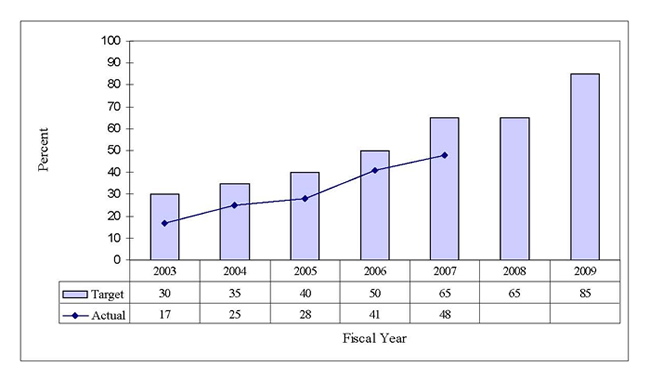
Figure 4. Percent of Population with Access to 511 Telephone Traveler Information Services, FY 2002-FY 2009.
Working through the National Traffic Incident Management Coalition, which is comprised of a number of transportation, public safety and private sector organizations, the FHWA completed an effort in FY 2007 to develop measures and baseline results that will be used to monitor progress in changing the state of practice in three areas: Full-function service patrols, Quick Clearance or Move It laws, and Quick Clearance policies. Additionally, progress was made to develop performance measures for incident duration so we can begin to measure the effect of different strategies on the reducing incident duration.
Complementing this information is the management of integrated corridors. Unused corridor capacity often exists on parallel routes, on the non-peak direction on freeways and arteries, within single-occupant vehicles, and in transit vehicles. As traffic congestion increases due to non-recurrent congestion events, shifts in travel demand to unused capacity can be accomplished by delivering real time travel data. ITS technologies can efficiently and proactively manage the movement of people and goods in major transportation corridors in large cities.
As illustrated in Figure 5, the FHWA will pursue broad strategies that are aimed at increasing the use of integrated ITS networks, providing real-time traveler information, effective approaches to incident and construction (work) zone management as well as road weather management technologies. A high priority will be placed on integrated corridor management, reducing incident delay, and better managing work zones associated with construction and maintenance projects.
|
FHWA National Performance Objectives Mitigate congestion and improve system reliability through actions targeted at key causes of congestion. Mitigate the impacts of congestion by fully integrating system management and operations into project and program delivery decisions. Increase investment through Public-Private Partnerships and the Corridors of the Future Program. |
|
DOT Performance Goals Reduction in urban congestion. Increased use of integrated ITS networks and new incident management approaches. Increased transportation capacity. |
| Figure 5. Relationship between Integrated ITS networks and Incident Management Program Objectives and Outcomes. | ||
Anticipated FY 2008 Accomplishments
Congestion reduction should be achieved in corridors and areas where there are more extensive deployment and integration of ITS technologies, and greater use of work zone, incident management practices, and other effective operational practices. By focusing efforts on these areas, the FHWA anticipates progress in meeting the following objectives:
- Developing effective strategies and technical tools to move additional people and goods through congested corridors in major metropolitan areas that consist of freeway, arterial, and transit facilities, particularly by advancing the Joint Program Office ITS Integrated Corridor Management Initiative.
- Increasing the number of the top 40 metropolitan areas with full function service patrols, quick clearance policies, and Move It laws by mobilizing FHWA field staff to promote such laws, policies and practices and adequately equipping them to provide technical assistance.
- Continuing efforts to ensure the necessary collaboration and coordination between the transportation, public safety, and private sector communities as required for effective traffic incident management.
- Championing the implementation of integrated communication between traffic management centers and other transportation assets and emergency call-taking/dispatch centers and other appropriate public safety responder agencies. In particular, partner with the ITS Joint Program Office (JPO) to work with States involved in Traffic Management Center (TMC)/Computer-Aided Dispatch (CAD) Integration Field Operational Test to apply lessons learned and software modules developed to other States using same or similar TMC systems.
- Providing focused, on-site technical assistance to State DOTs to improve work zone management.
- Continuing to provide guidance and technical support to States implementing the requirements of the updated Work Zone Rule particularly through peer exchange opportunities.
- Championing the deployment of 511 Services and use of travel times on Dynamic Message Signs (DMS) through executive-level outreach and promotion aimed at key, high-impact locations. The portion of the Nation’s population with access to 511 traveler information services should increase to 65 percent in 2008.
- Advancing the SAFETEA-LU Section 1201 Real Time System Management Information Program. This program will lead to the nationwide availability of quality real-time information on delays associated with incidents, work zones, and weather events.
- Demonstrating regional weather observation networks and establishing a national partnership to deploy and operate a national weather observation network.
Safety, System Performance and 21st Century Solutions
Integrated Corridor Traffic Management (ITS Major Initiative) – USDOT is partnering with eight pioneer sites to develop corridors where travelers can rapidly make alternative transportation choices – even during a trip – in response to changing traffic conditions. An Integrated Corridor is one where travelers and shippers can receive information that encompasses the entire transportation network and infrastructure managers can coordinate their activities to ensure optimal real-time management of the corridor. This initiative will provide the institutional guidance, operational capability, ITS technology and technical methods needed for effective ICM systems.
Electronic Freight Management (EFM) (ITS Major Initiative) - Complete EFM deployment tests and initiate movement into business practice. Complete the independent evaluation of EFM Deployment Test, which ran from May through November of 2007, complete initial phase of EFM Adoption Strategy, under the auspices of the Intermodal Freight Technology Working Group (IFTWG), and begin the transfer of key elements of the business plan to the private sector.
Traffic Incident Management (TIM) –Develop and implement actions that work aggressively on advancing key efforts to improve traffic incident management. These actions include establishing performance measures for traffic incident duration; expanded use of full functioning service patrols; quick clearance policies; move-it/steer-it/clear-it laws; and integrated communications between public safety and transportation disciplines.
Operations Performance Measures – Performance measures provide concrete information that agency decision-makers and stakeholders can use to better understand the trade-offs associated with the allocation of transportation resources. Activities are underway to achieve industry-wide acceptance of basic performance measures and to assist in the formulation of performance measure programs aimed at measuring how the system is operating.
Real Time Traveler Information – Real-time traveler information is information that enables travelers to decide how they will use (or not use) the transportation system. Agencies use real-time information to better manage and improve the system. Three key activities are being pursued under the real-time information umbrella: (1) Facilitating deployment of 511 communication services, (2) Encouraging the display of travel times on dynamic message signs, and (3) Establishing and supporting a real-time system management information program as called for in the Safe, Accountable, Flexible, Efficient Transportation Equity Act: A Legacy for Users. Supporting these activities are outreach, technical assistance and peer exchange programs.
Work Zones – Develop and implement actions that work aggressively on advancing key efforts to reduce the impact of work zones on congestion and crashes. These actions include establishing performance measures for WZ management; creating a WZ Peer-to-Peer program to enable professional interchange and technology transfer amongst and between the transportation agencies and; providing focused, on-site technical assistance to State DOTs to improve WZ management in targeted areas.
Data Collection- System Performance - Funds will be used to modify and supplement data collected by the States to focus more on system performance and freight mobility. The expected outcome is better, more complete measures of system performance and utilization, and asset management.
FY 2009 Performance Budget Request
Federal-aid Highway Program
Highway funds apportioned to the States will continue to be used to improve traffic flow through more effective systems management and operations, including providing better information to travelers to allow them to choose departure times, travel modes, and routes that may mitigate congestion problems; implementing and maintaining incident management service patrols and promoting quick clearance policies and ‘Move It’ laws; and developing and implementing improved strategies for work zone implementation and management.
Research and ITS
Effectively addressing traffic congestion will hinge on the ability of the FHWA and State and local transportation agencies to transform traditional transportation organizations into agencies which can use advanced technologies to improve management and operations. ITS technologies have been researched, deployed, and tested during the past decade to improve the operation of the highway system and mitigate congestion.
The FHWA will use FY 2009 R&D and ITS funding to:
- Continue work in partnership with the Joint Program Office on the ITS Integrated Corridor Management Initiative to develop and test the associated tools and strategies. This activity will include promoting the results of demonstrations of approaches and technologies at select Pioneer test sites.
- Deploy and test a road weather observation network and forecasting system to promote the range of innovative value-added products that will improve traveler decision-making when faced with weather events.
- Continue to increase number of jurisdictions with Quick Clearance policies and full function service patrols through outreach and technical assistance to provide targeted attention and information to key decision-makers.
- Continue efforts to ensure the necessary collaboration and coordination between the transportation, public safety, and private sector communities as required for effective traffic incident management.
- Increase the number of jurisdictions having integrated communication systems that include traffic management centers, other transportation assets and public safety responder agencies, building on the technical and outreach efforts undertaken in FY 2007.
- Continue to provide guidance and technical support to States implementing the requirements of the updated Work Zone Rule particularly through peer exchange opportunities.
- Continue to champion the deployment of 511 Services and use of travel times on Dynamic Message Signs (DMS) through executive-level outreach and promotion aimed at key, high-impact locations.
- Provide technical assistance to jurisdictions implementing Real-Time System Management Information Programs.
Limitation on Administrative Expenses
FTE and administrative resources associated with this strategic initiative are as follows:
192 FTE and $32.7 million
Responsible Officials:
Mr. King Gee, Associate Administrator for Infrastructure
Mr. John Baxter, Associate Administrator Office of Federal Lands Highway
Mr. Dennis C. Judycki, Associate Administrator for Research, Development and Technology
Mr. Jeffrey F. Paniati, Associate Administrator for Operations
Mr. Marc Lemon, Chief Counsel
DOT Performance Goal: Increased transportation capacity.
This funding request contributes to the DOT Reduced Congestion strategic objective and the performance outcome goal to increase investment in the Corridors of the Future Program. This request will allow the DOT, on a discretionary basis, to assist States with the development of corridors that meet the program objectives.
| 2007 | 2008 | 2009 | |
|---|---|---|---|
| Target | 2 | 5 | 10 |
| Actual | 2* |
| STRATEGIC GOALS & OUTCOMES by Perfomance Measure |
FY 2007 ENACTED | FY 2008 ENACTED | FY 2009 REQUEST |
|---|---|---|---|
| 2. REDUCED CONGESTION STRATEGIC GOAL | |||
| Increased Transportaion Capacity | |||
| a. Number of states enacting public/privits partnership (PPP) laws where PPP authority is lacking | 1,671,481 | 1,689,286 | 1,605,734 |
| b. Other | ----- | ----- | ----- |
| Subtotal Performance Outcome | 1,671,481 | 1,689,286 | 1,605,734 |
This request will allow the FHWA to promote innovative national and regional transportation planning and congestion mitigation solutions; illustrate the benefits of alternative financial models that employ private sector capital; employ a more efficient environmental review process; support continued growth of the U.S. economy by providing reliable transportation corridors; and develop corridors that will provide reliable freight movement needed by the U.S. economy and more efficient transportation networks that will enable the growing U.S. population to enjoy a lifestyle unhampered by congestion.
The request also allows the FHWA to continue to provide technical assistance and share information with other government partners so that they can assist legislators at all government levels to develop enabling legislation that would permit public-private financing arrangements for select projects, thus leveraging public funds to increase investment in tolling and pricing demonstration projects and capacity expansion projects. The FHWA will consider the use of credit assistance through the Transportation Infrastructure Finance and Innovation Act (TIFIA) credit reform program, if proposed projects meet the established criteria.
Performance Issue
The Federal government has an important role to play in facilitating and accelerating development of multi-State, and possibly multi-use, transportation corridors that can alleviate current or forecasted congestion. Economically-based multi-State, multi-use corridor development that relies on private sector investment resources holds the promise to introduce new innovations and increase existing highway productivity.
Anticipated FY 2008 Accomplishments
- The FHWA will work with the six selected Corridors of the Future to advance their project goals. In addition, the DOT will introduce legislation specifically for the Corridors of the Future Program to streamline Federal reviews and approvals and address any other Federal statutory and regulatory impediments that may prevent the timely delivery of the program.
- The FHWA will continue to pursue strategies to achieve higher levels of investment in surface transportation infrastructure projects through increased utilization of available TIFIA credit assistance. These strategies will include continuous outreach efforts to educate transportation agencies and other interested individuals in the transportation sector and financial community in the TIFIA program. Consistent with PART recommendations, the TIFIA Joint Program Office will establish criteria to determine instances where a loan guarantee would provide a more appropriate form of credit assistance than a direct loan.
- Increase the number of States using non-traditional revenue sources beyond TIFIA and State Infrastructure Banks for project financing.
Safety, System Performance and 21st Century Solutions
Public-Private Partnerships (PPPs) – In FY 2008, funds will be used to:
- analyze two different international PPPs in-depth;
- develop a flexible financial model from the perspectives of both the private sector and the public sector, and;
- develop general guidance for State and local governments.
The expected outcome is a better understanding of PPP financing, performance specifications and standards, risks borne by the parties, actions needed to protect the public interest, and other aspects of PPPs.
Increase the use of non-traditional, i.e., non-motor fuel based revenue sources for system management and expansion. Sources will include TIFIA credit assistance, GARVEE bonds, and private activity bonds.
International Program - Public Private Partnerships. In conjunction with AASHTO and the National Cooperative Highway Research Program (NCHRP), funds will be used in FY 2008 to conduct an international research scan on Public Private Partnerships. Each scan results in the preparation of a written final report with recommended steps for implementing study findings.
FY 2009 Performance Budget
Federal-aid Highway Program
The FHWA will provide technical assistance to all parties involved in Public Private Partnerships (PPP) issues from both a programmatic and project level. The program will engage State representatives, State DOTs, private sector interests, and private financial community representatives to explain and demonstrate how financing tools and methods have worked successfully to build roads and highways faster and more economically. The FHWA will share information with State government and private industry and financial representatives about the advantages of using innovative partnerships by developing and disseminating technical materials. Program staff will prepare a revised technical manual, which will be of value to those who will be interested in using PPPs to more easily accomplish their objectives. Staff will also be presenting best practices and highlighting successful examples throughout the country at meetings and conferences during the year. The FHWA will assist in the implementation of the Secretary’s Congestion Initiative by encouraging states to enact enabling legislation, working with states and others to overcome institutional resistance by explaining how the process works and what was done to achieve success, and identifying and utilizing Federal program authorities to encourage the formation of PPPs.
TIFIA credit assistance will continue to support projects that otherwise might have difficulty in obtaining financing in existing capital markets. TIFIA assistance cannot exceed 33 percent of total project costs.
Limitation on Administrative Expenses
FTE and administrative resources associated with this strategic initiative are as follows:
93 FTE and $15.8 million
Responsible Officials:
Mr. King Gee, Associate Administrator for Infrastructure
Mr. John Baxter, Associate Administrator Office of Federal Lands Highway
Mr. Dennis C. Judycki, Associate Administrator for Research, Development and Technology
Mr. Jeffrey F. Paniati, Associate Administrator for Operations
Mr. Marc Lemon, Chief Counsel
Mr. A. Thomas Park, Chief Financial Officer
DOT Performance Goal: Longer lasting, high performance highway infrastructure.
This request contributes to the DOT Reduced Congestion strategic objective and the performance outcome goal to achieve a longer lasting, high performance highway infrastructure.
| 2002 | 2003 | 2004 | 2005 | 2006 | 2007 | 2008 | 2009 | |
|---|---|---|---|---|---|---|---|---|
| Target | N/A | N/A | N/A | 53 | 54 | 56 | 56 | 57 |
| Actual | 49(r) | 50(r) | 52(r) | 52 | 54 | 57 |
| 2002 | 2003 | 2004 | 2005 | 2006 | 2007 | 2008 | 2009 | |
|---|---|---|---|---|---|---|---|---|
| Target | 28.6 | 27.5 | 26.4 | 25.3 | 24.2 | 23.1 | 22.0 | 20.9 |
| Actual | 29.9 | 29.8 | 29.8 | 29.9 | 29.2 | 29.7 |
| STRATEGIC GOALS & OUTCOMES by Perfomance Measure |
FY 2007 ENACTED | FY 2008 ENACTED | FY 2009 REQUEST |
|---|---|---|---|
| 2. REDUCED CONGESTION STRATEGIC GOAL | |||
| High Perfomance Transp. Infrastructure | |||
| a. Percent of travel on the National Highway System meeting pavement performance standards for "good"-rated ride. | 5,730,919 | 5,784,050 | 5,486,124 |
| b. Percent of deck area on NHS bridges rated deficient, adjusted for available average daily traffic. | 5,730,919 | 5,784,050 | 5,486,124 |
| c. Other | ----- | ----- | ----- |
| Subtotal Performance Outcome | 11,461,838 | 11,568,099 | 10,972,248 |
This request will allow the FHWA to continue to fund transportation-related improvements in the States to maintain and improve the performance of the NHS, including the Interstate system and non-NHS, and replace, rehabilitate, and preserve bridges and other infrastructure. Funds will also be used to build needed transportation facilities, support long-term research, and provide public education, technical assistance, and training to partner agencies and transportation system users. Funds will be used to promote the use of asset management principles to manage and allocate resources to improve system performance, and accelerate the adoption of innovation and new technology in highway construction. This request will also enable the FHWA to fund the clean up, repair, restoration and/or reconstruction of highway facilities damaged during natural and man made disasters.
Marginal Cost of Performance – Pavement Condition
Empirical studies demonstrate that users perceive pavements with an International Roughness Index (IRI) of less than 95 inches per mile as being of good or very good quality. Using this measure, the FHWA and the States have shown improvement over the past five years. This measure reinforces an asset management philosophy that espouses "doing the right thing at the right time." Waiting until pavements have deteriorated to what is perceived to be fair or poor condition, with an IRI of 170 inch per mile, is often too late. Once pavements reach this stage, major rehabilitation or reconstruction is the only viable alternative in many cases. It is better to make improvements when pavements are at or near the 95 inch per mile level.
As noted in the table below, the FHWA will focus its pavement smoothness initiatives on increasing the amount of travel on pavements with good ride quality. The estimate of increased travel on pavements with good ride quality is based on meeting the targets for the percentage of travel with good ride quality on the NHS and an estimated VMT for FY 2007-FY 2009. Using this approach, it is estimated that there will be an increase of 780 million miles of travel on the NHS with good ride quality in FY 2009. The incremental improvement from FY 2008 to FY 2009 is 24 million miles of travel. This increase in the amount of travel on pavement with good ride quality is likely to produce some user benefits such as less vehicle wear and tear, lower fuel consumption, and higher user satisfaction with the ride. However, it is difficult to quantify these benefits in economic terms when comparing pavements that are between good and fair ride quality (in the 95 to 120 inch per mile range).
Agency Output or Outcome Measure Associated with this Program increase(s): Improved infrastructure in all modes.
Performance Measure: Million vehicle miles of travel on the National Highway System (NHS) meeting pavement performance standards for good ride (less than or equal to 95 inches per mile International Roughness Index).
| FY 2005 | FY 2006 | FY 2007 | FY 2008 | FY 2009 | |
|---|---|---|---|---|---|
| Target | 702 | 721 | 748 | 756 | 780 |
| Actual | 689 | 721 | 761 | ||
| Incremental Performance Target* |
18 | 27 | 8 | 24 | |
Note: Actual VMT was 2,965 million miles in FY 2004 and 2,989 in 2005, and 3,014 in 2006. Assume VMT is 3,015 million miles in 2007, 3,049 in 2008, and 3,092 in 2009. Percent of VMT on the NHS is 44.3 percent, based on travel in 2003.
Marginal Cost of Performance – NHS Bridge Condition
Bridge condition is a measure of infrastructure system performance. The FY 2009 target for this measure is to decrease the percent of deck area on deficient NHS bridges to 20.9 percent. The actual percentage of deck area on deficient bridges on the NHS with high ADT is historically higher than on bridges with lower ADT, which might indicate the aging of the thousands of bridges built during the Interstate era. Progress towards decreasing the deck area that is deficient on all ADT bridges in the coming years may depend on proactive implementation of asset management programs and preservation strategies.
As noted in the tables below, the FHWA will focus its bridge program initiatives on decreasing the percent of deck area of NHS bridges that are rated deficient, as either structurally deficient or functionally obsolete. The estimate of the decrease in the deck area on bridges that are deficient in FY 2008 and FY 2009 is based on meeting the targets for FY 2007-FY 2009. Using this approach, it is estimated that there will be 34.573 million square meters of deck on the NHS bridges that are structurally deficient and/or functionally obsolete. The incremental improvement from FY 2008 to FY 2009 is a decrease by 1.615 million square meters of deck area on deficient NHS bridges. This decrease in the amount of deck area on deficient NHS bridges is likely to produce some user benefits such as less travel delays and operational savings to bridge owners in terms of delayed or deferred bridge replacement costs.
Agency Output or Outcome Measure Associated with this Program increase(s): Improved infrastructure in all modes.
Performance Measure: Percent of deck area on NHS bridges rated deficient.
| FY 2006 | FY 2007 | FY 2008 | FY 2009 | |
|---|---|---|---|---|
| Target | 39.360 | 37.783 | 36.188 | 34.573 |
| Actual | 47.492 | 48.333 | ||
| Incremental Performance Target* |
-1.576 | -1.595 | -1.615 | |
Note: Total NHS deck area was 162,642,636 in FY 2006. For the purposes of this study, total NHS deck area is projected to increase annually by 0.057 percent between FY 2007-FY 2009. While the measure pertains only to deck area on NHS bridges rated deficient, FHWA programs seek to reduce deficient deck area on both NHS and non-NHS bridges.
Performance Issue
The condition of the NHS affects wear and tear on vehicles, the comfort of travelers, and fuel consumption. Consequently, maintaining a healthy network of pavements and bridges is critical to the structural integrity, cost effectiveness and performance of the transportation system. In addition, excessive highway construction must be avoided because it is costly and undermines system performance so it is critical to keep the NHS pavement network in good condition to avoid costly construction operations. Efforts need to continue to maintain the current condition level of the NHS pavement network where, currently, 57 percent of vehicles are traveling on pavement mileage exhibiting good ride quality (International Roughness Index (IRI) of 95 inches/mile or less). At the same time, these efforts need to be conducted with a goal to improve the condition of the NHS pavement network beyond FY 2009 to ensure the long term health of the pavement network.
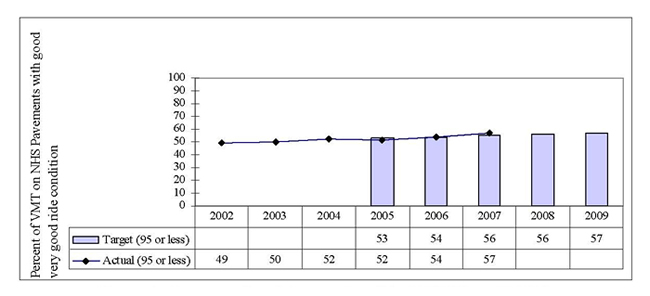
Figure 6. Pavement Condition on the NHS, FY 2002 to FY 2009.
An additional goal for FY 2009is to decrease the percent of deck area on deficient NHS bridges to 20.9 percent. The nationwide percentage of deck area on deficient bridges on the NHS dropped from 32.6 percent in 1998 to 29.7 percent in 2007. The results vary on the NHS by average daily traffic (ADT), with a higher percentage of deck area on deficient bridges on roads with ADT levels above 50,000. The ADT is an average 24-hour traffic volume at a given location for a period of time less than one year. The nationwide percentage of deck area on deficient bridges on the non-NHS dropped from 32.5 percent in 1998 to 30.5 percent in 2007. The results vary on the non-NHS by ADT, with a higher percentage of deck area on deficient bridges on roads with ADT levels above 10,000.
As illustrated in Figure 7, the FHWA will pursue broad strategies that are aimed at furthering the use of asset management practices, providing longer lasting highway structures, improving pavement surface characteristics, accelerating the adoption of new technologies, and pursuing non-traditional revenue sources.
|
FHWA National Performance Objectives Effectively use asset management principles to manage and allocate resources. Provide longer lasting highway structures through improved research, technology transfer, design, quality of construction, and system preservation. Improve pavement surface characteristics. Accelerate the adoption of innovation and new technology in construction. Greater use of non-traditional, i.e., non-motor fuel based revenue sources, and Public Private Partnerships, where appropriate, in order to expand physical capacity and enhance system management. |
|
Longer lasting, high performance highway infrastructure. Increased transportation capacity. |
| Figure 7. Relationship between Infrastructure Program Objectives and Outcomes. | ||
Anticipated FY 2008 Accomplishments
In FY 2008, funds will be used to help ensure each State and Federal Land Management Agency (FLMA) uses management systems information to measure system performance and support integrated decisions in programming projects. Activities planned include:
- Sponsoring the 7th National Conference on Transportation Asset Management and conducting regional conferences to bring asset management principles to states,
- Supporting and advancing the application of comprehensive pavement management and remaining service life methods by State agencies as a tool to assess the needs of their network to determine the adequacy of their resource allocation, and
- Sharing best practices through process reviews, case studies and other methods.
As a result, the anticipated outcome is that the number of states and Federal Lands Highway Divisions with documented performance based processes that use asset management principles will increase.
In FY 2008, funds will be used to:
- Support the enhancement of the National Bridge Inspection Program to assure safety of highway bridges and structures.
- A program audit by the DOT Office of Inspector General planned for FY 2008 may result in recommended improvements to the Highway Bridge Program and the National Bridge Inspection Program.
- Provide guidance for developing design criteria to be adopted by AASHTO in the design and retrofit of bridges in coastal regions.
- Provide Emergency Relief program funding and assist the Minnesota DOT with the replacement of the I-35W Bridge in Minneapolis. A program audit by the DOT Office of Inspector General may result in additional recommended improvements to the Bridge program.
- Provide guidance for developing design criteria to be adopted by AASHTO in the design and retrofit of bridges in coastal regions.
- Complete evaluation of bridges, over rivers and tidal waterways, vulnerable to scour.
- Assist States with the development and implementation of plans of action to address scour critical bridges.
- Support the installation of countermeasures on scour critical bridges to prevent bridge failures.
- Promote the use of high-performance materials, such as Ultra-high Performance Concrete (UHPC), High Performance Steel (HPS) and Fiber-Reinforce Polymers (FRP) as standard materials of bridge construction.
- Advance the implementation of Load Resistance Factor Design (LRFD) in foundation designs. Support AASHTO in fully implementing the LRFD Bridge Design and Construction Specifications.
- In coordination with AASHTO, promote the use of Load and Resistance Factor Rating in the load rating of new and existing bridges.
The expected result should be an increase in the number of states that employ new design procedures, high performance materials, and advanced construction practices to achieve longer life and more reliability; a reduction in the number of scour vulnerable bridges; and improvements in the state of the practice in bridge inspection.
In FY 2008, funds will be used to:
- Monitor and review State materials and construction quality assurance programs to identify the most effective areas to deploy quality system tools and practices for improved material control and construction management.
- Conduct quality assurance performance reviews in a number of states
- Co-host with industry to deliver a national workshop on percent within limits specifications and develop training on quality assurance and specification development/validation.
- Conduct programs with the Asphalt and Concrete Mobile Laboratory in select states to advance new technologies and performance related specifications that will improve quality assurance.
- Continue to promote Accelerated Construction Technology (ACT) through regional workshops and projects with an expected outcome to increase the number of states using advanced quality assurance programs.
In FY 2008, funds will be used to:
- Conduct workshops and data reviews in opportunity states that have been identified as key states where gains in pavement smoothness or rideability will most likely affect the national trends.
- Continue efforts to establish national standards for test methods to monitor pavement smoothness, noise, friction and splash and spray and will continue to explore pavement technologies that can be easily implemented to improve pavement surface characteristics.
As part of this effort, the FHWA will revisit existing policies related to pavement surface characteristics to identify any changes necessary to better reflect the current standard of practice to monitor surface characteristics and existing pavement technologies that can be utilized to improve pavement surface characteristics. The expected outcome of these activities is to increase the number of states that employ three or more technology practices to improve pavement smoothness.
In FY 2008, we will continue to work with our partners and stakeholders to accelerate the adoption of innovative practices to improve safety and customer satisfaction and to reduce the congest caused by highway construction. The “Vanguard Technologies”: Road Safety Audits, Prefabricated Bridge Elements and Systems and Making Work Zones Work Better will be promoted and transferred using marketing science to develop the most effective strategies to accelerate their adoption as standard practice. Demonstration workshops will be held at the sixteen 2006 and 2007 funded pilot Demonstration Projects. These projects will be platforms to demonstrate what can be done and to bring practitioners together to learn from each other how to adopt these practices. FHWA has developed and will deliver up to 20 workshops on “Seeking the Best Solutions”. These workshops are aimed at using performance goals to raise the bar and create an environment that fosters the application of innovation. In addition, the FHWA will maintain an active program of information dissemination and stakeholder participation which will include the bimonthly publication of the INNOVATOR newsletter that features innovative practices and opportunities to learn more. FHWA will continue to provide technical support and assistance to States willing to use performance contracting on Highways for LIFE projects to achieve the performance goals in safety, quality, congestion reduction and customer satisfaction.
Additional technology transfer activities include conducting workshops and showcases to provide peer-to-peer, case studies, and hands-on opportunities for practitioners in the public sector and industry to learn about the benefits of the innovations demonstrated on the projects. The FHWA will also implement a Technology Partnership Program to work with developers of innovative technologies to accelerate the development of working prototypes. The expected outcome of these activities is the acceleration and adoption of new and innovative technologies and practices to improve safety, quality, customer satisfaction and reduction in construction caused by congestion.
In FY 2008, FLH will continue work on approximately 140 active construction projects underway and over 530 projects in the design phase. In addition, the FLH will complete and endorse a new Agreement with the National Park Service that includes outcome goals and measures, complete a joint program risk assessment, and identify high-risk areas and corrective actions for addressing them.
Safety, System Performance and 21st Century Solutions
Effectively Use Asset Management Principles to Manage and Allocate Resources to Improve Our Nation’s Transportation System Performance - In FY 2008, funds will be used to support States and FLMAs usage of management systems information to measure system performance and support integrated decision making in programming projects.
Accelerate the Adoption of Innovation and New Technology in Construction to Significantly Improve Safety, Quality, Customer Satisfaction and Reduce Congestion Due To Construction. In FY 2008, Highways for LIFE will continue to advance the vision to Significantly Improve America’s Driving Experience.
Provide Longer Lasting Highway Structures through Improved Research, Design, Quality of Construction, and System Preservation – In FY 2008, funds will be used to design, construct, rehabilitate, preserve, and inspect highway structures with improved standards, materials, and practices such as the AASHTO LRFD Bridge Design and Construction Specifications, High Performance Materials and Accelerated Construction Practices.
Improve Materials And Construction Quality Assurance – In FY 2008, funds will be used to deploy tools and practices for improved construction management, including advanced quality systems.
Improve Pavement Surface Characteristics - In FY 2008, funds will be used to develop, promote, and deploy technologies to improve pavement smoothness and measurement capabilities.
Issue Broad Agency Announcement (BAA) for Exploratory Advanced Research – In FY 2008, funds will be used to issue a second BAA. The expected outcome is the competitive selection of research proposals with the potential for transformational improvements to the durability, efficiency, environmental impact, productivity and safety aspects of the highway and intermodal transportation system. The initial selection of projects from the second BAA is expected byJuly 2008.
Create A New Process And Methodology For Developing, Conducting, And Delivering High-Risk, Breakthrough Research Within The Agency’s R&T Program – In FY 2008, funds will be used to continue the implementation of the Scanning and Convening Plan developed in FY 2007. The breakthrough innovations and technologies identified in FY 2007 will determine FHWA research proposals to be competed for further investigation and possible application to advance transformational change. The expected completion date for the FHWA competition is December 2008.
FY 2009 Performance Budget Request
Federal-aid Highway Program
Highway funds apportioned to the States will continue to be used to support the majority of projects and activities that contribute to achieving the mobility goal and this particular outcome.
Interstate Maintenance (IM) funds will be used for resurfacing, restoring, rehabilitating, and reconstructing most routes on the Interstate System. Also, IM funds will provide for the upkeep and improvement of the 46,000 mile Interstate System, which is designated as a separate identity within the NHS.
The National Highway System (NHS) funds will be used for improvements to rural and urban roads that are part of the NHS, including the Interstate System, and designated connections to major intermodal terminals.
The Surface Transportation Program (STP) funds will be used on a variety of surface transportation infrastructure projects, transit and carpool activities, bicycle and pedestrian projects, intelligent transportation systems, and management systems, on any Federal-aid highway. Using set aside STP funds, the FHWA will implement a new Planning Capacity Building Initiative to support enhancements in transportation planning through research, program development, information collection and dissemination, and technical assistance. Transportation, Community, and System Preservation Program (TCSP) set- aside funds will be used to facilitate the planning, development, and implementation of strategies by States, Metropolitan Planning Organizations (MPOs), federally-recognized tribes, and local governments, in order to integrate transportation community, and system preservation plans and practices.
Bridge Program funds will be used by States to improve the condition of bridges, including historic bridges, through replacement, rehabilitation, and systematic preventative maintenance. Also, funds will be used to promote the advancement of bridge technologies and enhance the quality of the highway bridge program delivery.
Highway Bridge Program funds will be used by States to improve the condition of bridges, including historic bridges, through replacement, rehabilitation, and systematic preventative maintenance. Also, funds will be used to inspect and load rate all highway bridges on public roads using advanced practices, tools, and technologies.
The Emergency Relief (ER) Program funds will be used for the repair or reconstruction of Federal-aid highways and federally owned roads if they suffer serious damage as a result of natural disasters or catastrophic failures from an external cause. The ER program funds are critical to maintaining mobility for the American public, since natural disasters and catastrophes that destroy highways and bridges can occur anywhere in the country. Following the unfortunate collapse of the I-35W Bridge in Minneapolis, MN, DOT released more than $173 million in ER program funds for clean-up and recovery work, including clearing debris and re-routing traffic, as well as for design work on a new bridge. This amount is in addition to the $5M in ER program funds immediately provided to the Minnesota DOT after the bridge collapse. In P.L. 110-161 for FY 2008, Congress authorized additional expenditures of up to $195 million for the repair and reconstruction of the bridge.
The FHWA will continue to work with States to develop a comprehensive asset management program to ensure the most effective targeting of investments in highway construction, maintenance, and systems preservation.
Federal Lands Highway
Funding for the FLHP will be used for road and bridge improvements on Federal and Indian lands. Park Roads and Parkways funds will be used to support the President’s National Park Legacy initiative to reduce the backlog of maintenance needs for roads and bridges in the national parks. The specific projects that will be funded for all our partners in FY 2009 are based on the program of projects that our partners initiate through the transportation planning process. The trend data based on the past few years, coupled with the number of active design projects underway currently, indicates that we can anticipate improving between 700 to 1000 miles of roads and about 35 to 40 bridges in FY 2009. The improvement of these roads and bridges enables the American public to access these national treasures across the country.
FLH will continue to emphasize and encourage Federal Land Management Agencies (FLMA) that we support to perform as well as report their findings during their bridge inspections in the appropriate format and in accordance with National Bridge Inventory Standards.
Research and ITS
There is a growing need to develop a comprehensive background in system preservation technologies of roads and bridges. To meet this need, an enhanced RD&T program will be initiated for the preservation of roads and bridges. Improving pavement condition as a means of improving physical condition and performance of the NHS, including the Interstate System, remains a primary objective of the FHWA. This can only be accomplished through an extensive program that includes active outreach programs and use of innovative technology, as well as continued effort by States to effectively maintain and rehabilitate the NHS in a timely manner. Improvement in pavement condition on federally owned roads will also be supported. Further, the FHWA will focus resources and grant funding for improving and preserving bridge conditions on the NHS and non-NHS routes. More widespread use of the latest highway materials and design technologies, new specifications and best practices for constructing and preserving pavements, as well as asset management tools and system preservation techniques, are expected to help maintain and improve the Nation’s transportation infrastructure.
To optimize performance in the pavement design area, components will be developed that contribute to the further development of a truly mechanistic (i.e., performance predictive) design/analysis procedure and continued use and adoption of the recently developed AASHTO design procedure. Technologies will also be sought and employed to enhance highway user satisfaction by reducing delays, enhancing pavement smoothness, and optimizing surface texture for safety and noise. Initiatives in FY 2009 relate to research to support development of a fully integrated suite of tools for pavement management (including design, materials selection, construction specifications, including quality control/assurance, and preservation).
Additionally, pavements funds will be used in development of automated testing for construction and material quality assurance State process reviews, implementation of the new pavement design guide technology, development of pavement surface characteristic measuring equipment and technologies for faster construction (e.g., precast and prestressed concrete) and less energy intensive (e.g., warm asphalt) pavements, and technology to facilitate increased recycling. The Long Term Pavement Performance (LTPP) funds will be used to maximize the return on the LTPP investment, and analyze collected data with emphasis on developing products that can be applied to improve our nation’s highway system.
The highway bridge and structure Research and ITS activities will focus on improved development and testing of a variety of innovative technology for non-destructive evaluation and methodologies for bridge management. The use of advanced materials such as fiber-reinforced polymer, high-performance steel and concrete, corrosion resistant reinforcing bars and corrosion resistant pre-stressing tendons will be emphasized. A systems approach to designing and building more reliable, durable bridges will also be emphasized. A wide variety of activities to assure bridge safety, reliability, and security will continue, with a particular emphasis on developing techniques to control structural corrosion and prevent other damage.
Asset management activities will focus on systematic management approaches to ameliorate the long-term cost effectiveness of highway investments. Programs include developing innovative methods for measuring and analyzing highway performance, sponsoring programs that enhance preservation of pavements and structures, encourage the further development and use of performance related specifications, increase efforts to calculate remaining service life of pavements and structures, evaluate and implement new and/or innovative techniques/traffic control devices in work zones, and research leading to the use of modern economic tools for evaluating highway investments.
The FHWA will use resources to research, develop, and promote the deployment of new technologies, Asset Management Principles, materials, and analysis tools that will improve pavement and bridge performance and system cost-effectiveness. The FHWA will continue to provide technical assistance and training to State officials and other partners in order to encourage the deployment of technologies, including innovative construction techniques and preservation practices that improve pavement and bridge condition. Through the sharing of best practices and the provision of training, the FHWA will encourage State partners to use innovative bridge materials that are more durable and resistant to traffic loads and corrosive attack, resulting in less maintenance and fewer traffic restrictions. Adoption of these technologies should lead to overall improvements in pavement and bridge condition ratings.
New initiatives in FY 2008-FY 2009 focus on modeling the performance of bridges (i.e., remaining service life), enhancing construction quality through improved program management and stewardship and oversight. Fundamental research on actual costs of maintaining and operating transportation facilities, including the integration of advanced pavement modeling into a new version of the Highway Economic Requirements System-State (HERS-ST) model, developing training in data integration techniques, encouraging improvement of management systems to monitor system performance and undertaking engineering and economic analysis as an integral part of the decision making process. The overall goal is to improve the remaining service life of the network through effective system preservation for the safe and efficient movement of people and goods on our highway transportation system.
The FHWA Exploratory Advanced Research program will explore longer-term, higher risk research with potentially dramatic breakthroughs for the next generation of highway infrastructure, addressing such issues as quality performance data, improved materials and systems, improved fabrication and construction practices, and new decision-making tools and models.
Limitation on Administrative Expenses
FTE and administrative resources associated with this strategic initiative are as follows:
631 FTE and $107.9 million
Responsible Officials:
Mr. King Gee, Associate Administrator for Infrastructure
Mr. John Baxter, Associate Administrator Office of Federal Lands Highway
Mr. Dennis C. Judycki, Associate Administrator for Research, Development and Technology
Mr. Jeffrey F. Paniati, Associate Administrator for Operations
Mr. Marc Lemon, Chief Counsel
