Jurisdictional Control by U. S Roads and Streets
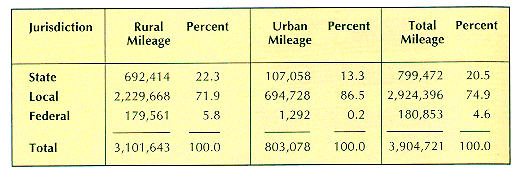
The vast majority (74.9) percent) of the Nation's roadways are under the jurisdiction of local governments (town, city, county). Only 4.6 percent are under the jurisdiction of the Federal Government, which includes roads in national forests and parks and on other Federal lands and Indian reservations. The rest of the roadways (representing 20.5 percent of the total 3,904,721 miles and including the entire Interstate System) are controlled and maintained by the State governments. It is estimated that these State roads carry 64 percent of the Nation's highway travel.
Road and Street Mileage by Surface Type
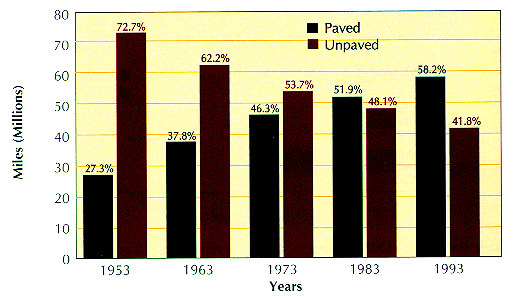 Currently, about 58.2 percent of all roads and streets are paved, compared with about 27.3 percent in 1953. The total paved mileage has increased 147 percent since 1953, but the total road and street mileage has increased by only 16 percent. Essentially all of the unpaved mileage is on slightly travelled rural roads.
Page 16
Functional Systems Mileage and Travel
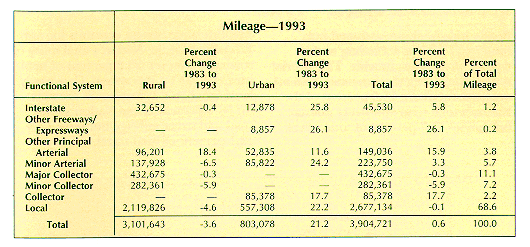 Roads and streets are grouped into functional classes according to the type of service they provide, and to some extent, on how much traffic the facility carries. Although functional classification may change over time to better describe the changing role that a particular road or street may be playing, the total mileage changes only slightly over time. Except for the other principal arterial system, the rural systems actually decreased in mileage due to the expansion of urban boundaries and functional reclassification.
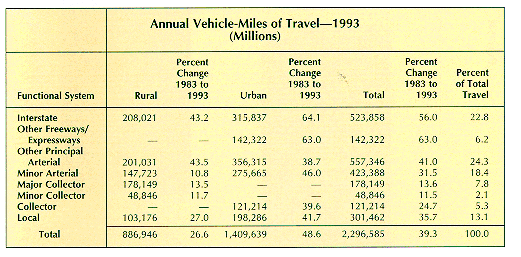 Total mileage has increased only 0.6 percent since 1983, while travel has increased 39.3 percent during the same time period. The urban travel increase of 48.6 percent has outpaced the rural 26.6 percent increase due to the Nation's continued growth in urbanization and expanding urban boundaries, which involves the transfer of heavily travelled rural facilities to urban. The urban Interstate System has had the greatest travel growth (65.2 percent) during the 1983 to 1993 time period.
Page 17
Total Road Mileage and Travel
by Functional System - 1993
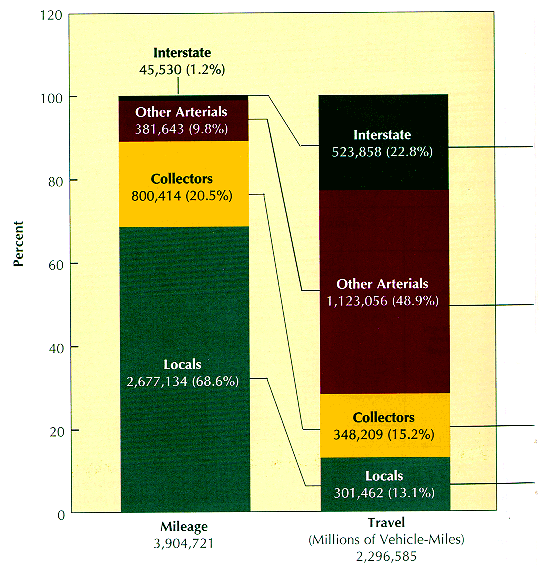
Roads and streets are grouped into functional systems according to the type of service they provide. The arterial system (including the Interstate System) accounts for about 11.0 percent of the Nation's total road and street mileage but carries 71.7 percent of total travel.
The Interstate System accounts for only 1.2 percent of the Nation's total miles of roadway; however, 22.8 percent of total travel occurs on this system. Conversely, local functional system roads account for 68.6 percent of the Nation's total road and street mileage but serve only 13.1 percent of total travel.
 Page 18
Functional Classification
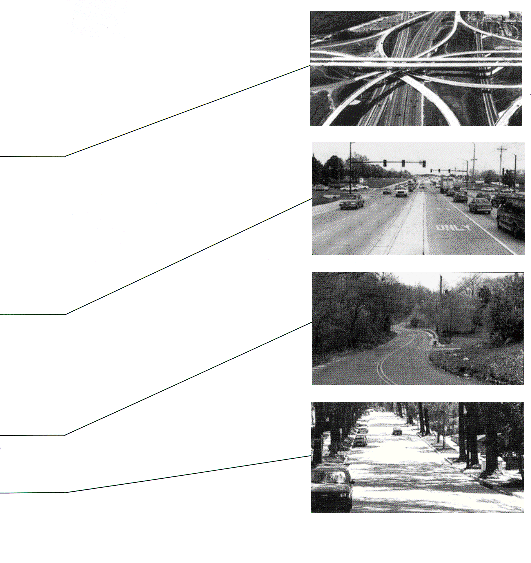
Arterial (including Interstate and other freeways) - The highest classification of roads and streets. Arterials provide the highest level of mobility, at the highest speed, for a long uninterrupted distance.
Collector - Provide a lower level of mobility than arterials at lower speeds and for a shorter distance. Collectors connect local roads with arterials and provide some access to abutting land.
Local - The lowest classification of roads and streets. Local roads provide a high level of access to abutting land but limited mobility.
 Page 19
Back to Contents