Air Quality
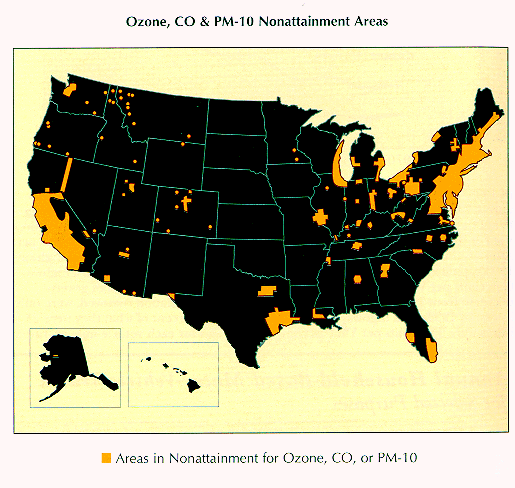 In 1990, the Clean Air Act Amendments (CAAA) set standards for pollutants which States, cities, and towns must either meet or actively work to meet - or face sanctions. The map displays areas designated by EPA as being in nonattainment of the National Ambient Air Quality Standard (NAAQS) for at least one of certain pollutants: ozone, carbon monoxide (CO), or suspended particulate matter (PM-10). More than one fifth of the Nation's population lives in nonattainment areas.
Source: Office of Program Development, Federal Highway
Administration, Transportation Air Quality Fact book, 1994
(using 1994 Environmental Protection Agency data).
Page 8
Air Quality Trends
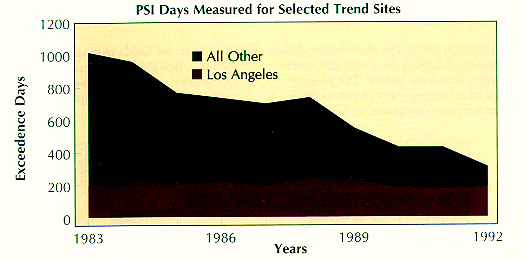 The Pollutant Standards Index (PSI) is a composite calculation of PM-10, sulfur dioxide, CO, 03, and nitrogen dioxide used to determine when an areas exceeds the NAAQS. Each day in exceedence is a day in which any part of the trend site violated the NAAQS. Los Angeles had 194 days in exceedence in 1983 and 183 in 1992.
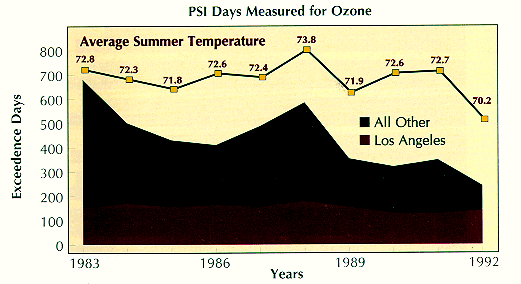
There is a separate PSI for ozone. The number of days that the trend sites have been in exceedence for ozone has been declining since 1983. Los Angeles had 154 days in exceedence in 1983 and 142 in 1992. While the number of days in exceedence has fluctuated somewhat (in part due to fluctuation in average summer temperature), the overall trend has been declining.
Source: Office of Program Development, Federal Highway Administration, transportation Air quality Fact Book,
1994 (using 1994 Environmental Protection Agency data).
Page 9
Back to Contents