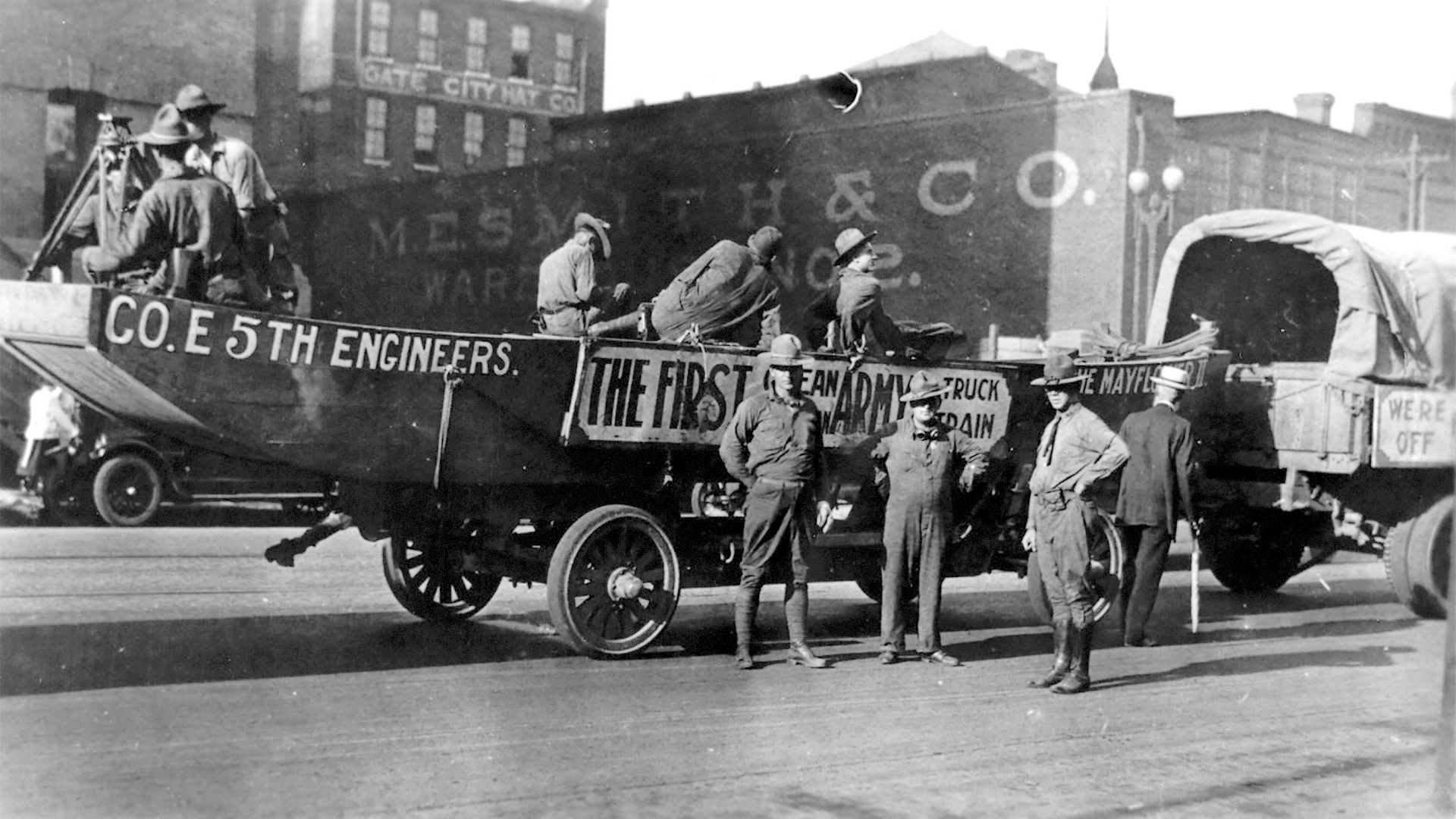
During World War I, Dwight D. Eisenhower was frustrated that he never made it to Europe, despite many requests for the assignment. Instead, one of his assignments was to found a separate armored unit known as the Tank Corps based in Gettysburg, PA. Thinking his military career was over, he volunteered for the U.S. Army’s first transcontinental convoy (July to September 1919) to accompany a small Renault tank. His experience on the convoy helped him understand the need for better roads, while his experiences on Germany’s autobahn expressway network convinced him of the need for “broader ribbons across the land.”
Source: Eisenhower Presidential Library and FHWA

On February 17, 1954, President Dwight D. Eisenhower addressed the White House Conference on Highway Safety. He said that “when any particular activity in the United States takes 38,000 American lives in one year, it becomes a national problem of the first importance.”
Source: Eisenhower Presidential Library and FHWA
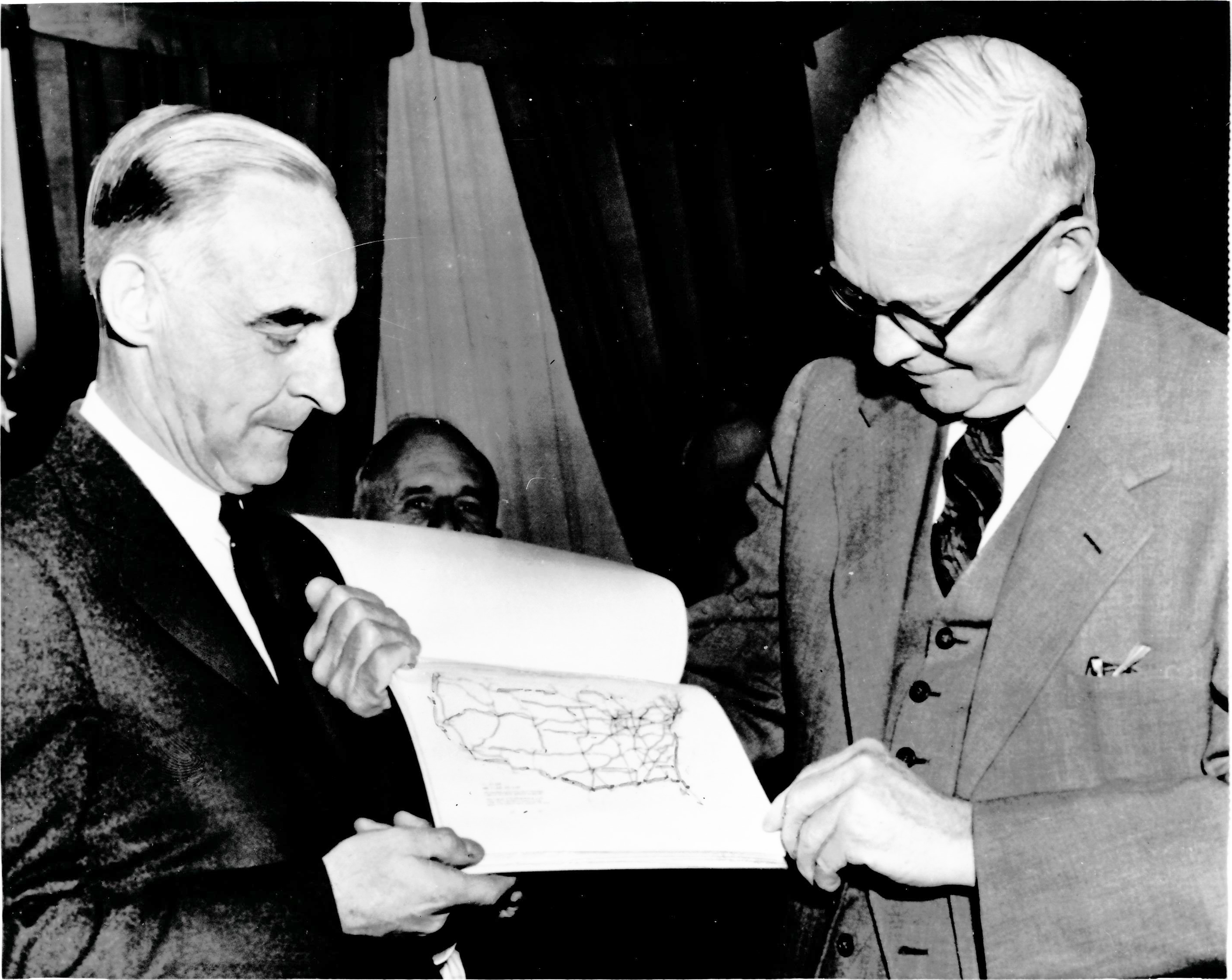
January 1955 - President Dwight D. Eisenhower reviews plans for financing the Interstate System with General Lucius Clay. General Clay headed the President’s committee for working out the funding details. Although Congress did not adopt the General’s plan, another plan adopted in 1956 helped get the Interstate Highway Program underway.
Source: Eisenhower Presidential Library and FHWA
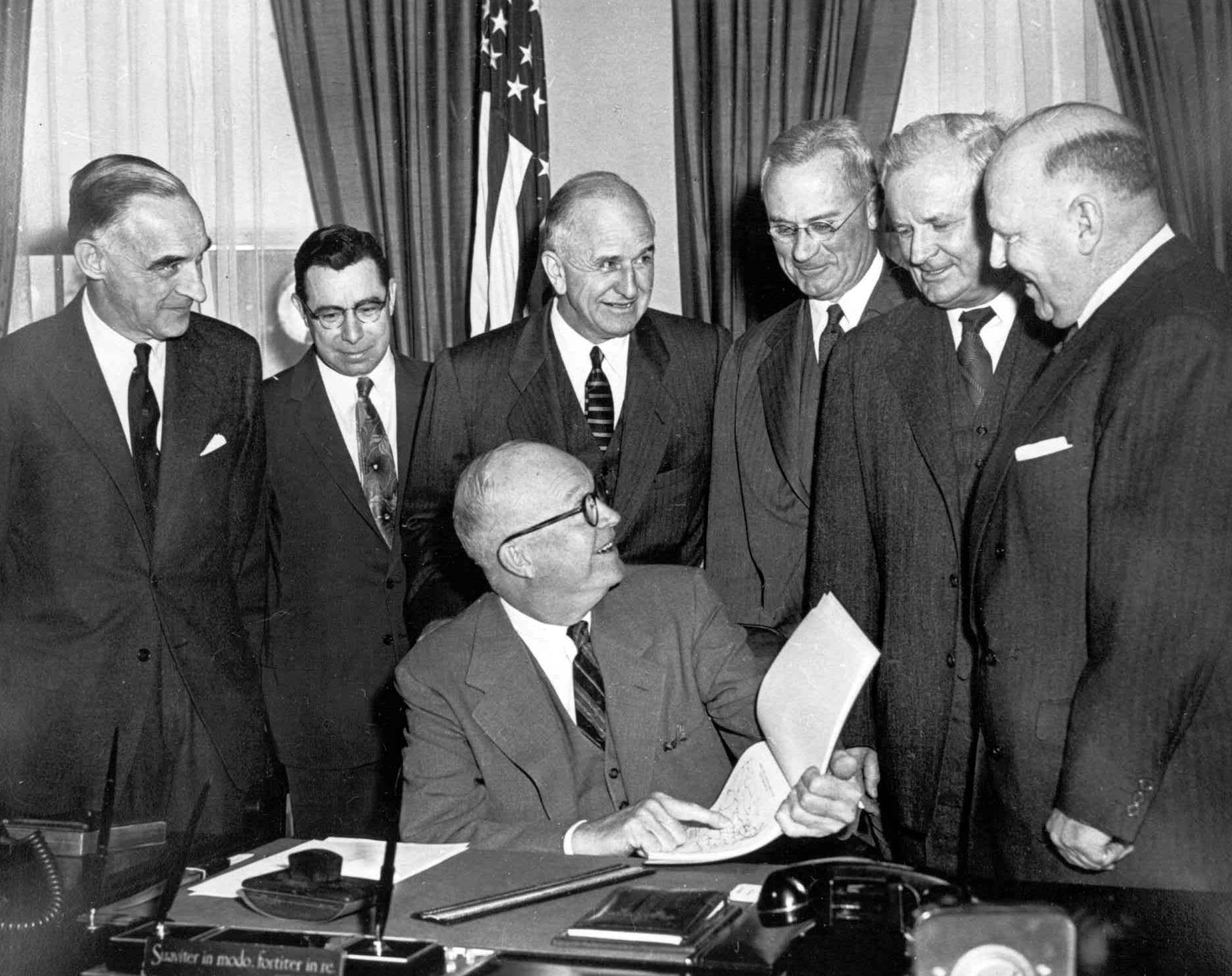
On January 11, 1955, President Eisenhower met with his Advisory Committee on a National Highway Program (the Clay Committee) to discuss A Ten-Year National Highway Program, which included a plan for financing the Interstate System. Left to right: General Lucius D. Clay, Francis C. Turner of the BPR, Steve Bechtel of Bechtel Corporation, Sloan Colt of Bankers’ Trust Company, Bill Roberts of Allis-Chalmers Manufacturing Company, and Dave Beck of the International Brotherhood of Teamsters.
Source: Eisenhower Presidential Library and FHWA
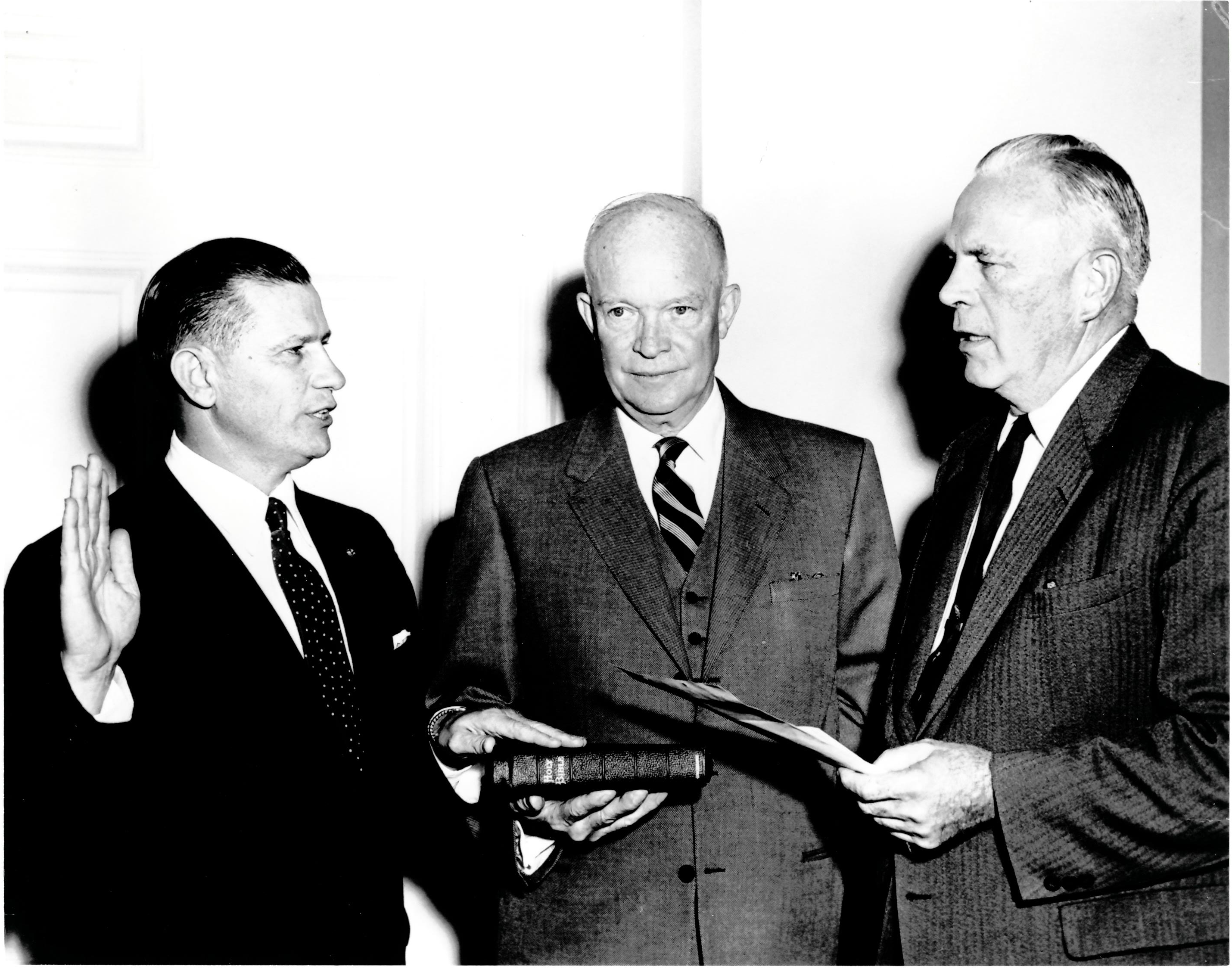
At the White House, President Eisenhower holds the Bible while Administrative Officer Frank K. Sanderson (right) administers the oath of office to John A. Volpe (left) as the first Federal Highway Administrator on October 22, 1956. “You’re now part of the family here,” the President told Volpe. The President added that he had worked hard to launch the highway program and was “anxious for it to move into high gear.” This is the only time a President attended the swearing-in of a Federal Highway Administrator.
Source: Eisenhower Presidential Library and FHWA
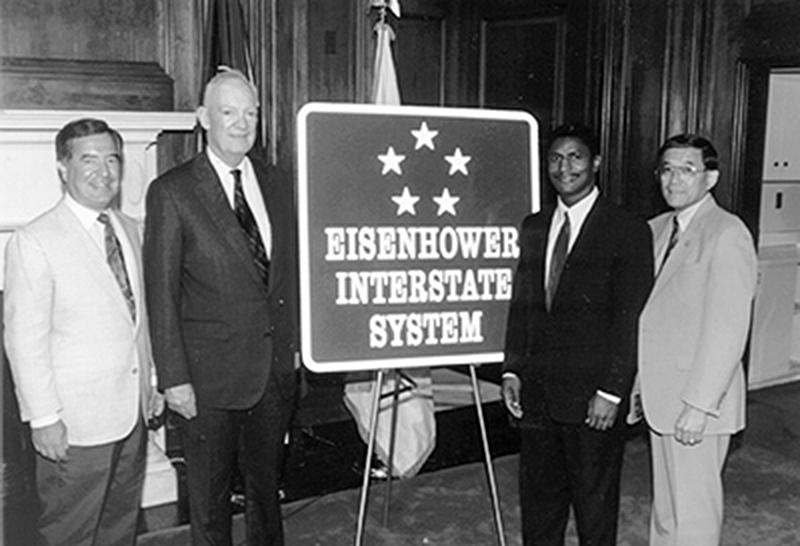
“The standard road sign for the Dwight D. Eisenhower National System of Interstate and Defense Highways, designed by FHWA and the American Association of State Highway and Transportation Officials, was unveiled in a ceremony on Capitol Hill on July 29, 1993. Left to right: Chairman Nick J. Rahall (D-WV) of the House Surface Transportation Subcommittee, John Eisenhower (President Eisenhower’s son), Federal Highway Administrator Rodney E. Slater, and Chairman Norman Y. Mineta (D-CA) of the House Committee on Public Works and Transportation.”
Source: Eisenhower Presidential Library and FHWA