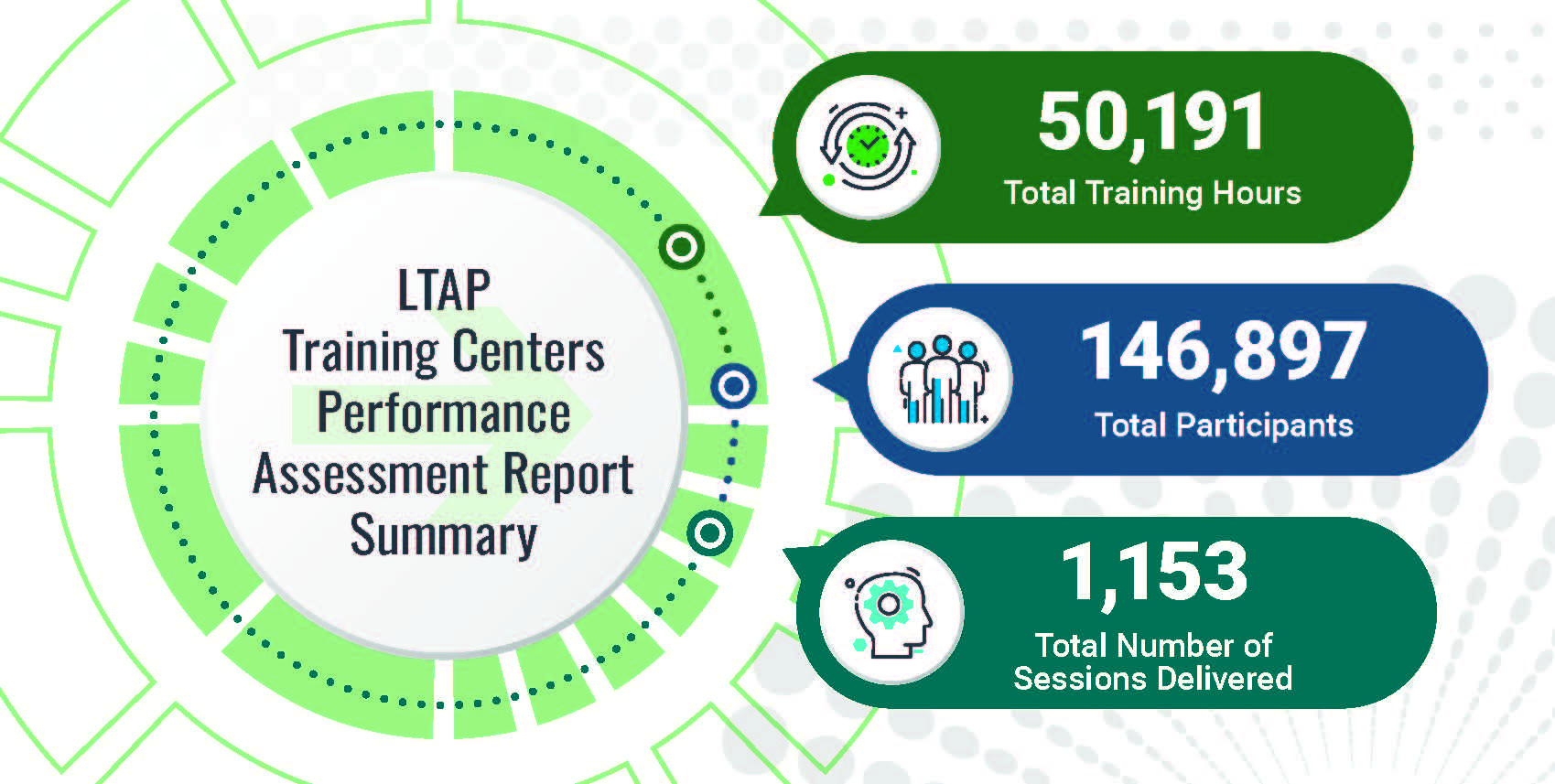
The Local Aid Support team collaborates nationwide with a diverse mix of organizations to provide training and technical assistance that improve safety and efficiency of local, tribal, and land management agency transportation programs. This network includes 51 Local Technical Assistance Program Centers (LTAP) and Tribal Technical Assistance Centers. The Local Aid Support team’s mission is to provide solutions-oriented training and technical assistance to keep pace with an ever-changing transportation workforce.
 Workforce Development

The Local Aid Support team took on a huge effort in 2021 to ensure that we were listening to the needs of the Local Technical Assistance Program (LTAP) Centers. We held “listening sessions” with 27 of the Centers to find out more about what is working well in their States. We wanted to hear their success stories and find out how the FHWA can better support their programs. We heard some common themes throughout our discussions. Here is a summary:
How the LTAPs see themselves
The LTAPs see themselves as a trusted resource for local agencies. If they do not have the answers, they have the resources to provide the answers and access to the subject matter experts needed to support local programs and other initiatives.
Adapting to the current environment
The LTAPs had to shift their way of conducting business during 2020. Some of the challenges they faced included the absence of face-to-face instruction, resistance to virtual training, updating their technological capabilities and access, and concerns about budget and resource restraints. All the Centers we spoke with met these challenges head-on by continuing to provide training and technical assistance while increasing their training participation. The virtual environment also provided the Centers with greater access to the experts for these trainings. During one of the listening sessions, an LTAP Center said they feel “e-learning is a way of the future.”
Building effecitve relationships
The Centers lean on each other for sharing resources, success stories, and information. They were able to promote each other’s training and provide mentoring to new members of the LTAP community. With the virtual training, they were able to expand their training offerings to agencies in all States. The Centers also maintained relationships with organizations such as FHWA, the American Public Works Association (APWA) and National Association of County Engineers (NACE). These collaborations are key to providing additional training and information and access to subject matter experts. “It’s all about the relationships,” said an LTAP Center. “Show compassion. Get to know them.”
Communication and outreach
Creativity among the LTAP Centers was on display in the area of communications and outreach in the past year. They upgraded websites, hosted webinars, developed electronic newsletters, and increased the use of social media for promoting training and sharing information. Some of the Centers created mobile applications, used QR codes for training registrations, and relied on YouTube videos to promote their programs and initiatives. The use of live question-and-answer sessions following training is something that is catching on among the Centers as well.

Core programs
There was great consistency in the use of core programs for the LTAP Centers. Most were safety based, such as the Circuit-Rider Program and the Highway Safety Improvement Program. Other programs finding success among the Centers included the Loan Equipment Program, Roads Scholar Program, and Build a Better Mousetrap, where the Centers recognized locally relevant, innovative programs within their States.
Technical assistance and data reporting were two other areas of importance coming from the listening sessions. The LTAP Centers agreed that technical assistance is their business. It comes in the form of phone calls and emails, making it difficult to track. Data reporting was a standard topic in the listening sessions because the Centers are looking for better ways to tell their success stories.
The FHWA is proud of our collaboration with the LTAP Centers, and we look forward to continuing to improve these relationships and our communication in the years to come.
 Innovation
Innovation is not just a buzzword. It is building safer communities. FHWA’s Build a Better Mousetrap program recognizes government agencies that have found ways to go against their norms to solve transportation-related challenges. The 2021 Build a Better Mousetrap winners from Seminole County, FL; Jones County, IA; Independent Highway District, ID; and the Illinois Tollway are seeing success in their programs because of ingenuity that started from the bottom up.
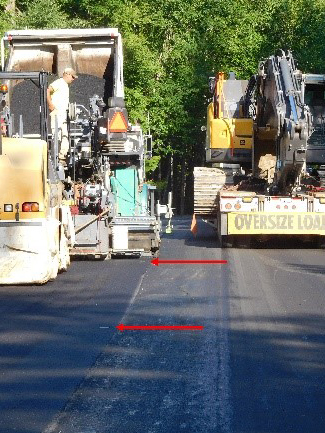
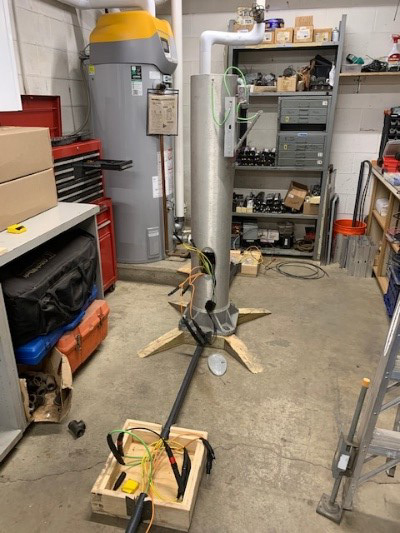
In Seminole County, FL, they developed a mobile application that came from a need to improve the Americans with Disabilities Act ramp inspection program by eliminating paperwork and decreasing the amount of time it took to develop reports. In Jones County, IA, they created a tool to improve their shoulder stone placement program. The Independent Highway District, ID, found a way to improve safety for their snowplow workers. In Illinois, the Tollway is training their new road electric workers faster and in safer conditions.


Developing innovative solutions take time, resources, and support from all levels within the organization. The 2021 winners have built a culture that encourages creative solutions. “We are a community, and we make every effort to work together as a community,” according to Seminole County.
What are the characteristics of organizations who successfully Build a Better Mousetrap for their communities?
Listen–Listen to your workers in the field. They know and understand what isn’t working and can help find solutions to solve the problems.
Keep an open mind–This was a key ingredient to success for the Illinois Tollway: “Keep an open mind, welcome the ideas, have conversations about them, and most importantly, be safe.” Solutions are not always easy, and they are not always right there in front of you. Successful organizations explore all options, seek plenty of feedback, and patiently develop their solution.
Be fearless–Try not to be controlled by your fears of failure. Jones County, IA, says, “Just keep the communication open, bridge the gap, and take away the fears.”

Be persistent–Some Build a Better Mousetrap winners say it took them years to develop a solution, but they persisted in their efforts to push for a change.
Understand the limits of your organization–Every organization has its limitations in resources, staff, and time. Understand what those limits are and work through them to develop your solution.
It’s a group effort–All of the winners have touted their innovations as a “group effort.” It is important to seek support from the ground up. According to previous Build a Better Mousetrap winners, this is accomplished by involving everyone in the process, whether by seeking their feedback, having them test the innovative solution, providing training on use of the solution, or listening to suggestions for improvement.
The Independent Highway District, ID’s best advice to organizations considering more innovative solutions is, “Nothing ventured is nothing gained.” For more information on Build a Better Mousetrap, visit https://www.fhwa.dot.gov/clas/babm/.
